النفس - الارتقاء والتحوّلThe Soul — Ascent and Transformation
النفس: الجوهر الممتد عبر العوالم
ما الذي يجعلني "أنا"؟
سؤال بسيط في ظاهره، لكنه يفتح باباً على عمق لا نهاية له.
الجسد يتغير. الخلايا تموت وتُستبدل. الطفل الذي كنته قبل ثلاثين سنة لا يشترك مع جسدي الحالي في خلية واحدة. ومع ذلك، أشعر أنني نفس الشخص. هناك استمرارية ما، خيط يربط كل تلك المراحل.
الأفكار تتغير أيضاً. ما كنت أؤمن به في العشرين يختلف عما أؤمن به الآن. آرائي تطورت، قناعاتي تبدلت، فهمي للعالم اختلف. ومع ذلك، أشعر أن هناك "أنا" ثابتة خلف كل هذه التغيرات.
هذه الـ"أنا" الثابتة هي ما أسميه النفس.
النفس هي جوهر الإنسان الواعي.
ليست الجسد، رغم أنها تسكنه. وليست الأفكار، رغم أنها تنتجها. وليست المشاعر، رغم أنها تختبرها. النفس هي ذلك الشيء الذي يقف خلف كل هذا. الشاهد الذي يراقب. المُدرك الذي يُدرك.
حين أقول "أشعر بالحزن"، هناك شيء يشعر وهناك الحزن. الحزن يأتي ويذهب، لكن الشيء الذي يشعر يبقى. هذا الشيء هو النفس.
حين أقول "أفكر في مشكلة"، هناك شيء يفكر وهناك المشكلة. المشكلة قد تُحل أو تتغير، لكن الشيء الذي يفكر يبقى. هذا أيضاً هو النفس.
النفس تملك صفات تحدد هويتها.
ليس المقصود الصفات الخارجية كالطول واللون، بل الصفات الجوهرية. الميول العميقة، الاستعدادات الفطرية، طريقة التفاعل مع العالم. هناك من يميل بطبعه نحو الهدوء، وهناك من يميل نحو الحركة. هناك من يميل نحو العطاء، وهناك من يميل نحو الأخذ.
هذه الصفات ليست ثابتة بشكل مطلق. يمكن أن تتغير، أن تنمو، أن تتراجع. لكنها تشكل في أي لحظة ما يمكن أن نسميه "هوية" النفس. ما يجعلها هي وليس غيرها.
والنفس ليست مقيدة بهذا العالم المادي.
هذا ما فهمته من تأملي في سلسلة العوالم. إذا كان الإنسان يمر عبر عوالم متعاقبة، فإن ما ينتقل ليس الجسد - فالجسد يتغير بتغير العالم - بل شيء آخر. شيء يحمل الاستمرارية. شيء يبقى "هو" رغم تغير كل ما حوله.
هذا الشيء هو النفس.
النفس تمتد عبر العوالم. تدخل عالماً، تختبر فيه تجربة معينة، تكتسب صفات أو تفقدها، ثم تنتقل إلى عالم آخر. الجسد يتغير، الظروف تتغير، القوانين الحاكمة تتغير. لكن النفس تبقى، تحمل معها حصيلة ما مرت به.
من خلال ما تختبره في كل عالم، تتشكل النفس.
التجارب تترك أثراً. القرارات تبني صفات. الأفعال المتكررة تترسخ كميول. النفس التي تخرج من عالم ليست نفس النفس التي دخلته. شيء ما تغير فيها.
وهذه الحالة التي تصير إليها هي ما تحمله معها إلى ما بعد، كما رأيتُ في مسار العوالم.
هذا الفهم غيّر نظرتي لنفسي.
لم أعد أرى نفسي ككائن محصور في هذا الجسد، في هذا الزمن، في هذا المكان. بدأت أرى نفسي ككيان أوسع، له تاريخ يمتد قبل هذه الحياة، ومستقبل يمتد بعدها.
ما أفعله الآن ليس مجرد فعل عابر. إنه يُشكّل نفسي. يبني فيها شيئاً أو يهدم شيئاً. وما أبنيه أو أهدمه سأحمله معي.
النفس هي رأس مالي الحقيقي. الشيء الوحيد الذي يبقى معي حين يتغير كل شيء آخر.
ارتقاء النفس: الاقتراب من الحقيقة
الحقيقة الكاملة عند الله.
هذا ما فهمته. الله هو الأصل، ومنه انبثق كل شيء. وبالتالي، المعرفة الكاملة، الرؤية الصافية، الفهم الذي لا يشوبه نقص - كل هذا عنده.
أما نحن، فنرى جزءاً من الحقيقة. جزءاً يتناسب مع موقعنا في سلسلة العوالم، ومع مستوى وعينا.
كلما ابتعد العالم عن الأصل، ازداد تعقيده.
هذا ما لاحظته في رحلتي عبر العوالم. العالم الأول - الأقرب إلى الله - هو الأبسط والأصفى. ثم تتوالى العوالم، وكل عالم يضيف طبقة من التعقيد. حتى نصل إلى عالمنا هذا، المليء بالتفاصيل والتشعبات والحجب.
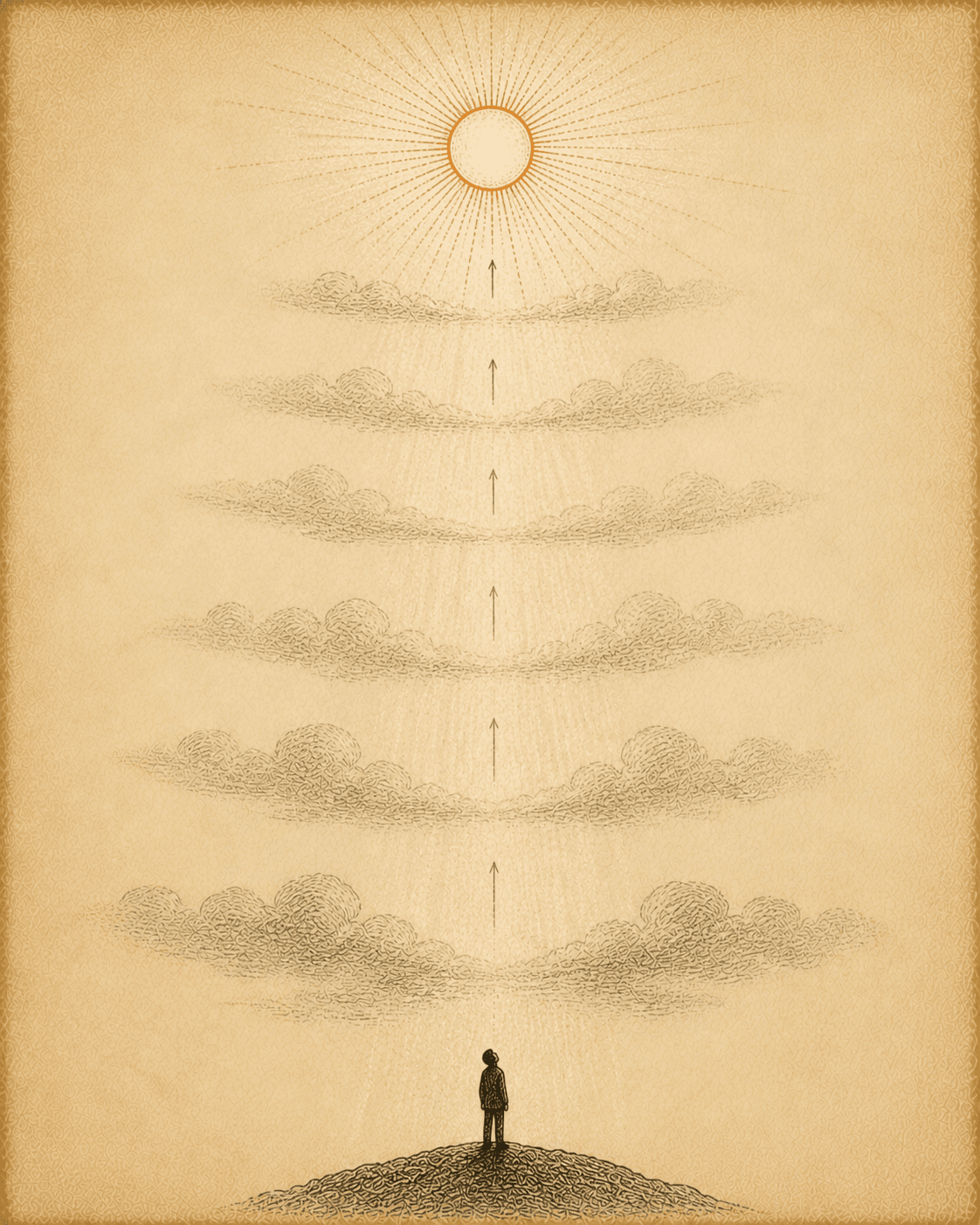
هذا التعقيد ليس شراً في ذاته. لكنه يجعل رؤية الحقيقة أصعب. كمن ينظر إلى الشمس من خلف طبقات من الغيوم. الشمس موجودة، لكن كم طبقة بينه وبينها؟
الارتقاء هو الاقتراب من الحقيقة.
حين ترتقي النفس، لا تنتقل بالضرورة إلى مكان آخر. بل يصفو وعيها. تبدأ برؤية ما كان محجوباً. تفهم ما كان غامضاً. تميّز ما كان مختلطاً.
الإنسان الذي لا يرى إلا العالم المحسوس يعيش في طبقة واحدة من الواقع. يظن أن ما يراه هو كل ما هو موجود. الطعام، الشراب، المال، الملذات - هذا عالمه. وتتحكم به دوافعه الغريزية، لأنه لا يرى ما هو أبعد منها.
لكن حين يبدأ وعيه بالارتقاء، تنكشف له طبقات أخرى. يبدأ برؤية المعاني خلف الأشياء. يبدأ بإدراك القوانين التي تحكم الوجود. يبدأ بالشعور بحضور أعمق في الحياة.
الوعي له مستويات.
في أدنى مستوياته، الإنسان أسير غرائزه. يتصرف بردود أفعال تلقائية. يريد، فيأخذ. يغضب، فيهاجم. يخاف، فيهرب. لا يتوقف ليسأل: هل هذا صحيح؟ هل هذا يليق بي؟ هل هذا يقربني من غايتي؟
في مستوى أعلى، يبدأ الإنسان بالتمييز. يرى أن هناك فرقاً بين ما يريده وما يجب أن يفعله. يبدأ بضبط نفسه، بتأجيل الإشباع، بالتفكير قبل الفعل. هذا مستوى الأخلاق والقيم.
في مستوى أعلى، يبدأ برؤية الصورة الأكبر. يفهم أن أفعاله لها نتائج تتجاوز اللحظة. يدرك أنه جزء من نظام أوسع. يبدأ بالسؤال عن المعنى والغاية.
وفي مستويات أعلى، يقترب من رؤية الحقيقة كما هي. ليس بالكامل - فهذا لله وحده - لكن بدرجة أصفى وأوضح.
كلما ازداد الوعي، ازدادت أشياء كثيرة معه.
تزداد صفاء الرؤية. ما كان يبدو معقداً يصبح أبسط. ما كان يبدو متناقضاً يظهر منسجماً. الإنسان الواعي يرى الخيط الذي يربط الأشياء، بينما غيره يرى فوضى.
تزداد دقة الأفعال. من يرى بوضوح يتصرف بدقة. لا يهدر طاقته في اتجاهات خاطئة. لا يتخبط بين الخيارات. يعرف ما يريد ويعرف كيف يصل إليه.
تزداد القدرة على التعامل مع الألم. الإنسان الواعي لا يتألم أقل من غيره. لكنه يفهم ألمه. يعرف من أين جاء وإلى أين يقوده. وهذا الفهم يجعل الألم محتملاً، بل مفيداً.
الارتقاء ليس هروباً من العالم.
بعض الناس يظنون أن الارتقاء يعني الانعزال، التخلي عن الحياة، الجلوس في كهف للتأمل. لكن هذا فهم ناقص.
الارتقاء الحقيقي يحدث في قلب الحياة. في التعامل مع الناس، في مواجهة التحديات، في اتخاذ القرارات الصعبة. العالم هو المدرسة التي نرتقي فيها، لا السجن الذي نهرب منه.
من يرتقي حقاً يصبح أكثر حضوراً في العالم، لا أقل. لكن حضوره يختلف. حضور واعٍ، هادئ، فاعل. لا حضور التائه الذي تجرفه الأمواج.
هذا هو معنى ارتقاء النفس.
ليس صعوداً إلى مكان بعيد. بل صفاءً يكشف ما كان محجوباً. اقتراباً من الحقيقة التي كانت دائماً هناك، لكننا لم نكن نراها.
والطريق مفتوح لكل نفس. لا أحد محروم من إمكانية الارتقاء. الفرق فقط في من يختار أن يسير.
لماذا الارتقاء؟ أهميته في مسيرة الحياة
لماذا يجب أن أرتقي؟
سؤال قد يبدو بديهياً، لكنه يستحق التوقف عنده. لماذا لا أعيش ببساطة؟ آكل، أشرب، أستمتع بما تيسر، ثم أموت؟ ما الذي يجعل الارتقاء ضرورة وليس ترفاً؟
الجواب يبدأ من طبيعة العالم نفسه.
العالم، كما فهمت، يقوم على صفات الله. القوانين التي تحكمه ليست عشوائية، بل تعبير عن حكمته. النظام الذي يسيّره ليس فوضى، بل انعكاس لكماله. كل شيء في هذا العالم يتحرك ضمن مسار له اتجاه، له غاية.
الإنسان جزء من هذا العالم. وبالتالي، هو أيضاً جزء من هذا المسار.
لكن الإنسان يملك شيئاً لا تملكه بقية المخلوقات: الوعي والاختيار. يستطيع أن ينسجم مع حركة العالم، أو أن يسير عكسها. يستطيع أن يتوافق مع القوانين التي تحكم الوجود، أو أن يصطدم بها.
حين ينسجم الإنسان مع حركة العالم، تصبح حياته أسهل.
ليس بمعنى أنها تخلو من الصعوبات، بل بمعنى أن الصعوبات تصبح ذات معنى. يفهم لماذا يمر بما يمر به. يرى كيف تقوده التجارب نحو شيء ما. لا يشعر بأنه ضحية لقوى عمياء، بل مسافر في طريق له وجهة.
وحين يسير عكس حركة العالم، تصبح حياته أصعب.
فهو يصطدم بالقوانين، كمن يسبح عكس التيار: يستنزف طاقته، ويتعب، ولا يصل. القوانين لا تتغيّر لتناسبه؛ هو من عليه أن يفهمها ويتوافق معها.
الارتقاء إذاً ليس ترفاً روحياً. إنه ضرورة عملية.
من يرتقي يرى القوانين بوضوح أكبر. يفهم كيف يعمل العالم. يعرف ما الذي يقوده نحو الخير وما الذي يبعده عنه. وبهذا الفهم، يستطيع أن يوجه أفعاله بدقة أكبر.
النتيجة؟ حياة أقل هدراً للطاقة. أقل اصطداماً بالعوائق. أقل تخبطاً في الظلام.
أذكر فترة قرّرتُ فيها أن أتعلّم شيئاً بدا فوق طاقتي.
كان مجالاً معقّداً يتطلّب ساعات طويلة من التركيز كل يوم. كنتُ أجلس أمام الصفحات حتى تتشوّش الحروف أمام عينيّ، وأعيد الصفحة الواحدة مرّاتٍ لأنني لم أستوعبها. كنتُ أسأل نفسي كثيراً: لماذا أُتعب نفسي؟ لِمَ لا أتركه وأرتاح؟
كان بإمكاني أن أستسلم؛ لم يكن أحد يجبرني على الاستمرار. لكن شيئاً في داخلي كان يقول: هذا الجهد يبني فيك ما لا تراه الآن.
فواصلتُ. وبعد وقت، أدركتُ أن الأهمّ لم يكن ما تعلّمته، بل ما صرتُ عليه: صبرٌ لم يكن فيّ من قبل، وقدرةٌ على مواجهة الصعب دون أن أفرّ منه.
تلك المعاناة المؤقتة كانت ثمناً لثمارٍ أبقى بكثير مما توقّعت.
هذا ما يفعله الارتقاء.
يعطيك القدرة على رؤية ما وراء اللحظة. على فهم أن الألم الآني قد يكون بوابة لخير أكبر. على التمييز بين ما يبدو مريحاً وما هو مفيد حقاً.
الإنسان الذي لم يرتقِ يرى فقط اللحظة الحاضرة. يريد الراحة الآن. يريد المتعة الآن. يهرب من أي ألم فوراً. وبهذا، يحرم نفسه من النمو الذي لا يأتي إلا عبر التحدي.
الإنسان الذي ارتقى يرى أبعد. يعرف أن بعض الآلام استثمار. يقبل الصعوبة حين يرى أنها تقوده إلى ما هو أفضل. لا يهرب من كل ألم، بل يميّز بين الألم الذي يجب تجنبه والألم الذي يجب عبوره.
الحكيم هو من يقبل ألم اللحظة ليبلغ طمأنينة أعمق.
هذه معادلة بسيطة لكنها تحتاج شجاعة. تحتاج ثقة بأن هناك نظاماً، بأن الألم ليس عبثياً، بأن من يزرع يحصد.
الارتقاء يبني هذه الثقة. كلما ارتقيت، كلما رأيت بوضوح أكبر كيف تعمل الأمور. وكلما رأيت، كلما سهل عليك أن تثق. وكلما وثقت، كلما سهل عليك أن تصبر على الألم المؤقت.
دورة تغذي نفسها. الارتقاء يقود إلى الفهم، والفهم يقود إلى الثقة، والثقة تقود إلى الصبر، والصبر يقود إلى مزيد من الارتقاء.
لهذا الارتقاء مهم.
ليس لأنه يجعلك "أفضل" من غيرك. بل لأنه يجعل حياتك أكثر انسجاماً مع طبيعة الوجود. يجعلك تسبح مع التيار لا ضده. يجعل المعاناة ذات معنى والفرح أعمق.
ولأن النفس تحمل معها ما اكتسبته، فإن كل ارتقاء هنا هو رصيد هناك. ما تبنيه في هذه الحياة لا يضيع. يرافقك في المراحل القادمة.
هذا هو الجواب على السؤال: لماذا أرتقي؟
لأن البديل هو أن أعيش ضد طبيعة الوجود. وهذا، في النهاية، طريق إلى مزيد من الألم لا إلى الراحة.
موانع الارتقاء ومراحله الطبيعية
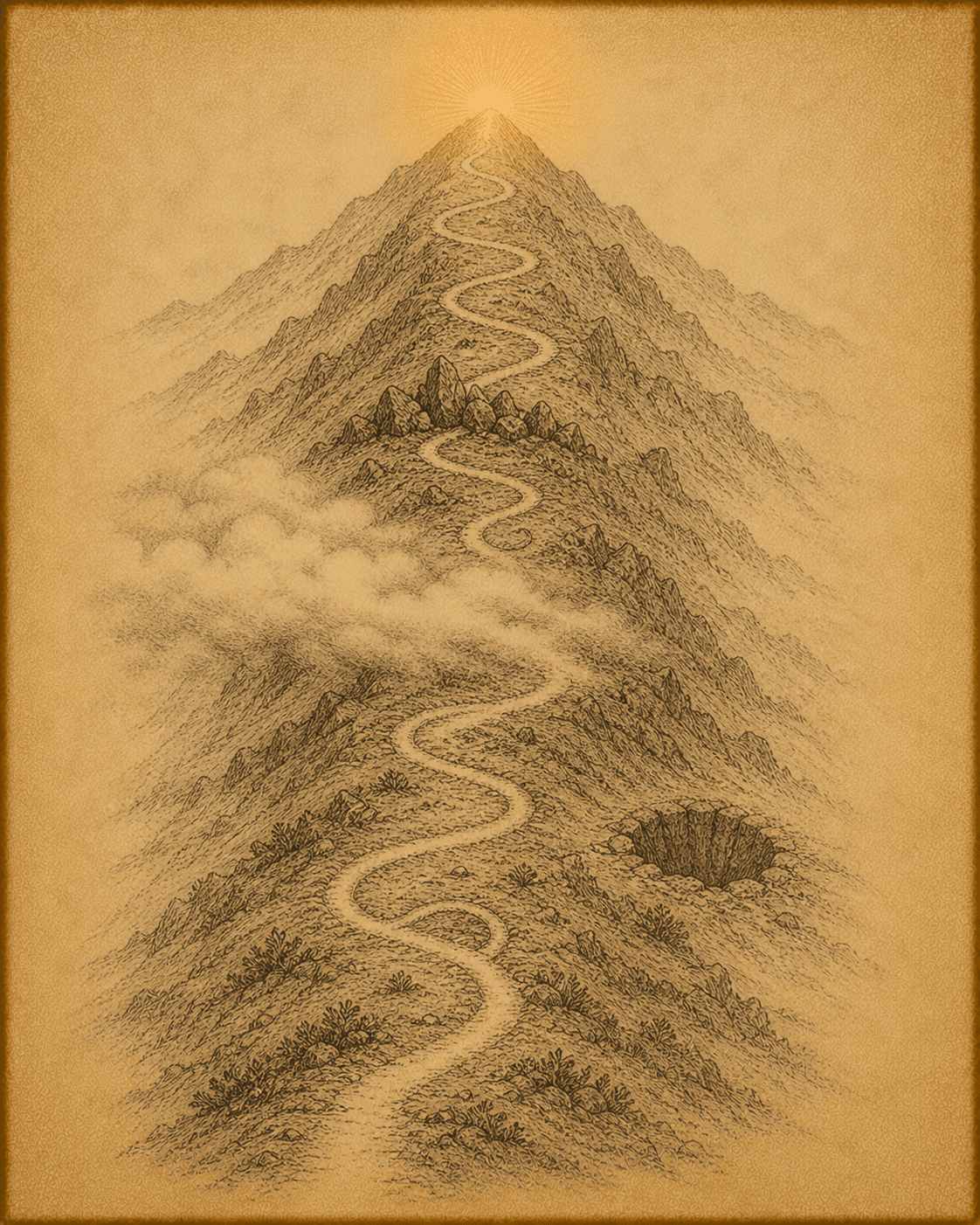
الارتقاء ليس خطاً مستقيماً صاعداً.
هذا ما تعلمته بالطريقة الصعبة. كنت أظن أنني كلما فهمت أكثر، سأتقدم باستمرار. لكن الواقع كان مختلفاً. هناك صعود، نعم. لكن هناك أيضاً هبوط. تقدم ثم تراجع. وضوح ثم ضبابية.
هناك عوامل تعترض طريق الارتقاء.
أولها ضعف الفهم. قد يعرف الإنسان أن الصدق قيمة، لكنه لا يعرف كيف يكون صادقاً في موقف معقد. قد يؤمن بأهمية العطاء، لكنه لا يعرف متى يعطي ومتى يتوقف. المعرفة النظرية شيء، وترجمتها إلى سلوك يومي شيء آخر.
ثانيها النقص النفسي الذي لم يُعالج. جروح الماضي، المخاوف المدفونة، الغضب المكبوت - كل هذا يثقل النفس ويعيقها. الإنسان قد يريد الارتقاء بصدق، لكن شيئاً في أعماقه يسحبه إلى الأسفل. شيء لم يواجهه، لم يفهمه، لم يشفَ منه.
ثالثها الفراغ. الفراغ الذي لا يُملأ بشيء ذي قيمة يبدد الوعي ويشده نحو العالم المادي. الإنسان الذي لا هدف له، لا مشروع يشغله، لا معنى يسعى إليه - هذا الإنسان تجرفه تيارات الحياة اليومية. ينسى أسئلته الكبرى. ينغمس في التفاصيل الصغيرة. ويستيقظ يوماً ليجد أنه لم يتحرك من مكانه منذ سنوات.
والانخفاض في مستوى الوعي ليس كارثة.
هذا ما احتجت وقتاً طويلاً لأفهمه. كنت أعتبر كل تراجع فشلاً. كل لحظة ضعف هزيمة. كل عودة إلى عادة قديمة دليلاً على أنني لم أتغير حقاً.
لكنني أدركت لاحقاً أن هذا الانخفاض مرحلة طبيعية في المسار. جزء من الرحلة، لا انحراف عنها.
التراجع يكشف الفرق بين السلوك الواعي والسلوك الغريزي. حين أكون في حالة ارتقاء، أتصرف بوعي. أختار أفعالي. أضبط ردود أفعالي. لكن حين أتراجع، تظهر الغرائز القديمة. العادات المدفونة. الأنماط التي ظننت أنني تجاوزتها.
هذا الظهور مفيد. يُريني ما لم يُشفَ بعد. ما يحتاج مزيداً من العمل. ما زال كامناً تحت السطح ينتظر لحظة ضعف ليخرج.
أذكر فترة بعد سنوات من البحث والتأمل.
كنت أظن أنني وصلت إلى مستوى معين من الوعي. أتعامل مع الناس بهدوء. أتقبل الظروف الصعبة. أفهم ما يحدث حولي.
ثم جاءت أزمة لم أتوقعها. ضغط شديد من عدة جهات في وقت واحد. وفجأة، انهار كل شيء.
عدت إلى أنماط قديمة. الغضب السريع. الانسحاب. الشك في كل شيء. كأن سنوات العمل على نفسي لم تكن.
في البداية، شعرت بالخزي. كيف أعود إلى هذا بعد كل ما تعلمته؟
لكن مع الوقت، فهمت. تلك الأزمة كشفت طبقة لم أكن قد وصلت إليها بعد. الهدوء الذي كنت أظنه حقيقياً كان جزئياً. كان يعمل في الظروف العادية، لكنه لم يُختبر في الظروف القصوى.
التراجع كان درساً، لا هزيمة.
كل تراجع يحمل في داخله درساً.
هذا ما أؤمن به الآن. السقوط يُرينا أين نحتاج أن نقوى. الخطأ يكشف الثغرة التي تحتاج سداً. العودة إلى العادة القديمة تُظهر أن جذورها أعمق مما ظننا.
المهم ليس ألا نسقط. المهم أن نقوم. وأن نقوم ونحن نحمل فهماً جديداً.
من يسقط ويقوم بنفس الطريقة لم يتعلم شيئاً. لكن من يسقط ويقوم وهو يفهم لماذا سقط، هذا تقدّم. حتى لو بدا تراجعاً.
التقدم الحقيقي يأتي من التعلم المتراكم.
ليس من سلسلة انتصارات متواصلة. بل من دورات متعاقبة: صعود، سقوط، فهم، قيام. كل دورة تضيف شيئاً. كل سقطة تكشف شيئاً. وكل قيام يكون أقوى من سابقه.
الإنسان الذي لم يسقط قط لم يُختبر حقاً. لا يعرف حدوده. لا يعرف نقاط ضعفه. يعيش في وهم القوة حتى تأتي اللحظة التي تكشف هشاشته.
أما الإنسان الذي سقط وقام، سقط وقام، مرات ومرات - هذا يعرف نفسه. يعرف أين يضعف. يعرف ما يحتاج حراسة. ويعرف، الأهم، أن السقوط ليس النهاية.
لذلك لا أخاف التراجع كما كنت أخافه.
أعرف أنه سيأتي. أعرف أن لحظات الضعف جزء من الرحلة. لكنني أعرف أيضاً أنها ليست نهاية الرحلة.
ما يهم هو ما أفعله بعد التراجع. هل أبقى في الأسفل؟ أم أقوم وأتعلم وأكمل؟
الجواب على هذا السؤال هو ما يحدد المسار الحقيقي.
الارتقاء والحيوات السابقة: سلسلة متصلة
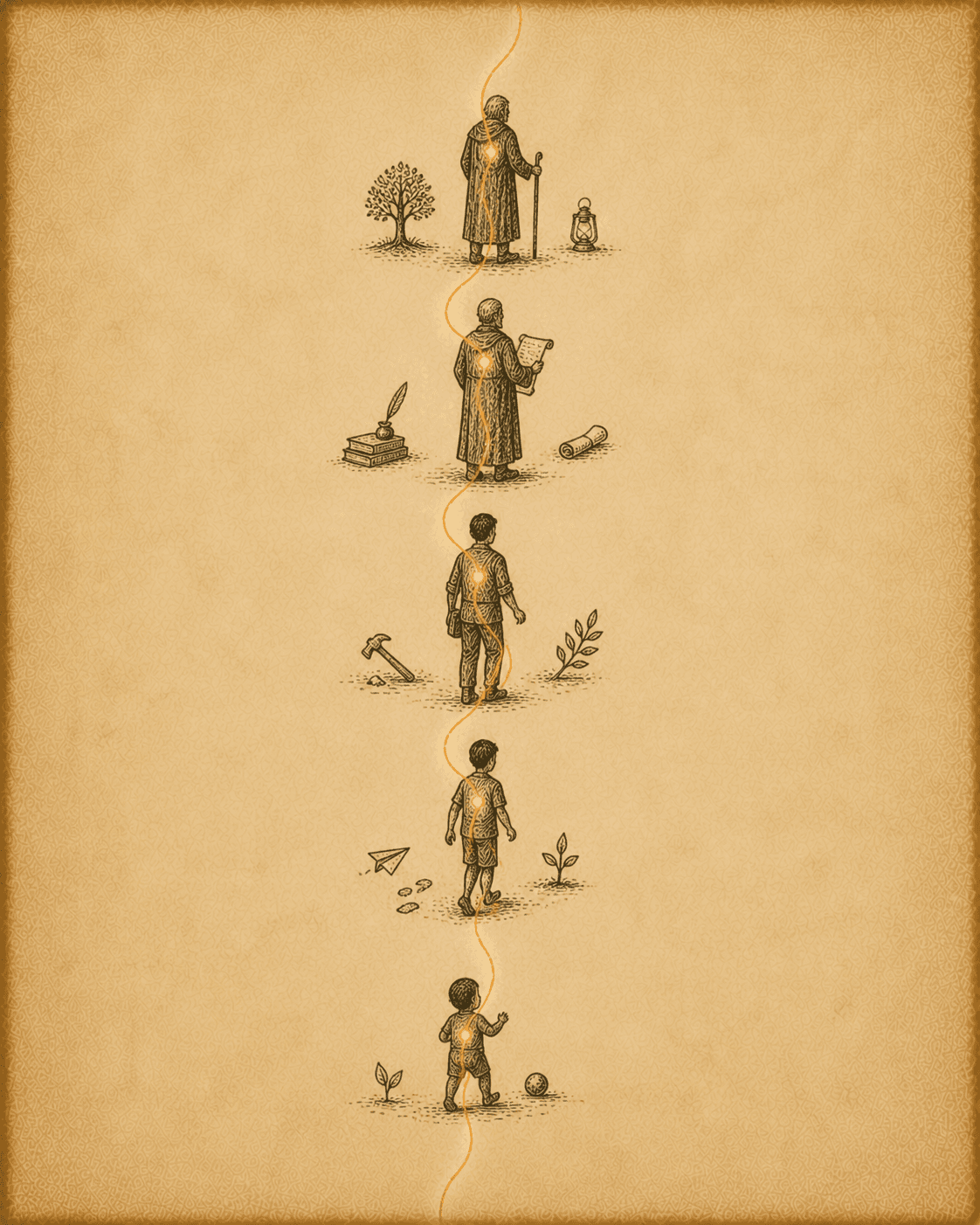
رأيتُ في مسار العوالم أن الإنسان لم يبدأ من الصفر في هذا العالم، بل جاء حاملاً حصيلة ما مرّ به قبله: صفاتٍ تشكّلت، وميولاً ترسّخت، ونتائجَ قراراتٍ لم تُمحَ عند الانتقال، وإن لم تكن ذكرياتٍ واعية.
وهذا الفهم يغيّر معنى الارتقاء تماماً. فما دام ما أصير إليه اليوم سأحمله معي إلى ما بعد، فإن الارتقاء لم يعد شأن هذه الحياة وحدها.
هذا الفهم يعطي للارتقاء مهمتين.
المهمة الأولى: تحسين المستقبل.
ما أفعله الآن يحدّد ما سأحمله معي إلى المراحل القادمة. إذا عملتُ على نفسي، إذا بنيتُ صفات أفضل، فكل هذا سيرافقني؛ سأدخل المرحلة التالية بحالة أفضل. الارتقاء هنا استثمار هناك.
وهذا ليس كلاماً مجرداً. أذكر أنني كنت أميل إلى الإمساك؛ أتردّد قبل أن أبذل وقتي أو جهدي لأحد، وكأنني أخشى أن ينقص منّي شيء. بدأتُ أختار العكس في المواقف الصغيرة: أن أُعطي حين يسهل ألّا أفعل. لم يتغيّر شيء دفعةً واحدة، لكن مع التكرار صار العطاء أقرب إلى طبعي منه إلى قرار أتكلّفه. وتلك التحوّلات الصغيرة لا تذهب سُدى؛ إنها تُبنى فيّ، وأحملها معي إلى ما بعد.
المهمة الثانية: معالجة الماضي.
ما أحمله من مراحل سابقة ليس قدراً محتوماً. الصفات التي جئتُ بها يمكن أن تتغير، والأنماط التي بدت وكأنها جزء من تكويني يمكن أن تلين.
كثيراً ما ظننتُ أن ميلاً بعينه فيّ هو "أنا"؛ هكذا وُجدتُ، ولا حيلة لي فيه. ثم اكتشفتُ، حين واجهته بصدق بدل أن أبرّره، أنه ليس صخرةً ثابتة، بل عادة قديمة يمكن أن تتراجع خطوةً بعد خطوة. الارتقاء هنا ليس بناءً للمستقبل فحسب، بل شفاءٌ من ماضٍ حملتُه دون أن أختاره.
هذا يجعل كل لحظة ثمينة.
لست مجرد إنسان يعيش سبعين أو ثمانين سنة ثم ينتهي. أنا نفس لها تاريخ طويل ومستقبل أطول. ما أفعله الآن له وزن يتجاوز هذه الحياة.
القرار الصغير الذي أتخذه اليوم قد يكون نقطة تحول. اللحظة التي أختار فيها أن أسامح بدل أن أحقد، أن أعطي بدل أن آخذ، أن أصبر بدل أن أنفجر - هذه اللحظات تبني شيئاً.
والعكس صحيح. اللحظات التي أختار فيها الطريق الأسهل، الأكثر أنانية، الأقل وعياً - هذه أيضاً تبني شيئاً. شيئاً سأحمله معي.
لكن هذا لا يعني القلق الدائم.
لا يعني أن أعيش في توتر من كل قرار صغير. بل يعني أن أعيش بوعي. أن أعرف أن لأفعالي وزناً. أن أختار بتروٍّ عندما يكون الاختيار مهماً.
والأهم، أن أعرف أن الباب مفتوح دائماً. مهما كان ماضيّ، مهما كان ما أحمله، التغيير ممكن. الارتقاء ممكن. ليس هناك نقطة أصل إليها فأقول: انتهى الأمر، لا أمل.
الأمل موجود ما دامت النفس موجودة. وما دام الطريق مستمراً.
هكذا أرى الارتقاء الآن.
ليس مجرد تحسين ذاتي في هذه الحياة. بل عمل على سلسلة متصلة تمتد من الماضي إلى المستقبل. شفاء لما كان، وبناء لما سيكون.
كل خطوة أخطوها في هذا الاتجاه لها قيمة تتجاوز اللحظة.
أثر الارتقاء: تحرّر الجسد وطمأنينة النفس
الارتقاء ليس مجرد فكرة جميلة. له أثر ملموس.
أثر يظهر في الجسد، في النفس، في طريقة التعامل مع الحياة اليومية. ليس شيئاً يحدث في عالم بعيد، بل شيئاً يُعاش هنا والآن.
كلما ازداد وعي الإنسان، خفّ ارتباطه بالمثيرات الحسية.
هذا ما لاحظته في نفسي تدريجياً. الأشياء التي كانت تسيطر عليّ بدأت تفقد قبضتها. الرغبات الملحّة التي كانت تدفعني دون تفكير صارت أهدأ. المثيرات التي كانت تشدني صارت أقل تأثيراً.
لا أقول إنني صرت بلا رغبات. هذا ليس المقصود. الرغبات موجودة، لكن العلاقة معها تغيرت. لم أعد أسيراً لها. صرت قادراً على أن أراها، أن أفهمها، أن أختار كيف أتعامل معها.
الفرق كبير بين أن تشعر بالجوع فتأكل فوراً أي شيء أمامك، وبين أن تشعر بالجوع فتختار ماذا تأكل ومتى. في الحالة الأولى، الجوع يتحكم بك. في الثانية، أنت تتعامل مع الجوع.
وتراجعت سيطرة الغرائز.
الغضب الذي كان ينفجر فوراً صار يمر بمرحلة من الوعي قبل أن يظهر. الخوف الذي كان يشلّني صار شيئاً أستطيع أن أنظر إليه وأفهمه. الحاجة للإثبات والظهور التي كانت تدفعني صارت أقل إلحاحاً.
هذا لا يعني أن الغرائز اختفت. هي جزء من التكوين البشري ولن تختفي. لكن العلاقة معها تغيرت. صارت أدوات أفهمها بدل أن تكون قوى تتحكم بي.
هذا التغيير ينعكس مباشرة على الحالة النفسية.
القلق يخف. ليس لأن المشاكل اختفت، بل لأن طريقة التعامل معها تغيرت. حين لا تكون أسير ردود الفعل التلقائية، تستطيع أن ترى المشكلة بوضوح أكبر. وحين تراها بوضوح، تستطيع أن تتعامل معها بفعالية أكبر.
التوتر يخف. الطاقة التي كانت تُستهلك في الصراعات الداخلية - بين ما أريد وما يجب، بين الغريزة والوعي - هذه الطاقة تتحرر. تصبح متاحة لأشياء أخرى. للإبداع، للعطاء، للحضور الحقيقي مع الآخرين.
والجسد أيضاً يشعر بالفرق. التوتر النفسي يظهر في الجسد: في العضلات المشدودة، في الصداع، في اضطرابات النوم والهضم. حين يخف التوتر النفسي، يرتاح الجسد.
أذكر فترة كنت أعاني فيها من أرق مزمن.
كنت أستلقي في السرير وذهني لا يتوقف. أفكار تدور، قلق على أشياء لم تحدث بعد، ندم على أشياء حدثت. الجسد متعب لكن العقل يرفض أن يهدأ.
مع الوقت، ومع العمل على الوعي، بدأ الأرق يخف. لم يكن الأمر سحراً. كان نتيجة طبيعية لتغير داخلي. حين صرت أقل تعلقاً بالأفكار، حين صرت أستطيع أن أتركها تمر دون أن تجرني معها، صار النوم أسهل.
الجسد والنفس ليسا منفصلين. ما يحدث في أحدهما يؤثر في الآخر.
والأهم من كل هذا: القدرة على توجيه الأفعال.
حين تتحرر من سيطرة الغرائز والمثيرات، تصبح قادراً على أن تختار. ليس مجرد ردة فعل، بل فعل واعٍ. تستطيع أن توجه طاقتك نحو ما يحقق الخير، لا ما تدفعك إليه اللحظة.
هذا هو الأثر الحقيقي للارتقاء: الحرية.
ليست حرية من القيود الخارجية فقط، بل حرية من القيود الداخلية. من الأنماط التي تتحكم بنا دون أن ندري. من العادات التي تستهلك طاقتنا. من الغرائز التي تقودنا بعيداً عن ما نريد حقاً.
هذا ما يعنيه الارتقاء في الحياة اليومية.
ليس حالة صوفية بعيدة عن الواقع. بل طريقة مختلفة للعيش. أكثر حرية، أكثر وعياً، أكثر انسجاماً مع ما نريد أن نكون عليه.
والطريق إليه مفتوح. خطوة بخطوة، يوماً بيوم. كل لحظة وعي تضيف شيئاً. كل اختيار واعٍ يبني شيئاً.
هذا هو أثر الارتقاء: أن تصبح، شيئاً فشيئاً، أكثر حرية في أن تكون أنت.
The Soul: The Essence Extending Across Worlds
What makes me "I"?
A simple question on its surface, but it opens a door to depths without end.
The body changes. Cells die and are replaced. The child I was thirty years ago shares not a single cell with my current body. Yet I feel I am the same person. There is some continuity, a thread connecting all those stages.
Thoughts change too. What I believed at twenty differs from what I believe now. My opinions evolved, my convictions shifted, my understanding of the world changed. Yet I feel there is a fixed "I" behind all these changes.
This fixed "I" is what I call the soul.
The soul is the essence of the conscious human.
It is not the body, though it inhabits it. It is not thoughts, though it produces them. It is not feelings, though it experiences them. The soul is that thing standing behind all of this. The witness that watches. The perceiver that perceives.
When I say "I feel sad," there is something that feels and there is the sadness. Sadness comes and goes, but the thing that feels remains. This thing is the soul.
When I say "I am thinking about a problem," there is something that thinks and there is the problem. The problem may be solved or change, but the thing that thinks remains. This too is the soul.
The soul possesses qualities that define its identity.
Not external qualities like height and color, but essential qualities. Deep inclinations, innate dispositions, ways of interacting with the world. There are those who are inclined by nature toward calm, and those inclined toward movement. Those inclined toward giving, and those inclined toward taking.
These qualities are not absolutely fixed. They can change, grow, decline. But they constitute at any moment what we might call the "identity" of the soul. What makes it itself and not another.
And the soul is not bound to this material world.
This is what I understood from my contemplation of the chain of worlds. If a person passes through successive worlds, then what transitions is not the body — for the body changes with the change of world — but something else. Something that carries continuity. Something that remains "itself" despite the change of everything around it.
This thing is the soul.
The soul extends across worlds. It enters a world, experiences a certain experience in it, acquires qualities or loses them, then transitions to another world. The body changes, circumstances change, governing laws change. But the soul remains, carrying with it the sum of what it went through.
Through what it experiences in each world, the soul is shaped.
Experiences leave an effect. Decisions build qualities. Repeated actions solidify as inclinations. The soul that exits a world is not the same soul that entered it. Something in it has changed.
And the state it reaches is what it carries with it into what comes after, as I saw in the path through worlds.
This understanding changed how I view myself.
I no longer see myself as a being confined to this body, in this time, in this place. I began to see myself as a broader entity, with a history extending before this life, and a future extending after it.
What I do now is not just a passing action. It shapes my soul. Builds something in it or destroys something. And what I build or destroy I will carry with me.
The soul is my true capital. The only thing that remains with me when everything else changes.
The Soul's Ascent: Approaching Truth
Complete truth is with God.
This is what I understood. God is the origin, and from Him everything emanated. Therefore, complete knowledge, pure vision, understanding with no deficiency — all of this is with Him.
As for us, we see part of the truth. A part proportionate to our position in the chain of worlds, and to the level of our consciousness.
The further a world is from the origin, the more complex it becomes.
This is what I noticed in my journey through worlds. The first world — the closest to God — is the simplest and purest. Then worlds succeed, and each world adds a layer of complexity. Until we reach this world of ours, filled with details and branches and veils.
This complexity is not evil in itself. But it makes seeing truth harder. Like someone looking at the sun through layers of clouds. The sun exists, but how many layers are between them and it?
Ascent is approaching truth.
When the soul ascends, it does not necessarily move to another place. Rather, its consciousness is purified. It begins to see what was veiled. Understands what was obscure. Distinguishes what was mixed.
The human who sees only the sensory world lives in one layer of reality. They think what they see is all that exists. Food, drink, money, pleasures — this is their world. And their instinctive drives control them, because they do not see what is beyond them.
But when their consciousness begins to ascend, other layers are revealed to them. They begin to see meanings behind things. Begin to perceive the laws that govern existence. Begin to feel a deeper presence in life.
Consciousness has levels.
At its lowest levels, the human is prisoner to their instincts. They act with automatic reactions. They want, so they take. They get angry, so they attack. They fear, so they flee. They do not stop to ask: Is this right? Is this befitting of me? Does this bring me closer to my purpose?
At a higher level, the human begins to distinguish. They see that there is a difference between what they want and what they should do. They begin to control themselves, to delay gratification, to think before acting. This is the level of morals and values.
At a higher level, they begin to see the bigger picture. They understand that their actions have consequences beyond the moment. They perceive they are part of a wider system. They begin to ask about meaning and purpose.
And at higher levels, they approach seeing truth as it is. Not completely — for this is for God alone — but to a purer and clearer degree.
The more consciousness increases, the more many things increase with it.
Clarity of vision increases. What seemed complex becomes simpler. What seemed contradictory appears harmonious. The conscious human sees the thread that connects things, while others see chaos.
Precision of action increases. Whoever sees clearly acts precisely. Does not waste their energy in wrong directions. Does not flounder between choices. They know what they want and know how to reach it.
The ability to deal with pain increases. The conscious human does not suffer less than others. But they understand their pain. They know where it came from and where it is leading. And this understanding makes the pain bearable, even beneficial.
Ascent is not an escape from the world.
Some people think ascent means isolation, abandoning life, sitting in a cave to meditate. But this is an incomplete understanding.
True ascent happens in the heart of life. In dealing with people, in facing challenges, in making difficult decisions. The world is the school in which we ascend, not the prison we escape from.
Whoever truly ascends becomes more present in the world, not less. But their presence is different. A conscious, calm, effective presence. Not the presence of one lost, swept by the waves.
This is the meaning of the soul's ascent.
Not a rise to a distant place. But a clarity that reveals what was veiled. An approach to the truth that was always there, but we could not see.
And the way is open to every soul. No one is deprived of the possibility of ascent. The only difference is in who chooses to walk.
Why Ascent? Its Importance in the Journey of Life
Why must I ascend?
A question that may seem obvious, but it deserves pause. Why not simply live? Eat, drink, enjoy what is available, then die? What makes ascent a necessity and not a luxury?
The answer begins with the nature of the world itself.
The world, as I understood it, is founded on God's attributes. The laws that govern it are not random, but an expression of His wisdom. The system that runs it is not chaos, but a reflection of His perfection. Everything in this world moves within a path that has a direction, has a purpose.
The human is part of this world. Therefore, they too are part of this path.
But the human possesses something other creatures do not: consciousness and choice. They can harmonize with the movement of the world, or walk against it. They can align with the laws that govern existence, or collide with them.
When a person harmonizes with the movement of the world, their life becomes easier.
Not in the sense that it is free of difficulties, but in the sense that difficulties become meaningful. They understand why they are going through what they are going through. They see how experiences are leading them toward something. They do not feel like a victim of blind forces, but a traveler on a road with a destination.
And when they walk against the movement of the world, their life becomes harder.
They collide with the laws, like someone swimming against the current: they drain their energy, tire themselves, and do not arrive. The laws do not change to suit them; they are the one who must understand them and align with them.
Ascent, then, is not a spiritual luxury. It is a practical necessity.
Whoever ascends sees the laws more clearly. Understands how the world works. Knows what leads them toward good and what distances them from it. And with this understanding, they can direct their actions with greater precision.
The result? A life with less waste of energy. Less collision with obstacles. Less stumbling in the dark.
I remember a period when I decided to learn something that seemed beyond my capacity.
It was a complex field that demanded long hours of concentration every day. I would sit before the pages until the letters blurred before my eyes, and reread a single page many times because I had not grasped it. I asked myself often: Why do I tire myself? Why not leave it and rest?
I could have surrendered; no one was forcing me to continue. But something inside me was saying: This effort is building in you something you cannot see now.
So I continued. And after a time, I realized that the most important thing was not what I learned, but what I became: a patience that had not been in me before, and a capacity to face the difficult without fleeing from it.
That temporary suffering was the price for fruits far more lasting than I had expected.
This is what ascent does.
It gives you the ability to see beyond the moment. To understand that present pain may be a gateway to greater good. To distinguish between what seems comfortable and what is truly beneficial.
The person who has not ascended sees only the present moment. They want comfort now. They want pleasure now. They flee from any pain immediately. And by this, they deprive themselves of growth that comes only through challenge.
The person who has ascended sees further. They know that some pains are investments. They accept difficulty when they see it leading to something better. They do not flee from every pain, but distinguish between pain that should be avoided and pain that should be crossed.
The wise person is one who accepts the pain of the moment to reach a deeper tranquility.
This is a simple equation but it needs courage. Needs trust that there is a system, that pain is not absurd, that whoever plants will harvest.
Ascent builds this trust. The more you ascend, the more clearly you see how things work. And the more you see, the easier it becomes to trust. And the more you trust, the easier it becomes to be patient with temporary pain.
A cycle that feeds itself. Ascent leads to understanding, understanding leads to trust, trust leads to patience, and patience leads to more ascent.
This is why ascent is important.
Not because it makes you "better" than others. But because it makes your life more harmonious with the nature of existence. Makes you swim with the current, not against it. Makes suffering meaningful and joy deeper.
And because the soul carries with it what it has acquired, every ascent here is credit there. What you build in this life is not lost. It accompanies you to the coming stages.
This is the answer to the question: Why do I ascend?
Because the alternative is to live against the nature of existence. And this, in the end, is a path to more pain, not to comfort.
Obstacles to Ascent and Its Natural Stages
Ascent is not a straight line going upward.
This is what I learned the hard way. I used to think that the more I understood, the more I would continuously advance. But reality was different. There is ascent, yes. But there is also descent. Progress then retreat. Clarity then fog.
There are factors that obstruct the path of ascent.
The first is weakness of understanding. A person may know that honesty is a value, but not know how to be honest in a complex situation. May believe in the importance of giving, but not know when to give and when to stop. Theoretical knowledge is one thing, and translating it into daily behavior is another.
The second is psychological deficiency that has not been addressed. Wounds of the past, buried fears, suppressed anger — all of this weighs on the soul and obstructs it. A person may sincerely want to ascend, but something in their depths pulls them down. Something they have not faced, have not understood, have not healed from.
The third is emptiness. Emptiness that is not filled with something of value dissipates consciousness and pulls it toward the material world. The person who has no goal, no project occupying them, no meaning they are pursuing — this person is swept by the currents of daily life. They forget their great questions. They immerse themselves in small details. And they wake up one day to find they have not moved from their place for years.
And decline in the level of consciousness is not a catastrophe.
This is what I needed a long time to understand. I used to consider every retreat a failure. Every moment of weakness a defeat. Every return to an old habit proof that I had not truly changed.
But I realized later that this decline is a natural stage in the path. Part of the journey, not a deviation from it.
Retreat reveals the difference between conscious behavior and instinctive behavior. When I am in a state of ascent, I act with awareness. I choose my actions. I control my reactions. But when I retreat, old instincts appear. Buried habits. Patterns I thought I had transcended.
This appearance is useful. It shows me what has not yet healed. What needs more work. What still lurks beneath the surface waiting for a moment of weakness to emerge.
I remember a period after years of searching and contemplation.
I thought I had reached a certain level of consciousness. I dealt with people calmly. I accepted difficult circumstances. I understood what was happening around me.
Then came a crisis I did not expect. Intense pressure from several directions at once. And suddenly, everything collapsed.
I returned to old patterns. Quick anger. Withdrawal. Doubt in everything. As if years of working on myself had never been.
At first, I felt shame. How do I return to this after all I have learned?
But with time, I understood. That crisis revealed a layer I had not yet reached. The calm I thought was real was partial. It worked in ordinary circumstances, but it had not been tested in extreme circumstances.
The retreat was a lesson, not a defeat.
Every retreat carries within it a lesson.
This is what I believe now. Falling shows us where we need to strengthen. Error reveals the gap that needs closing. Return to the old habit shows that its roots are deeper than we thought.
What matters is not that we do not fall. What matters is that we rise. And that we rise carrying new understanding.
Whoever falls and rises the same way has learned nothing. But whoever falls and rises understanding why they fell, this is progress. Even if it seems like retreat.
Real progress comes from accumulated learning.
Not from a series of continuous victories. But from successive cycles: ascent, fall, understanding, rising. Each cycle adds something. Each fall reveals something. And each rising is stronger than the one before.
The person who has never fallen has not truly been tested. They do not know their limits. They do not know their points of weakness. They live in the illusion of strength until the moment comes that reveals their fragility.
But the person who has fallen and risen, fallen and risen, again and again — this person knows themselves. Knows where they weaken. Knows what needs guarding. And knows, most importantly, that falling is not the end.
Therefore I do not fear retreat as I used to fear it.
I know it will come. I know moments of weakness are part of the journey. But I also know they are not the end of the journey.
What matters is what I do after the retreat. Do I stay at the bottom? Or do I rise and learn and continue?
The answer to this question is what determines the real path.
Ascent and Previous Lives: A Connected Chain
I saw in the path through worlds that a person did not begin from zero in this world, but came carrying the sum of what they passed through before: qualities that were shaped, inclinations that took root, and results of decisions that were not erased in the transition, even if not as conscious memories.
And this understanding completely changes the meaning of ascent. For as long as what I become today I will carry with me into what comes after, ascent is no longer the affair of this life alone.
This understanding gives ascent two tasks.
The first task: improving the future.
What I do now determines what I will carry with me to the coming stages. If I work on myself, if I build better qualities, all of this will accompany me; I will enter the next stage in a better state. Ascent here is investment there.
And this is not abstract talk. I remember that I used to tend toward holding back — hesitating before I gave my time or effort to anyone, as if I feared something would be taken from me. I began to choose the opposite in small situations: to give when it was easy not to. Nothing changed all at once, but with repetition, giving became closer to my nature than to an effort I forced. Those small shifts are not wasted; they are built into me, and I carry them with me into what comes after.
The second task: addressing the past.
What I carry from previous stages is not an inescapable fate. The qualities I came with can change, and the patterns that seemed part of my very makeup can soften.
I often thought that some inclination in me was simply "who I am" — that this was how I was made, with no recourse. Then I discovered, when I faced it honestly instead of excusing it, that it was not a fixed rock but an old habit that could recede step by step. Ascent here is not only building for the future, but a healing from a past I carried without having chosen it.
This makes every moment precious.
I am not merely a human living seventy or eighty years then ending. I am a soul with a long history and a longer future. What I do now has weight that transcends this life.
The small decision I make today may be a turning point. The moment I choose to forgive instead of hold a grudge, to give instead of take, to be patient instead of explode — these moments build something.
And the opposite is true. The moments I choose the easier path, the more selfish, the less conscious — these also build something. Something I will carry with me.
But this does not mean constant worry.
It does not mean living in tension over every small decision. Rather, it means living with awareness. Knowing that my actions have weight. Choosing deliberately when the choice is important.
And most importantly, knowing the door is always open. Whatever my past, whatever I carry, change is possible. Ascent is possible. There is no point I reach where I say: It is over, there is no hope.
Hope exists as long as the soul exists. And as long as the path continues.
This is how I see ascent now.
Not merely self-improvement in this life. But work on a connected chain extending from the past to the future. Healing of what was, and building of what will be.
Every step I take in this direction has value that transcends the moment.
The Effect of Ascent: Liberation of the Body and Tranquility of the Soul
Ascent is not just a beautiful idea. It has a tangible effect.
An effect that appears in the body, in the soul, in the way of dealing with daily life. Not something happening in a distant world, but something lived here and now.
The more a person's consciousness increases, the lighter their attachment to sensory stimuli becomes.
This is what I noticed in myself gradually. Things that used to control me began to lose their grip. Urgent desires that used to drive me without thinking became calmer. Stimuli that used to pull me became less influential.
I am not saying I became without desires. That is not the point. Desires exist, but the relationship with them changed. I am no longer their prisoner. I have become able to see them, understand them, choose how to deal with them.
The difference is great between feeling hunger and immediately eating anything in front of you, and feeling hunger and choosing what to eat and when. In the first case, hunger controls you. In the second, you deal with hunger.
And the control of instincts receded.
The anger that used to explode immediately now passes through a stage of awareness before appearing. The fear that used to paralyze me became something I can look at and understand. The need for proof and appearance that used to drive me became less urgent.
This does not mean instincts disappeared. They are part of human constitution and will not disappear. But the relationship with them changed. They became tools I understand rather than forces that control me.
This change reflects directly on psychological state.
Anxiety lessens. Not because problems disappeared, but because the way of dealing with them changed. When you are not prisoner to automatic reactions, you can see the problem more clearly. And when you see it clearly, you can deal with it more effectively.
Tension lessens. The energy that used to be consumed in internal conflicts — between what I want and what I should, between instinct and consciousness — this energy is freed. It becomes available for other things. For creativity, for giving, for real presence with others.
And the body also feels the difference. Psychological tension appears in the body: in tense muscles, in headaches, in sleep and digestive disturbances. When psychological tension lessens, the body relaxes.
I remember a period when I suffered from chronic insomnia.
I would lie in bed and my mind would not stop. Thoughts spinning, worry about things that had not yet happened, regret about things that had happened. The body was tired but the mind refused to calm.
With time, and with working on consciousness, insomnia began to lessen. It was not magic. It was a natural result of inner change. When I became less attached to thoughts, when I became able to let them pass without dragging me with them, sleep became easier.
Body and soul are not separate. What happens in one affects the other.
And more important than all this: the ability to direct actions.
When you are freed from the control of instincts and stimuli, you become able to choose. Not merely a reaction, but a conscious action. You can direct your energy toward what achieves good, not what the moment drives you toward.
This is the real effect of ascent: freedom.
Not only freedom from external constraints, but freedom from internal constraints. From patterns that control us without our knowing. From habits that consume our energy. From instincts that lead us away from what we truly want.
This is what ascent means in daily life.
Not a mystical state far from reality. But a different way of living. More freedom, more consciousness, more harmony with what we want to be.
And the path to it is open. Step by step, day by day. Every moment of consciousness adds something. Every conscious choice builds something.
This is the effect of ascent: to become, little by little, freer to be yourself.