الرحلة العكسية - من الله إلى العالمThe Reverse Journey — From God to the World
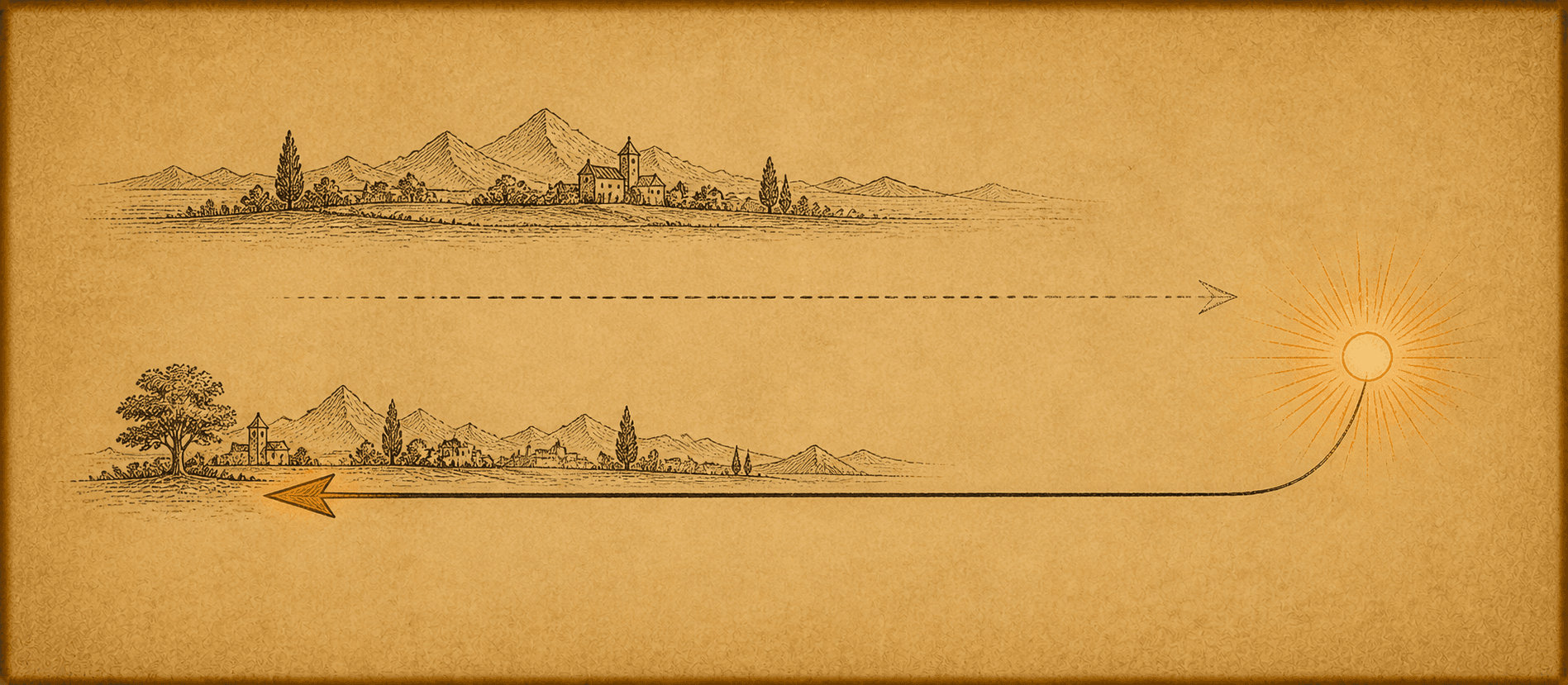
6.1 انعكاس المسار: من معرفة الله إلى فهم العالم
وصلتُ إلى محطة مهمة في رحلتي.
بدأتُ من العالم. نظرتُ إلى الكون، إلى الذرات والكواركات، إلى سلسلة العوالم المتراصّة. تتبعتُ هذه السلسلة إلى الوراء، عالماً بعد عالم، حتى وصلتُ إلى الأصل الأول. ثم اكتشفتُ أن هذا الأصل ليس مادة ولا طاقة، بل معلومات شاملة قائمة بذاتها. ثم أدركتُ أن هذه المعلومات ليست جامدة، بل واعية. ثم فهمتُ أن هذا الوعي كامل، لا نقص فيه ولا حدود. وأخيراً، وجدتُ أن ما توصلتُ إليه بالعقل هو نفسه ما تحدثت عنه الأديان: الله.
هذا ما فعلتُه حتى الآن. صعدتُ من العالم إلى الله.
والآن، حان الوقت للنزول. للعودة من الله إلى العالم. لكن هذه المرة بعيون مختلفة.
في المرحلة الأولى من رحلتي، كنتُ أنظر إلى العالم وأسأل: من أين جاء؟ كنتُ أبحث عن السبب، عن المصدر، عن الأصل. كان العالم هو المعطى، وكان الله هو المجهول الذي أبحث عنه.
الآن انعكس الأمر.
أصبح الله هو المعطى - عرفتُه، فهمتُ شيئاً عن طبيعته، أدركتُ كماله. والعالم أصبح هو المجهول الذي أريد أن أفهمه. ليس من حيث وجوده، فقد عرفتُ أنه صادر عن الله. بل من حيث طبيعته وآلياته ومعناه.
كيف يصنع الله العالم؟ كيف تتحول المعلومة المجردة إلى مادة نراها ونلمسها؟ ما العلاقة بين ما يحدث في حياتنا وبين حكمة الله الكاملة؟
هذه أسئلة مختلفة عن الأسئلة التي بدأتُ بها. وتحتاج إلى منهج مختلف.
في المرحلة الأولى، استخدمتُ العلم كثيراً. الفيزياء، الكواركات، الذرات، نظريات نشوء الكون. العلم ساعدني على فهم بنية العالم المادي، وقادني إلى حدود المعرفة العلمية، حيث يتوقف العلم ويبدأ التأمل العقلي.
لكن في المرحلة التالية، لن يساعدني العلم كثيراً.
العلم يدرس المادة. يرصد، يقيس، يجرّب، يستنتج قوانين. لكن ما أريد فهمه الآن يتجاوز المادة. أريد أن أفهم كيف توجد المادة أصلاً. أريد أن أفهم العلاقة بين الخالق والمخلوق. أريد أن أفهم معنى ما يحدث لنا، لا مجرد آلياته الفيزيائية.
هذه أسئلة لا يستطيع العلم التجريبي الإجابة عنها. ليس لأن العلم قاصر أو فاشل، بل لأنها خارج نطاقه. العلم أداة ممتازة لفهم كيف تعمل الأشياء. لكنه ليس الأداة المناسبة لفهم لماذا توجد الأشياء أو ما معناها.
المنهج الذي سأستخدمه في هذه المرحلة مختلف.
سأنطلق مما عرفتُه عن الله. عرفتُ أنه كامل، حكيم، لا يصدر عنه إلا الخير. سأستخدم هذه المعرفة كمرجع. سأنظر إلى العالم، إلى ظواهره وأحداثه، وأحاول أن أفهمها في ضوء ما عرفتُه عن الله.
هذا لا يعني أنني سأخترع إجابات من خيالي. بل يعني أنني سأستخدم العقل، مسترشداً بما عرفتُه، لأصل إلى فهم أعمق.
مثلاً: كيف يخلق الله العالم المادي وهو ليس مادياً؟ سأبحث في العالم عن أقرب شيء يشبه هذه العملية، ثم أتأمل فيه، ثم أحاول أن أفهم الصورة الكاملة لهذه القدرة عند الله.
مثلاً: لماذا يولد الناس في ظروف مختلفة؟ سأنطلق من معرفتي بأن الله عادل لا يظلم، ثم أبحث عن تفسير يتسق مع هذه الحقيقة.
هذا هو المنهج: الانطلاق من الله للوصول إلى فهم العالم، بدلاً من الانطلاق من العالم للوصول إلى الله.
السؤال الأول الذي سأبدأ به هو الأكثر أساسية:
كيف يصنع الله العالم؟
نحن نعيش في عالم مادي. نرى أشياء، نلمسها، نسمعها. لكنني عرفتُ أن الله ليس مادياً. هو معلومات، وعي، حقيقة مجردة. فكيف يمكن لشيء غير مادي أن يُنتج شيئاً مادياً؟
هذا ما كان عليّ أن أفهمه أولاً.
المنهج الجديد: البحث من خلال الله
كان عليّ أن أحدد منهجاً واضحاً قبل أن أبدأ.
في المرحلة السابقة، كان المنهج بسيطاً نسبياً: أنظر إلى العالم، أسأل أسئلة، أتتبع الإجابات إلى حيث تقودني. كان العالم أمامي، وكنتُ أبحث فيه عن دلائل تقودني إلى ما وراءه.
لكن الآن الأمر مختلف. أريد أن أفهم أشياء لا يستطيع العلم التجريبي الوصول إليها. أريد أن أفهم كيف يخلق الله العالم، وما معنى ما يحدث لنا، وكيف تعمل العدالة الإلهية. هذه أسئلة لا تُجاب بالتجربة والقياس. تحتاج إلى منهج مختلف.
المنهج الذي وجدتُه يعتمد على فكرة بسيطة: معرفة الله تأتي من مراقبة العالم.
الله لا نراه مباشرة. لكننا نرى آثاره في كل مكان. العالم كله تعبير عن علمه وحكمته. كل شيء فيه - من أصغر ذرة إلى أكبر مجرة، من أبسط كائن إلى أعقد نظام - كل هذا صادر عنه ويحمل شيئاً من صفاته.
إذاً، حين أريد أن أفهم شيئاً عن الله أو عن طريقة عمله، أبدأ بمراقبة العالم. أبحث فيه عن مبدأ أو ظاهرة تتعلق بما أريد فهمه.
لكن المراقبة وحدها لا تكفي.
العالم فيه خير وفيه شر. فيه كمال وفيه نقص. ليس كل ما أراه في العالم يعكس الله بشكل مباشر. بعضه يعكس حدود المخلوقات ونقصها.
لذلك، الخطوة الثانية هي: أن أقيس ما وجدتُه على مفهوم الخير والشر.
إذا كان المبدأ الذي استخرجتُه من العالم شراً - أي نقصاً أو غياباً للخير - فهو ليس من الله مباشرة، بل من حدود المخلوقات. لا آخذ به كدليل على طبيعة الله.
أما إذا كان خيراً - أي قيمة إيجابية حقيقية تنفع العالم - فهو انعكاس لشيء في الله. يمكنني أن أستخدمه للفهم.
لكن حتى الخير الذي أراه في العالم ليس كاملاً.
الرحمة موجودة في البشر، لكنها ناقصة. الحكمة موجودة، لكنها محدودة. العدل موجود، لكنه يخطئ أحياناً. كل قيمة إيجابية في العالم موجودة بشكل جزئي، لأن المخلوقات محدودة.
لذلك، الخطوة الثالثة هي: أن أحيل المبدأ إلى صورته الكاملة.
أسأل نفسي: كيف ستكون هذه القيمة لو تحررت من كل الحدود؟ لو لم يكن هناك جهل ولا ضعف ولا قصور؟
الجواب يعطيني تصوراً عن الصورة الكاملة لهذه القيمة عند الله.
مثال يوضح الفكرة:
أريد أن أفهم رحمة الله.
الخطوة الأولى: أبحث في العالم عن شيء يشبه الرحمة. أجد رحمة الأم بطفلها. حين يبكي الطفل، تشعر الأم بألمه وتسعى لتخفيفه. تسهر الليالي، تتحمل التعب، تضحي براحتها. هذا أوضح مثال على الرحمة في عالمنا.
الخطوة الثانية: هل رحمة الأم خير أم شر؟ هي قيمة إيجابية بلا شك. موجودة في الطبيعة البشرية بالخلقة، تحفظ النوع، تبني الروابط، تخفف الألم. إذاً هي خير.
الخطوة الثالثة: ما حدود رحمة الأم؟ هي محدودة بمن تعرفهم وتحبهم. تتأثر بمزاجها وظروفها. قد تضعف مع الوقت أو الإرهاق. قد تعجز عن المساعدة رغم رغبتها. وأحياناً قد تخطئ في فهم ما يحتاجه من ترحمه.
الخطوة الرابعة: كيف ستكون الرحمة لو تحررت من هذه الحدود؟ لو كانت تشمل كل المخلوقات لا بعضها. لو كانت لا تتأثر بمزاج أو إرهاق. لو كانت مصحوبة بقدرة كاملة على المساعدة. لو كانت مقرونة بحكمة تعرف ما يحتاجه كل كائن فعلاً.
الجواب يعطيني تصوراً عن رحمة الله. ليست رحمة بالمعنى البشري المحدود، بل رحمة كاملة تشمل كل شيء، ولا تعجز عن شيء، وتعرف ما يصلح لكل مخلوق.
هذا هو المنهج الذي سأستخدمه:
أولاً، أراقب العالم وأستخرج منه مبدأ يتعلق بما أريد فهمه.
ثانياً، أقيس هذا المبدأ على الخير والشر. إن كان شراً أتركه، وإن كان خيراً آخذ به.
ثالثاً، أحدد نقاط الضعف والحدود في هذا المبدأ كما يظهر في العالم.
رابعاً، أتخيّل صورته الكاملة بعد إزالة هذه الحدود.
خامساً، أستخدم النتيجة لفهم ما أبحث عنه.
هذا المنهج ليس علمياً بالمعنى التجريبي. لا أستطيع أن أُثبت نتائجه في مختبر. لكنه منهج عقلي متماسك، ينطلق من مقدمات ثبتت لي - وجود الله، كماله، أن العالم تعبير عن علمه - ويصل إلى استنتاجات منطقية.
هذا أفضل ما يمكن للعقل البشري أن يفعله حين يتعامل مع أسئلة تتجاوز المادة.
والآن، حان الوقت لتطبيق هذا المنهج على السؤال الأول: كيف يصنع الله العالم؟
الخيال الإلهي: كيف يصنع الله العالم؟
المسألة الأساسية
السؤال الذي واجهني كان صعباً.
الله ليس مادياً. هذا ما عرفتُه. هو معلومات، وعي، حقيقة مجردة لا هيئة لها ولا طاقة بالمعنى الفيزيائي. لكن العالم الذي نعيش فيه مادي. نراه، نلمسه، نسمعه. له ثقل وحجم ولون وصوت.
كيف يصنع شيء غير مادي شيئاً مادياً؟
هذا السؤال حيّرني طويلاً. بدا لي أن هناك فجوة لا يمكن عبورها بين طبيعة الله وطبيعة العالم. كيف تتحول الفكرة المجردة إلى شيء ملموس؟
ثم تذكّرتُ المنهج الذي وضعتُه: أبحث في العالم عن شيء يشبه ما أريد فهمه.
البحث في العالم: التخيّل
بدأتُ أبحث.
ما الشيء في عالمنا الذي يحوّل الأفكار المجردة إلى صور؟
فكّرتُ في الفن: الرسام يحوّل فكرة إلى لوحة. لكنه يستخدم مواد خارجية - ألوان وفرشاة وقماش. هذا لا يشبه ما أبحث عنه.
فكّرتُ في الكتابة: الكاتب يحوّل أفكاره إلى كلمات. لكن الكلمات تحتاج إلى وسيط - ورق أو شاشة. هذا أيضاً لا يشبه ما أبحث عنه.
ثم خطرت لي فكرة.
أغمضتُ عينيّ وتخيّلتُ وجه أمي. رأيتُه بوضوح في ذهني. ملامحها، ابتسامتها، التجاعيد الصغيرة حول عينيها. صورة كاملة، ظهرت من لا شيء، دون أن أستخدم أي مادة خارجية.
هذا هو. التخيّل.
التخيّل قدرة عجيبة. نستطيع أن ننشئ في أذهاننا صوراً كاملة، مشاهد متحركة، عوالم لم تكن موجودة. نفعل ذلك بإرادتنا حين نتخيّل شيئاً، ويحدث لا إرادياً في الأحلام حين ننام.
في التخيّل، تتحول الفكرة المجردة إلى صورة. بلا مادة خارجية، بلا أدوات، بلا وسيط.
طبيعة الخيال البشري
توقفتُ لأفحص هذه القدرة.
التخيّل ليس اختراعاً بشرياً. لم نصنعه نحن. هو قدرة موجودة فينا بالخلقة، جزء من تكويننا الأصلي. الطفل الصغير يتخيّل قبل أن يتعلم أي شيء. الحيوانات تحلم. هذه قدرة أصيلة في الكائنات الواعية.
وبما أنها قدرة أوجدها الله فينا، فهي خير بالضرورة. لا حاجة لأن أسأل: هل التخيّل خير أم شر؟ هو خير، لأنه صادر عن الله مباشرة، جزء من تصميم الكائن الواعي.
إذاً، يمكنني أن أستخدم التخيّل كنموذج لفهم كيف يصنع الله العالم.
لكن التخيّل البشري ناقص. وأنا أبحث عن الصورة الكاملة.
نقاط ضعف الخيال البشري
بدأتُ أحصي نقاط ضعف التخيّل عندنا.
أولاً: يحتاج جهداً.
جرّبتُ أن أتخيّل مشهداً معقداً - غابة كاملة بأشجارها وحيواناتها وأصواتها وروائحها. وجدتُ أن الأمر يتطلب تركيزاً كبيراً. ذهني يتعب بسرعة. لا أستطيع الحفاظ على الصورة طويلاً.
ثانياً: يتشتت بسهولة.
بينما كنتُ أتخيّل الغابة، سمعتُ صوتاً في الخارج. فوراً تلاشت الصورة. أي مؤثر خارجي - صوت، حركة، حتى فكرة عابرة - يكفي لتدمير ما بنيتُه في خيالي.
ثالثاً: لا يستطيع التركيز على أكثر من شيء واحد.
حاولتُ أن أتخيّل شيئين مختلفين في نفس اللحظة: وجه أمي وشاطئ البحر. وجدتُ أنني أنتقل بينهما، لكنني لا أستطيع رؤيتهما معاً بوضوح في نفس اللحظة. ذهني يركّز على واحد ويُهمل الآخر.
رابعاً: الصورة غير مكتملة.
حتى حين أتخيّل شيئاً بسيطاً - تفاحة مثلاً - الصورة ليست كاملة التفاصيل. أرى الشكل العام واللون، لكن التفاصيل الدقيقة ضبابية. لا أستطيع أن أرى كل خلية في التفاحة، كل تفصيل صغير في قشرتها.
هذه حدود التخيّل البشري. حدود تأتي من محدودية عقولنا وطاقتنا.
الصورة الكاملة للتخيّل الإلهي
والآن، الخطوة التالية في المنهج: كيف سيكون التخيّل لو تحرر من هذه الحدود؟
الله كامل القدرة. لا شيء يُعجزه.
إذاً، التخيّل عنده لا يحتاج جهداً. لا يتعب، لا يُنهك، لا يستنزف طاقة. هو قادر على أن يُنشئ أي صورة بلا أدنى كلفة.
الله لا يتشتت. لماذا؟ لأنه لا شيء خارجه يشتته. كل ما في الوجود منه وفيه. لا مؤثر خارجي يُبدد تركيزه، لأنه لا "خارج" أصلاً.
الله قادر على التركيز على كل شيء في آن واحد. ليس كعقولنا التي تنتقل من شيء لآخر. هو يرى كل التفاصيل، في كل مكان، في كل لحظة، بنفس الوضوح الكامل.
الله قادر على إنشاء صورة كاملة التفاصيل. ليس شكلاً عاماً ضبابياً، بل كل ذرة، كل جزيء، كل حركة، كل لون، كل صوت - كل شيء بدقة مطلقة.
هذا ما قد يشبه "التخيّل الإلهي". ليس تخيّلاً بالمعنى البشري الضعيف، بل قدرة كاملة على إنشاء صور بلا حدود.
عملية الخلق
لكن الله لا يتخيّل فقط.
نحن حين نتخيّل، الصورة تبقى في أذهاننا. لا تخرج إلى الواقع. لا تصبح شيئاً مستقلاً عنا. هي مجرد صورة ذهنية تتلاشى حين نتوقف عن التركيز عليها.
الله يفعل أكثر من ذلك.
هو لا يصنع صورة فقط، بل يعطيها وجوداً. يعطيها الوعي لتدرك نفسها. يعطيها القدرة على الحركة والتفاعل. يعطيها استقلالية تجعلها تبدو وكأنها موجودة بذاتها.
ثم يُخضعها لقوانين. نسميها قوانين الفيزياء، قوانين الكيمياء، قوانين الحياة. هذه القوانين تحدد كيف تتفاعل الأشياء مع بعضها، كيف تتحرك، كيف تتغير.
هذه العملية بأكملها هي ما نسميه: الخلق.
الخلق ليس مجرد "صنع" بالمعنى الذي نعرفه. ليس كما يصنع النجار كرسياً من خشب موجود. الخلق هو إيجاد من لا شيء، إعطاء الوجود لما لم يكن له وجود، ثم إعطاؤه الحركة والوعي والقدرة على التفاعل ضمن نظام محكم.
هيمنة الله المستمرة
وهنا أدركتُ شيئاً مهماً جداً.
إذا كان العالم يشبه "صورة" في علم الله، فهذا يعني أن الله لا يزال يصنعه في كل لحظة.
نحن حين نتخيّل شيئاً، الصورة تبقى ما دمنا نركّز عليها. لحظة نتوقف، تتلاشى. الصورة لا تملك وجوداً مستقلاً عن تخيّلنا لها.
كذلك العالم. هو موجود لأن الله يوجده في كل لحظة. ليس أن الله خلقه مرة واحدة في الماضي ثم تركه يسير بنفسه. بل هو يخلقه الآن، في هذه اللحظة بالذات، وفي كل لحظة تليها.
هيمنة الله على العالم ليست هيمنة الملك على مملكته - يحكمها من بعيد وهي موجودة بذاتها. بل هي هيمنة أعمق: العالم موجود لأن الله يريده أن يوجد، ويستمر في الوجود لأن الله يستمر في إرادة وجوده.
هذا يناقض فكرة قديمة اعتقدها بعض الفلاسفة: أن الله خلق العالم ثم تركه يعمل بنفسه، كما يصنع الساعاتي ساعة ثم يتركها تدور. لا. العالم ليس ساعة مستقلة. العالم أقرب إلى حلم مستمر، أو صورة لا تنقطع، أو فكرة حيّة في وعي لا ينام ولا يغفل.
كتبتُ في دفتري تلك الليلة:
"التخيّل أقرب شيء في عالمنا لفهم كيف يخلق الله. لكنه تخيّل كامل، بلا حدود، بلا جهد، بلا تشتت. والله لا يتخيّل فقط، بل يُوجد. يعطي الصورة وعياً وحركة وقوانين. والعالم لا يوجد بذاته، بل بإرادة الله المستمرة في كل لحظة."
هذا الفهم غيّر نظرتي لكل شيء حولي. كل ما أراه، كل ما ألمسه، كل ما أسمعه - كل هذا موجود الآن لأن الله يريده أن يوجد الآن. العالم ليس شيئاً قديماً منفصلاً عن الله. العالم تجلٍّ حيّ ومستمر لإرادته وعلمه.
وهذا جعلني أسأل السؤال التالي: إذا كان العالم "صورة" في علم الله، فكيف ندركه نحن كمادة صلبة حقيقية؟
من المعلومة إلى المادة: صناعة الصورة
عملية التحول: صناعة الصورة
فهمتُ أن الله يخلق العالم بطريقة تشبه التخيّل، لكنها أكمل وأعمق. لكن كيف تتحول هذه "الصورة" إلى عالم مادي نعيش فيه؟
بدأتُ أفكر في الأمر.
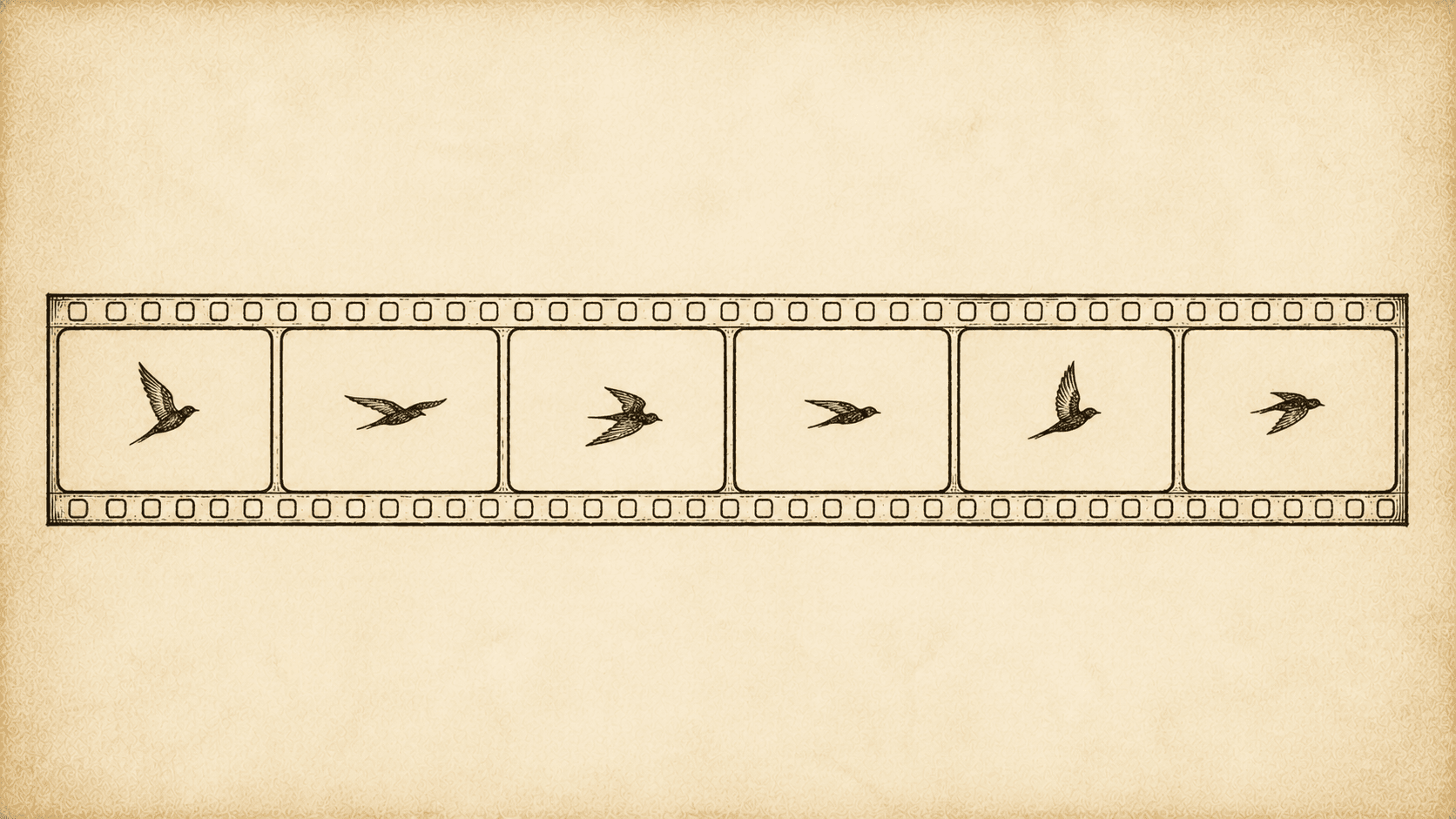
الله يصنع صورة العالم في كل لحظة. ليس مرة واحدة في الماضي، بل الآن، وفي كل "الآن" التي تأتي. العالم الذي أراه في هذه اللحظة هو صورة يصنعها الله في هذه اللحظة بالذات.
ثم في اللحظة التالية، يصنع صورة جديدة. مختلفة قليلاً عن السابقة. الأشياء تتحرك، تتغير، تتفاعل.
هذا التتابع السريع للصور هو ما يعطي العالم حركته. كما في الفيلم السينمائي: صور ثابتة تتتابع بسرعة فتبدو متحركة. لكن الفرق أن الله لا يحتاج إلى "صور سابقة" يعرضها. هو يخلق كل صورة من جديد، في كل لحظة.
القوانين والأنظمة
لكن كيف تتغير الصور بطريقة منظمة؟
لو كان التغيير عشوائياً، لكان العالم فوضى. شيء يظهر هنا ويختفي هناك بلا سبب. لكن العالم منظم. الأشياء تتحرك بطرق يمكن التنبؤ بها. الحجر يسقط للأسفل دائماً، لا للأعلى. الماء يغلي عند درجة حرارة معينة، لا عشوائياً.
هذا الانتظام يأتي من القوانين.
الله لم يصنع العالم فقط، بل وضع له قوانين تحكم كيف تتغير الصور. قوانين الجاذبية، قوانين الحركة، قوانين الكهرباء والمغناطيسية، قوانين الكيمياء والأحياء. كل هذه القوانين هي "قواعد" تحدد كيف تنتقل الصورة من لحظة إلى لحظة.
حين أرمي حجراً في الهواء، الله يصنع صورة الحجر وهو يرتفع، ثم صورة وهو يتباطأ، ثم صورة وهو يسقط. التتابع ليس عشوائياً، بل يتبع قانون الجاذبية الذي وضعه الله.
القوانين إذاً ليست قوى خارجية تفرض نفسها على الله. القوانين هي طريقة الله في تنظيم تتابع الصور.
الخصائص المادية
ثم فكّرتُ في الخصائص المادية التي نختبرها.
لماذا بعض الأشياء صلبة وبعضها سائلة؟ لماذا بعضها ساخن وبعضها بارد؟ لماذا الحديد مختلف عن الماء مختلف عن الهواء؟
الجواب: لأن الله أعطى صور الأشياء خصائص معينة.
الصلابة خاصية. حين يصنع الله صورة الحجر، يجعله صلباً. هذا يعني أن الحجر، في قواعد هذا العالم، لا يسمح للأشياء الأخرى بالمرور من خلاله. حين تلتقي صورة يدي بصورة الحجر، القانون يقول: لا اختراق. فأشعر بالصلابة.
السيولة خاصية أخرى. الماء يأخذ شكل الإناء الذي يوضع فيه. جزيئاته تتحرك بحرية أكبر. هذه خاصية وضعها الله للماء.
الحرارة خاصية ثالثة. النار ساخنة، الثلج بارد. هذه ليست صفات "موجودة في ذاتها"، بل خصائص وضعها الله لهذه الأشياء، وجعل لها تأثيرات معينة حين تتفاعل مع غيرها.
كل شيء في العالم له خصائص. اللون خاصية، والوزن خاصية، والرائحة خاصية. كل هذه الخصائص جزء من "الصورة" التي يصنعها الله لكل شيء.
التفاعل والتغيير
ماذا يحدث حين تتفاعل الأشياء؟
لنأخذ مثالاً بسيطاً: النار والورقة.
أمسكتُ ورقة وقرّبتُها من شمعة مشتعلة. في علم الله، هناك صورة للورقة وصورة للهب. مع كل لحظة، الصور تتغير: الورقة تقترب من اللهب.
في لحظة معينة، التقت الصورتان. صورة حافة الورقة وصورة اللهب في نفس المكان.
هنا يدخل القانون. النار لها خاصية الحرارة العالية. الورقة لها خاصية القابلية للاشتعال عند درجة حرارة معينة. حين تلتقي الصورتان، القانون يحدد النتيجة: الورقة تبدأ بالاحتراق.
الصورة التالية تُظهر الورقة وقد اشتعلت حافتها. ثم الصورة التي بعدها تُظهر اللهب وهو يمتد. ثم صورة الورقة وهي تتحول إلى رماد. كل صورة تنتج عن سابقتها وفق القوانين.
لم "تفعل" النار شيئاً بذاتها. ولم "تتأثر" الورقة بذاتها. ما حدث هو أن الله صنع سلسلة من الصور المتتابعة، كل واحدة تنتج عن السابقة وفق قواعد محددة.
الأمر نفسه مع كل تفاعل في العالم. الماء يُذيب الملح: صورة الماء تلتقي بصورة الملح، القوانين تحدد التفاعل، الصورة التالية تُظهر ماءً مالحاً. الشمس تُسخّن الحجر: صورة أشعة الشمس تلتقي بصورة الحجر، القوانين تحدد انتقال الحرارة، الصورة التالية تُظهر حجراً أكثر سخونة.
العالم كله سلسلة متصلة من الصور المتتابعة، كل واحدة تنتج عن سابقتها وفق قوانين محددة.
طبيعة المادة
هذا قادني إلى فهم جديد لطبيعة المادة.
ما نسميه "مادة" - الحجر، الماء، الهواء، أجسادنا - ليس شيئاً قائماً بذاته بشكل مستقل. المادة في حقيقتها "معلومات" في علم الله. معلومات عن الشكل والحجم والخصائص والموقع. الله يخلق هذه المعلومات في كل لحظة، ويجعلها تتفاعل وفق القوانين التي وضعها.
لكن هذا يطرح سؤالاً مهماً: إذا كان العالم معلومات في علم الله، فكيف ندركه نحن؟ كيف نرى ونسمع ونلمس؟
هذا ما كان عليّ أن أفهمه في الخطوة التالية.
من المعلومة إلى المادة: آلية الإدراك
آلية الإدراك
إذا كان العالم معلومات في علم الله، فكيف ندركه نحن؟
هذا السؤال شغلني طويلاً. نحن نرى الأشياء، نسمعها، نلمسها. نشعر بالعالم من حولنا بشكل مباشر وحقيقي. كيف يحدث هذا إذا كان العالم "صورة" في علم الله؟
الجواب الذي وصلتُ إليه كان مفاجئاً.
الأدوات الحسية - العين، الأذن، الجلد، الأنف، اللسان - لا تستطيع بذاتها أن تدرك ما في علم الله. العين جزء من صورة، والصورة لا تعرف شيئاً. كيف لصورة أن تصل إلى علم الله وتقرأ منه؟
ما يحدث فعلياً مختلف تماماً.
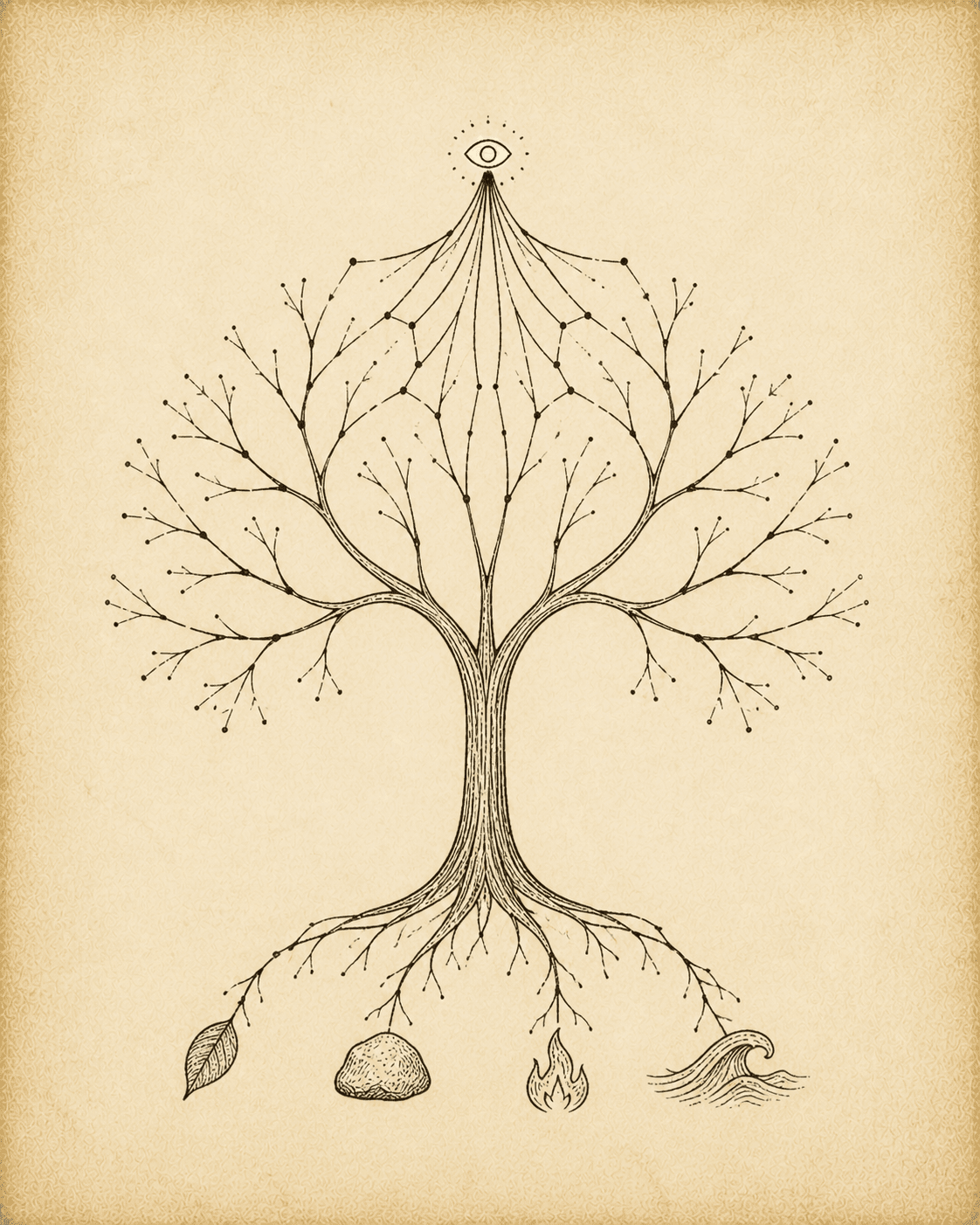
الله هو الذي يضع المعلومات في وعينا. هو يأخذ من علمه - الصور، الأصوات، الأحاسيس - ويضعها مباشرة في وعي المخلوق. الحواس لا "تنقل" شيئاً إلى الوعي. الحواس مجرد أدوات توجيه، تحدد أي جزء من علم الله يجب أن يظهر في الوعي.
الحواس كوسائل لا كمصادر
لنأخذ العين مثالاً.
نحن نظن أن العين "ترى". أن الضوء يدخل إليها، ويصطدم بالشبكية، وتتحول الإشارات إلى صورة في الدماغ. هذا ما يقوله العلم، وهو صحيح على مستوى الوصف المادي.
لكن السؤال الأعمق: كيف تتحول إشارات كهربائية في الدماغ إلى تجربة واعية؟ كيف تصبح "رؤية"؟
العلم لا يستطيع الإجابة عن هذا السؤال. يسمونه "المشكلة الصعبة للوعي". كيف تنشأ التجربة الواعية من مادة غير واعية؟
الجواب الذي وصلتُ إليه: لا تنشأ منها.
العين لا ترى. العين تحدد الاتجاه. حين أفتح عيني وأنظر يميناً، أنا أقول للنظام: أريد أن أرى ما على يميني. الله عندها يضع في وعيي صورة ما على يميني، بحسب موقعي واتجاه نظري.
العين إذاً أداة توجيه. تحدد إطار الصورة التي ستظهر في الوعي. لكنها ليست مصدر الرؤية.
الأمر نفسه مع الأذن.
نظن أن الأذن "تسمع". أن الموجات الصوتية تدخل إليها وتتحول إلى إشارات. لكن كيف تصبح هذه الإشارات "صوتاً" نسمعه؟
الأذن لا تسمع. الأذن تحدد الموقع. الصوت موجود في علم الله - معلومات عن اهتزازات في الهواء. حين تكون أذني قريبة من مصدر الصوت، الله يضع في وعيي إحساس السماع، بحسب المسافة والاتجاه.
واللمس كذلك.
حين ألمس شيئاً بارداً، أشعر بالبرودة. لكن البرودة ليست "في" الشيء بطريقة يمكن ليدي أن تستخرجها. البرودة معلومة. الشيء البارد له خاصية معينة في علم الله. حين تلتقي يدي به، الله يضع في وعيي إحساس البرودة المناسب لخصائص هذا الشيء.
اليد أداة توجيه. أمدّها لألمس شيئاً، فيعرف النظام أي إحساس يجب أن يظهر في وعيي.
وهكذا مع كل الحواس. الأنف لا يشم، بل يوجّه. اللسان لا يتذوق، بل يحدد. كل حاسة أداة نستخدمها للتفاعل مع العالم، والله هو الذي يضع في وعينا التجربة المناسبة بحسب هذا التفاعل لصناعة تأثير العالم المادي لتبدو واقعية في نظرنا.
مثال توضيحي: الاصطدام بالشجرة
دعني أوضح الفكرة بمثال كامل.
ذات مرة كنتُ أمشي في حديقة، شارد الذهن، أفكر في شيء ما. لم أنتبه لشجرة أمامي. فجأة، اصطدمتُ بها. شعرتُ بألم في كتفي، وتراجعتُ للخلف.
ماذا حدث بالضبط؟
في علم الله، هناك "صورة" لجسدي وهو يمشي، و"صورة" للشجرة في مكانها. مع كل لحظة، الصور تتغير: جسدي يقترب من الشجرة.
في لحظة معينة، التقت الصورتان. صورة كتفي وصورة جذع الشجرة في نفس المكان.
هنا يدخل القانون: الشجرة صلبة، الجسد صلب، لا اختراق متبادل. النتيجة: الصورة التالية تُظهر جسدي وقد توقف أو تراجع.
لكن هذا كله في علم الله. كيف أدركتُه أنا؟
الله وضع في وعيي عدة أشياء:
- صورة بصرية: رأيتُ الشجرة أمامي فجأة. - إحساس لمسي: شعرتُ بصلابة الجذع على كتفي. - ألم: شعرتُ بوجع في مكان الاصطدام. - إحساس بالحركة: شعرتُ بجسدي وهو يتراجع.
كل هذه التجارب لم "تأتِ" من العين أو الجلد أو الأعصاب بذاتها. الله وضعها في وعيي مباشرة، بحسب ما حدث في علمه من التقاء الصورتين.
العين رأت الشجرة لأنها كانت مفتوحة ومتجهة نحوها. الجلد "أحس" بالصلابة لأنه كان في موضع الالتقاء. لكن التجربة الفعلية - الرؤية، الإحساس، الألم - وُضعت في الوعي من الله مباشرة.
الخلاصة
المشهد المادي بأكمله - المشي، الشجرة، الاصطدام، الألم، التراجع - كل هذا مركّب من عناصر غير مادية.
في حقيقته، هو معلومات في علم الله. صور تتتابع وفق قوانين. والله ينقل إلى وعيي الجزء الذي يخصني من هذه المعلومات، فأختبر التجربة وكأنها واقع مادي مستقل.
لكنها ليست مستقلة. هي قائمة بالله في كل لحظة.
وهنا توقفتُ عند فكرة أعمق.
إذا كان الله هو الذي يضع المعلومات في وعينا، فما هو هذا الوعي نفسه؟ من أين يأتي؟
الوعي ليس شيئاً تنتجه المادة. المادة لا تُنتج وعياً. هذا ما أثبته لي التأمل في "المشكلة الصعبة" التي يعترف بها العلم. إذاً، الوعي الذي نختبر به العالم ليس "ملكنا" بالمعنى الذي نظنه.
وصلتُ إلى فكرة غريبة لكنها بدت لي منطقية: إدراكنا لذاتنا هو في جوهره إدراك الله لذاته.
نحن لا نملك وعياً منفصلاً عن الله. ما نسميه "وعينا" هو انعكاس لوعيه الكلي، أو بالأحرى جزء منه يظهر من خلالنا.
لكن إذا كان الأمر كذلك، فلماذا نشعر بأننا أفراد مستقلون؟ لماذا أشعر بأنني "أنا"، منفصل عن غيري، محدود بهذا الجسد؟
هنا يأتي دور الحواس.
الحواس هي التي تحدد لنا ما نرى ونسمع ونشعر من صورة العالم الكلّية. العين ترى من زاوية واحدة. الأذن تسمع من موقع واحد. الجلد يحس ما يلامسه فقط. كل حاسة تقتطع جزءاً صغيراً من الصورة الشاملة وتقدمه للوعي.
هذا الاقتطاع هو الذي يخلق الإحساس بالفردية.
الوعي واحد في أصله. لكن حين يُصفّى من خلال حواس محددة، مرتبطة بجسد محدد، في مكان وزمان محددين، يبدو وكأنه وعي فردي منفصل. نحن ندرك أنفسنا كأفراد مستقلة لأن الحواس ترسم لنا حدوداً: هذا جسدي، هذا ليس جسدي. هذا أنا، هذا غيري.
الحواس إذاً لا تحدد فقط ما نرى من العالم، بل تحدد أيضاً كيف نرى أنفسنا.
حقيقة العالم
هل هذا يعني أن العالم وهم؟
لا. العالم ليس وهماً.
العالم حقيقي. حقيقي جداً. بل هو حقيقي أكثر مما نظن. لأن حقيقته ليست في كونه "مادة صمّاء" موجودة بذاتها، بل في كونه تجلياً لعلم الله وإرادته. العالم قائم بالحق، بالله، بالوجود المطلق.
ما هو الوهم إذاً؟
الوهم هو أن نظن أن العالم "مادة فارغة" لا معنى لها ولا مصدر. أن نظنه موجوداً بذاته، منفصلاً عن الله، قائماً بنفسه. هذا هو الوهم الحقيقي.
العالم الذي نعيش فيه ليس قفصاً مادياً أُلقينا فيه. العالم تجلٍّ مستمر لحضور الله. كل ما نراه ونسمعه ونلمسه هو من علمه، يصل إلى وعينا بإرادته، في كل لحظة.
هذا الفهم غيّر طريقة نظري للعالم.
حين أنظر الآن إلى شجرة، لا أرى مجرد مادة. أرى تجلياً لعلم الله. حين أسمع صوتاً، لا أسمع مجرد اهتزازات. أسمع شيئاً يضعه الله في وعيي. حين أشعر بنسمة هواء على وجهي، أعرف أن هذا الإحساس هدية مباشرة من الله إلى وعيي, فجأة أصبح كل شيء له معنى وورائه حكمة تحرّكه.
العالم لم يعد "شيئاً خارجياً" أعيش فيه. العالم أصبح حواراً مستمراً بيني وبين الله.
سلسلة العوالم: التأثير والعدالة
التأثير بين العوالم
عدتُ إلى فكرة العوالم المتراصّة التي اكتشفتُها في بداية رحلتي.
كنتُ قد فهمتُ أن كل عالم يُنتج العالم الذي يليه. عالم الكواركات أنتج عالم الذرات، وعالم الذرات أنتج عالم المادة، وهكذا في سلسلة متصلة حتى وصلنا إلى عالمنا هذا.
لكنني لم أتوقف عند هذا الحد. سألتُ نفسي: ما معنى هذا "الإنتاج"؟
العالم السابق لا يُنتج العالم التالي ثم يختفي. بل يبقى حاضراً فيه. الكواركات لا تزال موجودة داخل الذرات. الذرات لا تزال موجودة داخل المادة. كل عالم يحمل في داخله العوالم التي سبقته.
هذا يعني أن كل عالم يتأثر مباشرة بالعالم الذي أنتجه. خصائص العالم السابق تنعكس على بنية العالم التالي ونظامه وظروفه. لا يوجد عالم منفصل تماماً عما قبله.
عدالة الله والتأثير
هنا توقفتُ عند مسألة مهمة.
إذا كان كل عالم يتأثر بما قبله، فهذا يعني أن المخلوقات في كل عالم تتأثر بأشياء لم تصنعها بنفسها. الإنسان يولد في ظروف معينة - عائلة، مكان، زمان، قدرات - لم يخترها.
لكنني عرفتُ أن الله عادل. عدله كامل، لا نقص فيه.
كيف يتسق هذا مع أن الإنسان يُحمَّل نتائج لم يكن له دور في صنعها؟
لو كان التأثير بين العوالم عشوائياً - أي أن الإنسان يُلقى في ظروف لا علاقة له بها - لكان هذا ظلماً. ولو كان ظلماً، لتناقض مع عدالة الله الكاملة.
إذاً، لا بد أن يكون هناك تفسير آخر.
الحل: علاقة المخلوق بمساره
الحل الذي وصلتُ إليه كان منطقياً:
لا بد أن توجد علاقة تربط المخلوق بهذه العوالم. علاقة تجعله مشاركاً في تشكيل ما يعيشه، لا مجرد متلقٍّ سلبي.
بمعنى آخر: الظروف التي يولد فيها الإنسان ليست مفروضة عليه من خارج، بل هي نتيجة لشيء يخصه هو. شيء فعله أو اختاره أو كان جزءاً من مساره.
هذا الاستنتاج لم يأتِ من رغبة في تبرير الواقع، بل من ضرورة منطقية: إذا كان الله عادلاً، ولا يظلم أحداً، فلا بد أن تكون ظروف كل إنسان مرتبطة به بشكل ما.
إشكالية تفاوت ظروف الولادة
هذه الإشكالية قديمة جداً.
لماذا يولد طفل في عائلة غنية محبة، وآخر في فقر وإهمال؟ لماذا يولد أحدهم بجسد سليم، وآخر بإعاقة؟ لماذا يولد أحدهم في زمن سلام، وآخر في زمن حرب؟
هذه الأسئلة طُرحت كثيراً على أنها تشكيك في عدالة الله. كيف يكون الله عادلاً وهو يوزع الظروف بهذا التفاوت؟
لكن السؤال نفسه يفترض افتراضاً خاطئاً: أن الإنسان يبدأ وجوده من الصفر عند ولادته.
ماذا لو لم يكن الأمر كذلك؟
ماذا لو كان الإنسان موجوداً قبل هذا العالم؟ ماذا لو كانت ولادته هنا ليست بداية مطلقة، بل محطة في مسار أطول؟
عندها تتغير الصورة تماماً.
العوالم المتعددة كمراحل وجودية
هنا عدتُ إلى فكرة العوالم المتراصّة، لكن بفهم جديد.
العوالم المتعددة ليست مجرد "مستويات مادية" مختلفة - كواركات، ذرات، مادة. بل يمكن فهمها على أنها مراحل وجودية متعاقبة. مراحل مرّ بها الوجود كله، بما فيه الإنسان.
المعلومات التي تكوّن الإنسان هنا - وعيه، نفسه، جوهره - مرّت عبر هذه العوالم, هذا يعني أنه كان لها وجود فيها. فهي لم تُخلق من عدم في لحظة الولادة في هذا العالم. بل انتقلت من عالم إلى عالم كما كل المعلومات التي شكّلت هذا العالم، واكتسبت في كل مرحلة شيئاً جديداً.
هذا يعني أن وجود الإنسان لم يبدأ في هذا العالم. بل يمتد إلى ما قبله, ولكن بحكم أن طبيعة العالم مختلفة, فهيئته كانت مختلفة عمّا هي عليه في هذا العالم.
وإذا كان الإنسان موجوداً قبل هذا العالم، فقد كان له فيه تجربة. وإذا كانت له تجربة، فقد كانت له اختيارات. وإذا كانت له اختيارات، فنتائج هذه الاختيارات انتقلت معه إلى العالم التالي.
بهذا الفهم، الظروف التي يولد فيها الإنسان في هذا العالم ليست عشوائية ولا ظالمة. بل هي نتيجة لمساره في العوالم السابقة. نتيجة لما اختاره وما فعله وما أصبح عليه.
هذا لا يعني أننا نتذكر تلك العوالم. لا نتذكرها لأن طبيعة كل عالم مختلفة، ولأن الذاكرة التي نعرفها مرتبطة بهذا العالم وأدواته. لكن عدم التذكر لا يعني عدم الوجود.
وهذا لا يعني أيضاً أن الظروف الصعبة "عقوبة". ليست كذلك بالضرورة. قد تكون الظروف الصعبة هي بالضبط ما يحتاجه هذا الإنسان للنمو والتعلم واستكمال مساره. قد تكون فرصة، لا عقوبة.
المهم هو أن الظروف ليست عشوائية. هناك حكمة وراءها، حتى لو لم نفهمها بالكامل.
هذا الفهم فتح أمامي باباً جديداً. إذا كان الإنسان يسير في مسار عبر العوالم، فكيف بدأ هذا المسار؟ وكيف يستمر؟ وما الذي يحدث حين ينتقل من عالم إلى آخر؟
سلسلة العوالم: المسار عبر العوالم
العالم الأول: المساواة الكاملة
إذا كان الإنسان يسير في مسار عبر العوالم، فكيف بدأ هذا المسار؟
فكّرتُ في الأمر طويلاً.
العدالة تقتضي أن تكون البداية متساوية. لو بدأ بعض الناس من موقع أفضل والبعض الآخر من موقع أسوأ، لكان التفاوت موجوداً منذ البداية، ولما أمكن تفسيره بالاختيار.
إذاً، في العالم الأول - أول محطة في هذا المسار - لا بد أن يكون البشر قد وُلدوا في ظروف متساوية.
ليس بالضرورة أن تكون ظروفهم متطابقة في كل التفاصيل. لكن المساواة في الجوهر: نفس الفرص، نفس القدرات الأساسية، نفس نقطة الانطلاق. لا أحد يبدأ بامتياز على غيره، ولا أحد يبدأ بعائق لم يختره.
طبيعة ذلك العالم الأول مختلفة عن عالمنا. لا أستطيع تخيّلها بدقة لأن أدوات تخيّلي مرتبطة بهذا العالم. لكن المنطق يقول إنها كانت تسمح بالمساواة الحقيقية، بطريقة قد لا تكون ممكنة هنا.
الانتقال بين العوالم
في ذلك العالم الأول، عاش البشر تجربة ما بجسد و هيئة مختلفة.
لا أعرف تفاصيل تلك التجربة. لكنني أعرف أنها كانت تتضمن اختيارات. الإنسان كان حراً في أن يختار: كيف يتصرف، ما القيم التي يتبناها، كيف يتعامل مع غيره، ما الذي يسعى إليه.
بعض الناس اختاروا طريقاً، وبعضهم اختاروا طريقاً آخر.
ثم جاءت لحظة الانتقال. شيء يشبه ما نسميه "الموت" في عالمنا، لكن بآلية تناسب طبيعة ذلك العالم. ليس فناءً، بل عبوراً إلى المرحلة التالية.
وحين انتقل الناس، لم ينتقلوا فارغين. انتقلوا وهم يحملون آثار تجربتهم. ليس ذكريات بالمعنى الذي نعرفه، بل شيء أعمق: حالة نفسية، صفات تشكّلت، ميول ترسّخت. من عاش بطريقة معينة أصبح نوعاً معيناً من الكائنات. ومن عاش بطريقة مختلفة أصبح نوعاً مختلفاً.
هذه الحالة التي وصل إليها كل إنسان هي التي حددت ظروف دخوله إلى العالم التالي.
العالم الثاني والمسار
في العالم الثاني، لم تعد الظروف متساوية.
كل إنسان وُلد في ظروف تناسب حالته التي خرج بها من العالم الأول. من خرج بحالة معينة وجد نفسه في بيئة معينة. ومن خرج بحالة مختلفة وجد نفسه في بيئة وظروف مختلفة.
هذا الاختلاف لم يكن عشوائياً ولا ظالماً. بل كان جزءاً من نظام يهدف إلى شيء محدد: مساعدة كل إنسان على التعامل مع ما نتج عن تجربته السابقة.
من كان يحمل نقصاً في صفة معينة، وُضع في ظروف تساعده على تعلّم هذه الصفة. من كان يحمل ميلاً نحو شيء ضار، وُضع في ظروف تكشف له عواقب هذا الميل. الظروف كانت أدوات للنمو، لا أحكاماً نهائية.
وفي هذا العالم الثاني، عاش الناس تجربة جديدة. اختاروا مرة أخرى. بعضهم تحسّنت حالته، وبعضهم ساءت، وبعضهم بقي كما هو. ثم انتقلوا مرة أخرى، حاملين نتائج هذه التجربة الجديدة.
وهكذا استمر المسار، من عالم إلى عالم، حتى وصلنا إلى هذا العالم الذي نعيش فيه الآن.
النتيجة: الإطار المناسب
بهذا الفهم، الظروف التي يولد فيها الإنسان في عالمنا ليست عقوبة ولا مكافأة.
هي إطار مناسب لمساره الخاص.
الطفل الذي يولد في ظروف صعبة لم يُعاقَب على شيء. ربما هذه الظروف بالذات هي ما يحتاجه لاستكمال رحلته. ربما فيها فرصة للنمو لا توجد في غيرها. ربما التحديات التي سيواجهها هي بالضبط ما سيساعده على معالجة ما يحمله من تجاربه السابقة.
والطفل الذي يولد في ظروف سهلة لم يُكافَأ بالضرورة. ربما السهولة هي اختباره الخاص. ربما التحدي بالنسبة له يكمن في شيء آخر.
لا نستطيع الحكم من الخارج. لا نعرف مسار كل إنسان، ولا نعرف ما يحتاجه. لكننا نعرف أن الله حكيم، وأن حكمته كاملة. وهذا يكفي للثقة بأن كل شيء في مكانه الصحيح، حتى لو لم نفهم التفاصيل.
زوال التعارض
بهذا الفهم، يزول التعارض الظاهري بين عدالة الله وتفاوت التجربة الإنسانية.
التفاوت موجود، لكنه ليس ظلماً. لأنه ناتج عن مسار اشترك فيه كل إنسان بحريته. البداية كانت متساوية، والاختيارات كانت حرة، والنتائج انعكست على الظروف اللاحقة.
الإنسان ليس كائناً منفصلاً يبدأ وينتهي داخل حدود حياة واحدة. بل هو كائن يسير في مسار ممتد عبر العوالم. ما يعيشه الآن جزء من رحلة أطول، وما يختاره الآن سيؤثر على ما سيأتي.
أريد أن أوضح شيئاً مهماً هنا.
ما أتحدث عنه ليس "تناسخ الأرواح" بالمعنى المعروف في بعض الفلسفات. التناسخ يقول إن الروح تنتقل من جسد إلى جسد في نفس العالم - إنسان يموت فيولد من جديد كإنسان آخر أو حيوان أو نبات.
ما أتحدث عنه مختلف. ليس من الضروري أن الإنسان يعود إلى هذا العالم مرة أخرى في جسد جديد. بل قد ينتقل إلى عالم مختلف تماماً، بطبيعة مختلفة وقوانين مختلفة. فالنفس تنتقل إلى العالم الذي يناسب تركيبتها النفسية النهائية, قد يكون نفس العالم وقد يكون أي عالم آخر.
والأهم: الهوية تبقى. ليس تناسخاً تضيع فيه الذات، بل استمراراً تحافظ فيه النفس على جوهرها عبر المراحل.
هذا الفهم لسلسلة العوالم والمسار عبرها كان مفتاحاً مهماً. لكنه فتح أمامي أسئلة أعمق عن طبيعة هذا المسار: ما الغاية منه؟ كيف يتحدد مصير الإنسان فيه؟ وما علاقة اختياراته بما سيؤول إليه؟
هذه الأسئلة قادتني إلى موضوع القضاء والقدر، الذي وجدتُ أنه يتصل اتصالاً وثيقاً بكل ما فهمته حتى الآن.
في حضرة الموت
جاء الخبر في ليلة عادية.
كنتُ جالساً في غرفتي، أقرأ شيئاً ما، حين رنّ الهاتف. صوت أمي على الطرف الآخر كان مختلفاً. هادئاً أكثر من اللازم. قالت: "جدّك... رحل."
لم أفهم في البداية. أو ربما لم أُرِد أن أفهم. "رحل" كلمة غريبة. رحل إلى أين؟
ثم فهمتُ.
في اليوم التالي، وقفتُ أمام جسده الممدد. كان وجهه ساكناً بطريقة لم أرها من قبل. ليس نائماً. النائم تتحرك عيناه خلف جفنيه، يتنفس، تنبض فيه حياة خفية. هذا كان مختلفاً. سكون مطلق. كأن شيئاً غادر وترك خلفه قشرة فارغة.
لمستُ يده. كانت باردة. ليست برودة الشتاء، بل برودة أخرى. برودة الغياب.
هذا الرجل الذي كان يحملني على كتفيه حين كنتُ طفلاً، الذي كان يحكي لي القصص، الذي كان يضحك بصوت عالٍ يملأ البيت - أين ذهب؟ هذا الجسد أمامي، لكنه ليس هو. هو كان شيئاً آخر. شيئاً كان يسكن هذا الجسد ثم رحل.
وقفتُ هناك، أحدّق في وجهه، وشعرتُ بشيء ينهار في داخلي.
في تلك الليلة، جلستُ وحدي.
كل الأفكار التي جمعتُها على مدى سنوات - عن الله، عن العوالم، عن المعنى - بدت فجأة بعيدة. باردة. مجرد كلمات على ورق.
قلتُ لنفسي: "أنت تعرف أن الموت ليس نهاية. تعرف أن الإنسان ينتقل إلى عالم آخر. تعرف أن هناك حكمة وراء كل شيء."
لكن المعرفة شيء، والشعور شيء آخر.
المعرفة تقول إن جدي انتقل. الشعور يقول إنه اختفى. المعرفة تقول إنه في مكان أفضل. الشعور يقول إنه لم يعد هنا، ولن أراه مرة أخرى في هذه الحياة.
والشعور كان أقوى.
بكيتُ تلك الليلة. ليس بكاءً هادئاً، بل بكاءً عميقاً يخرج من مكان لم أكن أعرف أنه موجود. بكيتُ على جدي، وبكيتُ على نفسي، وبكيتُ على هذا العالم الذي يأخذ منا من نحب دون أن يستأذن.
وفي مكان ما وسط البكاء، سألتُ: هل كل ما فهمته حقيقي؟ أم أنني كنتُ أخدع نفسي؟ هل بنيتُ قصراً من الأفكار لأهرب من حقيقة الموت المرعبة؟
مرّت أيام ثقيلة.
كنتُ أذهب إلى القبر وأجلس هناك. لا أقول شيئاً. فقط أجلس. أنظر إلى التراب الذي يغطي جسده، وأحاول أن أفهم.
في أحد تلك الأيام، بينما كنتُ جالساً، هبّت نسمة هواء خفيفة. حرّكت أوراق الشجرة القريبة. سمعتُ صوت عصفور في مكان ما.
ولسبب لا أفهمه، شعرتُ بشيء يتغير.
ليس أن الحزن اختفى. بقي الحزن. لكن شيئاً آخر ظهر بجانبه.
تذكّرتُ ما فهمته عن العالم. ليس ككلمات هذه المرة، بل كشعور. هذا العالم الذي أجلس فيه الآن - الهواء، الشجرة، العصفور، التراب - كل هذا موجود في كل لحظة لأن الله يريده أن يوجد. وجدي... جدي ليس في هذا التراب. التراب يحتوي جسده فقط. أما هو - الشيء الذي كان يضحك، يحكي، يحب - فقد انتقل.
لم أكن أخدع نفسي. كنتُ أفهم شيئاً حقيقياً.
الألم لم يختفِ بعد ذلك اليوم. لكنه تغيّر.
لم يعد ألم يأس. أصبح ألم فراق. الفرق كبير. ألم اليأس يقول: "انتهى كل شيء، لا معنى لشيء." ألم الفراق يقول: "أفتقده، وسأفتقده، لكنني أعرف أنه بخير."
الأول يسحق. الثاني يؤلم لكنه لا يسحق.
فهمتُ في تلك الفترة شيئاً مهماً: الفهم لا يُلغي الألم، لكنه يمنعه من تدميرنا. نحن بشر، وسنحزن على من نفقد. هذا طبيعي وصحي. لكن الفهم يعطينا أرضاً نقف عليها وسط الحزن. يعطينا أفقاً حين تضيق الجدران.
حين عدتُ إلى تأملاتي بعد أسابيع، لم أعد كما كنت.
الأفكار التي كانت نظرية أصبحت مختبرة. مررتُ بالنار، وخرجتُ منها. ليس سالماً تماماً - ما زلتُ أحمل الندوب - لكنني خرجتُ.
وفهمتُ أن الموت ليس نهاية. ليس فكرياً فقط هذه المرة. بل بشيء أعمق من الفكر.
جدي رحل، لكنه لم يختفِ.
وأنا، يوماً ما، سأرحل أيضاً. لكنني لن أختفي.
هذا ما تعلّمته في حضرة الموت.
Reversing the Path: From Knowing God to Understanding the World
I had reached an important station in my journey.
I began from the world. I looked at the universe, at atoms and quarks, at the chain of layered worlds. I traced this chain backward, world after world, until I reached the First Origin. Then I discovered that this Origin is not matter or energy, but comprehensive information existing by itself. Then I realized that this information is not inert, but conscious. Then I understood that this consciousness is perfect, with no deficiency or limits. And finally, I found that what I had reached through reason is the same as what religions spoke of: God.
This is what I had done until now. I had ascended from the world to God.
And now, the time had come to descend. To return from God to the world. But this time with different eyes.
In the first stage of my journey, I looked at the world and asked: Where did it come from? I was searching for the cause, the source, the origin. The world was the given, and God was the unknown I was searching for.
Now things were reversed.
God had become the given — I knew Him, understood something of His nature, recognized His perfection. And the world had become the unknown I wanted to understand. Not in terms of its existence, for I knew it issued from God. But in terms of its nature, its mechanisms, its meaning.
How does God make the world? How does abstract information transform into matter we can see and touch? What is the relationship between what happens in our lives and God's complete wisdom?
These are different questions from the questions I began with. And they require a different approach.
In the first stage, I used science extensively. Physics, quarks, atoms, theories of the universe's origin. Science helped me understand the structure of the material world, and led me to the limits of scientific knowledge, where science stops and rational contemplation begins.
But in the next stage, science would not help me much.
Science studies matter. It observes, measures, experiments, derives laws. But what I now want to understand transcends matter. I want to understand how matter exists in the first place. I want to understand the relationship between the Creator and the creature. I want to understand the meaning of what happens to us, not merely its physical mechanisms.
These are questions that empirical science cannot answer. Not because science is deficient or failed, but because they lie outside its scope. Science is an excellent tool for understanding how things work. But it is not the appropriate tool for understanding why things exist or what their meaning is.
The approach I will use in this stage is different.
I will start from what I have learned about God. I know He is perfect, wise, that nothing issues from Him but good. I will use this knowledge as a reference. I will look at the world, at its phenomena and events, and try to understand them in light of what I have learned about God.
This does not mean I will invent answers from my imagination. It means I will use reason, guided by what I have learned, to reach a deeper understanding.
For example: How does God create the material world when He is not material? I will search in the world for the closest thing that resembles this process, then contemplate it, then try to understand the complete picture of this capacity in God.
For example: Why are people born in different circumstances? I will start from my knowledge that God is just and wrongs no one, then search for an explanation consistent with this truth.
This is the method: starting from God to reach an understanding of the world, instead of starting from the world to reach God.
The first question I will begin with is the most fundamental:
How does God make the world?
We live in a material world. We see things, touch them, hear them. But I know that God is not material. He is information, consciousness, abstract reality. So how can something non-material produce something material?
This is what I needed to understand first.
The New Method: Searching Through God
I had to establish a clear method before I began.
In the previous stage, the method was relatively simple: look at the world, ask questions, follow the answers wherever they lead. The world was before me, and I was searching in it for indications that would lead me to what lies beyond it.
But now things are different. I want to understand things that empirical science cannot reach. I want to understand how God creates the world, what the meaning of what happens to us is, how divine justice works. These are questions not answered by experiment and measurement. They require a different method.
The method I found depends on a simple idea: Knowledge of God comes from observing the world.
We do not see God directly. But we see His effects everywhere. The entire world is an expression of His knowledge and wisdom. Everything in it — from the smallest atom to the largest galaxy, from the simplest creature to the most complex system — all of this issues from Him and carries something of His attributes.
Therefore, when I want to understand something about God or about the way He works, I begin by observing the world. I search in it for a principle or phenomenon related to what I want to understand.
But observation alone is not enough.
The world contains good and evil. It contains perfection and deficiency. Not everything I see in the world reflects God directly. Some of it reflects the limits and deficiencies of creatures.
Therefore, the second step is: to measure what I have found against the concept of good and evil.
If the principle I extracted from the world is evil — that is, deficiency or absence of good — then it is not from God directly, but from the limits of creatures. I do not take it as evidence of God's nature.
But if it is good — that is, a genuine positive value that benefits the world — then it is a reflection of something in God. I can use it for understanding.
But even the good I see in the world is not complete.
Mercy exists in humans, but it is deficient. Wisdom exists, but it is limited. Justice exists, but it sometimes errs. Every positive value in the world exists partially, because creatures are limited.
Therefore, the third step is: to elevate the principle to its complete form.
I ask myself: How would this value be if it were freed from all limits? If there were no ignorance, no weakness, no deficiency?
The answer gives me a conception of the complete form of this value in God.
An example to clarify the idea:
I want to understand God's mercy.
First step: I search in the world for something resembling mercy. I find a mother's mercy toward her child. When the child cries, the mother feels their pain and seeks to relieve it. She stays up nights, endures fatigue, sacrifices her comfort. This is the clearest example of mercy in our world.
Second step: Is a mother's mercy good or evil? It is undoubtedly a positive value. It exists in human nature by creation, it preserves the species, it builds bonds, it relieves pain. Therefore, it is good.
Third step: What are the limits of a mother's mercy? It is limited to those she knows and loves. It is affected by her mood and circumstances. It may weaken with time or exhaustion. She may be unable to help despite wanting to. And sometimes she may misunderstand what the one she shows mercy to actually needs.
Fourth step: How would mercy be if freed from these limits? If it encompassed all creatures, not just some. If it were unaffected by mood or exhaustion. If it were accompanied by complete ability to help. If it were coupled with wisdom that knows what each being truly needs.
The answer gives me a conception of God's mercy. Not mercy in the limited human sense, but complete mercy that encompasses everything, that is unable to fail at anything, and that knows what is right for every creature.
This is the method I will use:
First, I observe the world and extract from it a principle related to what I want to understand.
Second, I measure this principle against good and evil. If it is evil, I leave it. If it is good, I take it.
Third, I identify the weaknesses and limits of this principle as it appears in the world.
Fourth, I imagine its complete form after removing these limits.
Fifth, I use the result to understand what I am searching for.
This method is not scientific in the experimental sense. I cannot prove its results in a laboratory. But it is a coherent rational method, starting from premises that have been established for me — God's existence, His perfection, that the world is an expression of His knowledge — and arriving at logical conclusions.
This is the best the human mind can do when dealing with questions that transcend matter.
And now, the time has come to apply this method to the first question: How does God make the world?
Divine Imagination: How Does God Make the World?
The Fundamental Problem
The question I faced was difficult.
God is not material. This I knew. He is information, consciousness, abstract reality with no physical form or energy in the physical sense. But the world we live in is material. We see it, touch it, hear it. It has weight and volume and color and sound.
How does something non-material make something material?
This question puzzled me for a long time. It seemed to me there was an unbridgeable gap between God's nature and the world's nature. How does an abstract idea transform into something tangible?
Then I remembered the method I had established: search in the world for something resembling what I want to understand.
Searching in the World: Imagination
I began to search.
What is the thing in our world that transforms abstract ideas into images?
I thought of art: a painter transforms an idea into a painting. But they use external materials — paints and brush and canvas. This does not resemble what I am searching for.
I thought of writing: a writer transforms their ideas into words. But words need a medium — paper or screen. This also does not resemble what I am searching for.
Then an idea occurred to me.
I closed my eyes and imagined my mother's face. I saw it clearly in my mind. Her features, her smile, the small wrinkles around her eyes. A complete image, appearing from nothing, without using any external material.
This is it. Imagination.
Imagination is a wondrous capacity. We can create in our minds complete images, moving scenes, worlds that did not exist. We do this by our will when we imagine something, and it happens involuntarily in dreams when we sleep.
In imagination, the abstract idea transforms into an image. Without external material, without tools, without a medium.
The Nature of Human Imagination
I paused to examine this capacity.
Imagination is not a human invention. We did not make it. It is a capacity that exists in us by creation, part of our original constitution. A small child imagines before learning anything. Animals dream. This is an original capacity in conscious beings.
And since it is a capacity that God placed in us, it is necessarily good. There is no need to ask: Is imagination good or evil? It is good, because it issues directly from God, part of the design of the conscious being.
Therefore, I can use imagination as a model for understanding how God makes the world.
But human imagination is deficient. And I am searching for the complete form.
The Weaknesses of Human Imagination
I began to enumerate the weaknesses of imagination in us.
First: It requires effort.
I tried to imagine a complex scene — a complete forest with its trees and animals and sounds and smells. I found the task required great concentration. My mind tires quickly. I cannot maintain the image for long.
Second: It is easily distracted.
While I was imagining the forest, I heard a sound outside. Immediately the image dissipated. Any external influence — a sound, a movement, even a passing thought — is enough to destroy what I built in my imagination.
Third: It cannot focus on more than one thing.
I tried to imagine two different things at the same moment: my mother's face and a seashore. I found I was moving between them, but I could not see both clearly at the same moment. My mind focuses on one and neglects the other.
Fourth: The image is incomplete.
Even when I imagine something simple — an apple, for example — the image is not complete in detail. I see the general shape and color, but the fine details are hazy. I cannot see every cell in the apple, every small detail on its skin.
These are the limits of human imagination. Limits that come from the limitations of our minds and our energy.
The Complete Form of Divine Imagination
And now, the next step in the method: How would imagination be if freed from these limits?
God is complete in power. Nothing is beyond Him.
Therefore, imagination in Him requires no effort. He does not tire, does not become exhausted, does not deplete energy. He is able to create any image without the slightest cost.
God is not distracted. Why? Because there is nothing outside Him to distract Him. Everything in existence is from Him and in Him. No external influence dissipates His focus, because there is no "outside" in the first place.
God is able to focus on everything at once. Not like our minds that move from thing to thing. He sees every detail, in every place, at every moment, with the same complete clarity.
God is able to create an image complete in detail. Not a hazy general shape, but every atom, every molecule, every movement, every color, every sound — everything with absolute precision.
This is what "divine imagination" might resemble. Not imagination in the weak human sense, but a complete capacity to create images without limits.
The Process of Creation
But God does not only imagine.
When we imagine, the image remains in our minds. It does not emerge into reality. It does not become something independent of us. It is merely a mental image that dissipates when we stop focusing on it.
God does more than that.
He does not only make an image — He gives it existence. He gives it consciousness to perceive itself. He gives it the capacity for movement and interaction. He gives it an independence that makes it seem as if it exists by itself.
Then He subjects it to laws. We call them the laws of physics, the laws of chemistry, the laws of life. These laws determine how things interact with each other, how they move, how they change.
This entire process is what we call: creation.
Creation is not merely "making" in the sense we know. It is not like a carpenter making a chair from existing wood. Creation is bringing into existence from nothing, giving existence to what had no existence, then giving it movement and consciousness and the capacity to interact within a precise system.
God's Continuous Sovereignty
And here I realized something very important.
If the world resembles an "image" in God's knowledge, this means God is still making it at every moment.
When we imagine something, the image remains as long as we focus on it. The moment we stop, it dissipates. The image has no existence independent of our imagining it.
So too with the world. It exists because God brings it into existence at every moment. It is not that God created it once in the past and then left it to run by itself. Rather, He creates it now, at this very moment, and at every moment that follows.
God's sovereignty over the world is not the sovereignty of a king over his kingdom — ruling it from afar while it exists by itself. Rather, it is a deeper sovereignty: The world exists because God wills it to exist, and it continues to exist because God continues to will its existence.
This contradicts an old idea that some philosophers believed: that God created the world and then left it to work by itself, like a watchmaker makes a watch and then leaves it to run. No. The world is not an independent watch. The world is closer to a continuous dream, or an unceasing image, or a living thought in a consciousness that neither sleeps nor becomes inattentive.
I wrote in my notebook that night:
"Imagination is the closest thing in our world to understanding how God creates. But it is a complete imagination, without limits, without effort, without distraction. And God does not only imagine — He brings into existence. He gives the image consciousness and movement and laws. And the world does not exist by itself, but by God's continuous will at every moment."
This understanding changed how I saw everything around me. Everything I see, everything I touch, everything I hear — all of this exists now because God wills it to exist now. The world is not something old and separate from God. The world is a living and continuous manifestation of His will and knowledge.
And this made me ask the next question: If the world is an "image" in God's knowledge, how do we perceive it as solid, real matter?
From Information to Matter: Making the Image
The Process of Transformation: Making the Image
I understood that God creates the world in a way resembling imagination, but more complete and deeper. But how does this "image" transform into a material world we live in?
I began to think about it.
God makes the image of the world at every moment. Not once in the past, but now, and in every "now" that comes. The world I see at this moment is an image God makes at this very moment.
Then at the next moment, He makes a new image. Slightly different from the previous one. Things move, change, interact.
This rapid succession of images is what gives the world its movement. As in a cinema film: still images succeed each other rapidly and appear to move. But the difference is that God does not need "previous images" to display. He creates each image anew, at every moment.
Laws and Systems
But how do the images change in an organized way?
If the change were random, the world would be chaos. Something appears here and disappears there for no reason. But the world is organized. Things move in predictable ways. A stone always falls down, not up. Water boils at a certain temperature, not randomly.
This regularity comes from laws.
God did not only make the world — He established laws that govern how the images change. Laws of gravity, laws of motion, laws of electricity and magnetism, laws of chemistry and biology. All these laws are "rules" that determine how the image transitions from moment to moment.
When I throw a stone in the air, God makes an image of the stone as it rises, then an image as it slows, then an image as it falls. The succession is not random, but follows the law of gravity that God established.
Laws, then, are not external forces imposing themselves on God. Laws are God's way of organizing the succession of images.
Material Properties
Then I thought about the material properties we experience.
Why are some things solid and some liquid? Why are some hot and some cold? Why is iron different from water different from air?
The answer: Because God gave the images of things certain properties.
Solidity is a property. When God makes the image of a stone, He makes it solid. This means that the stone, in the rules of this world, does not allow other things to pass through it. When the image of my hand meets the image of the stone, the law says: no penetration. So I feel solidity.
Liquidity is another property. Water takes the shape of the vessel it is placed in. Its molecules move more freely. This is a property God gave to water.
Heat is a third property. Fire is hot, ice is cold. These are not qualities "existing in themselves," but properties God gave to these things, and He made them have certain effects when they interact with others.
Everything in the world has properties. Color is a property, weight is a property, smell is a property. All these properties are part of the "image" God makes for each thing.
Interaction and Change
What happens when things interact?
Let us take a simple example: fire and paper.
I held a piece of paper and brought it close to a lit candle. In God's knowledge, there is an image of the paper and an image of the flame. With each moment, the images change: the paper approaches the flame.
At a certain moment, the two images met. The image of the paper's edge and the image of the flame in the same place.
Here the law enters. Fire has the property of high heat. Paper has the property of combustibility at a certain temperature. When the two images meet, the law determines the result: the paper begins to burn.
The next image shows the paper with its edge ignited. Then the image after that shows the flame spreading. Then an image of the paper transforming into ash. Each image results from the previous one according to the laws.
The fire did not "do" anything by itself. And the paper was not "affected" by itself. What happened is that God made a series of successive images, each one resulting from the previous according to specific rules.
The same is true for every interaction in the world. Water dissolves salt: the image of water meets the image of salt, the laws determine the interaction, the next image shows salty water. The sun heats the stone: the image of sunrays meets the image of the stone, the laws determine the transfer of heat, the next image shows a hotter stone.
The entire world is a connected chain of successive images, each one resulting from the previous according to specific laws.
The Nature of Matter
This led me to a new understanding of the nature of matter.
What we call "matter" — stone, water, air, our bodies — is not something existing by itself independently. Matter in its reality is "information" in God's knowledge. Information about shape and size and properties and location. God creates this information at every moment, and makes it interact according to the laws He established.
But this raises an important question: If the world is information in God's knowledge, how do we perceive it? How do we see and hear and touch?
This is what I needed to understand in the next step.
From Information to Matter: The Mechanism of Perception
The Mechanism of Perception
If the world is information in God's knowledge, how do we perceive it?
This question occupied me for a long time. We see things, hear them, touch them. We feel the world around us directly and really. How does this happen if the world is an "image" in God's knowledge?
The answer I reached was surprising.
The sensory tools — the eye, the ear, the skin, the nose, the tongue — cannot by themselves perceive what is in God's knowledge. The eye is part of an image, and an image knows nothing. How can an image reach God's knowledge and read from it?
What actually happens is completely different.
God is the one who places the information in our consciousness. He takes from His knowledge — the images, the sounds, the sensations — and places them directly in the creature's consciousness. The senses do not "transmit" anything to consciousness. The senses are merely directing tools, determining which part of God's knowledge should appear in consciousness.
The Senses as Means, Not Sources
Let us take the eye as an example.
We think the eye "sees." That light enters it, strikes the retina, and signals transform into an image in the brain. This is what science says, and it is correct at the level of material description.
But the deeper question: How do electrical signals in the brain transform into a conscious experience? How do they become "seeing"?
Science cannot answer this question. They call it "the hard problem of consciousness." How does conscious experience arise from unconscious matter?
The answer I reached: It does not arise from it.
The eye does not see. The eye determines direction. When I open my eyes and look to the right, I am telling the system: I want to see what is on my right. God then places in my consciousness an image of what is on my right, according to my position and the direction of my gaze.
The eye, then, is a directing tool. It determines the frame of the image that will appear in consciousness. But it is not the source of vision.
The same is true for the ear.
We think the ear "hears." That sound waves enter it and transform into signals. But how do these signals become a "sound" we hear?
The ear does not hear. The ear determines location. Sound exists in God's knowledge — information about vibrations in the air. When my ear is close to the source of the sound, God places in my consciousness the sensation of hearing, according to distance and direction.
And touch as well.
When I touch something cold, I feel coldness. But coldness is not "in" the thing in a way my hand can extract. Coldness is information. The cold thing has a certain property in God's knowledge. When my hand meets it, God places in my consciousness the sensation of coldness appropriate to the properties of this thing.
The hand is a directing tool. I extend it to touch something, and the system knows which sensation should appear in my consciousness.
And so with all the senses. The nose does not smell — it directs. The tongue does not taste — it determines. Each sense is a tool we use to interact with the world, and God is the one who places in our consciousness the appropriate experience according to this interaction, to make the effect of the material world seem real to us.
An Illustrative Example: Colliding with a Tree
Let me clarify the idea with a complete example.
Once I was walking in a garden, lost in thought, thinking about something. I did not notice a tree in front of me. Suddenly, I collided with it. I felt pain in my shoulder and stepped back.
What exactly happened?
In God's knowledge, there is an "image" of my body walking, and an "image" of the tree in its place. With each moment, the images change: my body approaches the tree.
At a certain moment, the two images met. The image of my shoulder and the image of the tree trunk in the same place.
Here the law enters: the tree is solid, the body is solid, no mutual penetration. The result: the next image shows my body having stopped or stepped back.
But all of this is in God's knowledge. How did I perceive it?
God placed in my consciousness several things:
- A visual image: I suddenly saw the tree in front of me. - A tactile sensation: I felt the solidity of the trunk on my shoulder. - Pain: I felt an ache at the point of collision. - A sensation of movement: I felt my body stepping back.
All these experiences did not "come" from the eye or skin or nerves by themselves. God placed them in my consciousness directly, according to what happened in His knowledge from the meeting of the two images.
The eye saw the tree because it was open and directed toward it. The skin "felt" the solidity because it was at the point of meeting. But the actual experience — the seeing, the sensation, the pain — was placed in consciousness by God directly.
The Conclusion
The entire material scene — the walking, the tree, the collision, the pain, the stepping back — all of this is composed of non-material elements.
In its reality, it is information in God's knowledge. Images succeeding according to laws. And God transmits to my consciousness the part of this information that concerns me, so I experience the experience as if it were independent material reality.
But it is not independent. It subsists through God at every moment.
And here I paused at a deeper thought.
If God is the one who places information in our consciousness, what is this consciousness itself? Where does it come from?
Consciousness is not something matter produces. Matter does not produce consciousness. This is what contemplation of the "hard problem" that science acknowledges proved to me. Therefore, the consciousness through which we experience the world is not "ours" in the sense we think.
I arrived at a strange idea, but it seemed logical to me: Our perception of ourselves is in its essence God's perception of Himself.
We do not possess a consciousness separate from God. What we call "our consciousness" is a reflection of His total consciousness, or rather a part of it appearing through us.
But if this is so, why do we feel we are separate individuals? Why do I feel I am "I," separate from others, limited to this body?
Here is where the role of the senses comes in.
The senses are what determine for us what we see and hear and feel from the total image of the world. The eye sees from one angle. The ear hears from one location. The skin feels only what it touches. Each sense cuts out a small part of the comprehensive image and presents it to consciousness.
This cutting out is what creates the sense of individuality.
Consciousness is one in its origin. But when it is filtered through specific senses, connected to a specific body, in a specific place and time, it appears as if it were separate individual consciousness. We perceive ourselves as independent individuals because the senses draw boundaries for us: this is my body, this is not my body. This is me, this is other.
The senses, then, do not only determine what we see of the world — they also determine how we see ourselves.
The Reality of the World
Does this mean the world is an illusion?
No. The world is not an illusion.
The world is real. Very real. In fact, it is more real than we think. Because its reality is not in being "mute matter" existing by itself, but in being a manifestation of God's knowledge and will. The world subsists through Truth, through God, through absolute existence.
What, then, is illusion?
The illusion is to think that the world is "empty matter" with no meaning and no source. To think it exists by itself, separate from God, subsisting on its own. This is the real illusion.
The world we live in is not a material cage we were thrown into. The world is a continuous manifestation of God's presence. Everything we see and hear and touch is from His knowledge, reaching our consciousness by His will, at every moment.
This understanding changed how I look at the world.
When I now look at a tree, I do not see mere matter. I see a manifestation of God's knowledge. When I hear a sound, I do not hear mere vibrations. I hear something God places in my consciousness. When I feel a breeze on my face, I know this sensation is a direct gift from God to my consciousness. Suddenly everything has meaning and behind it a wisdom that moves it.
The world is no longer an "external thing" I live in. The world has become a continuous dialogue between me and God.
The Chain of Worlds: Influence and Justice
Influence Between Worlds
I returned to the idea of layered worlds I had discovered at the beginning of my journey.
I had understood that each world produces the world that follows it. The world of quarks produced the world of atoms, and the world of atoms produced the world of matter, and so on in a connected chain until we reached this world of ours.
But I did not stop there. I asked myself: What does this "production" mean?
The previous world does not produce the next world and then disappear. Rather, it remains present within it. Quarks still exist inside atoms. Atoms still exist inside matter. Each world carries within it the worlds that preceded it.
This means that each world is directly influenced by the world that produced it. The properties of the previous world are reflected in the structure, system, and circumstances of the next world. No world is completely separate from what came before.
God's Justice and Influence
Here I paused at an important matter.
If each world is influenced by what came before, this means that creatures in each world are affected by things they did not make themselves. A person is born in certain circumstances — family, place, time, capacities — that they did not choose.
But I knew that God is just. His justice is complete, with no deficiency.
How is this consistent with a person bearing results they had no role in making?
If the influence between worlds were random — meaning a person is thrown into circumstances unrelated to them — this would be injustice. And if it were injustice, it would contradict God's complete justice.
Therefore, there must be another explanation.
The Solution: The Creature's Relationship to Their Path
The solution I reached was logical:
There must be a relationship connecting the creature to these worlds. A relationship that makes them a participant in shaping what they live, not merely a passive recipient.
In other words: The circumstances a person is born into are not imposed on them from outside, but are the result of something that concerns them specifically. Something they did or chose or that was part of their path.
This conclusion did not come from a desire to justify reality, but from logical necessity: If God is just, and wrongs no one, then each person's circumstances must be connected to them in some way.
The Problem of Disparate Birth Circumstances
This problem is very old.
Why is one child born into a wealthy, loving family, and another into poverty and neglect? Why is one born with a healthy body, and another with a disability? Why is one born in a time of peace, and another in a time of war?
These questions have often been raised as challenges to God's justice. How can God be just when He distributes circumstances with such disparity?
But the question itself assumes a false assumption: that a person begins their existence from zero at birth.
What if this were not the case?
What if a person existed before this world? What if their birth here is not an absolute beginning, but a station in a longer path?
Then the picture changes completely.
Multiple Worlds as Existential Stages
Here I returned to the idea of layered worlds, but with a new understanding.
Multiple worlds are not merely different "material levels" — quarks, atoms, matter. Rather, they can be understood as successive existential stages. Stages that all existence passed through, including the human being.
The information that constitutes a person here — their consciousness, their self, their essence — passed through these worlds. This means it had existence in them. It was not created from nothing at the moment of birth in this world. Rather, it moved from world to world like all the information that formed this world, acquiring something new at each stage.
This means a person's existence did not begin in this world. Rather, it extends to what came before. But since the nature of each world is different, their form was different from what it is in this world.
And if a person existed before this world, they had an experience in it. And if they had an experience, they had choices. And if they had choices, the results of these choices moved with them to the next world.
With this understanding, the circumstances a person is born into in this world are neither random nor unjust. Rather, they are the result of their path in previous worlds. The result of what they chose and did and became.
This does not mean we remember those worlds. We do not remember them because the nature of each world is different, and because the memory we know is connected to this world and its tools. But not remembering does not mean not existing.
And this also does not mean that difficult circumstances are "punishment." They are not necessarily so. Difficult circumstances may be exactly what this person needs for growth, learning, and completing their path. They may be an opportunity, not a punishment.
What matters is that circumstances are not random. There is wisdom behind them, even if we do not fully understand it.
This understanding opened a new door before me. If a person travels on a path through worlds, how did this path begin? How does it continue? And what happens when they move from one world to another?
The Chain of Worlds: The Path Through Worlds
The First World: Complete Equality
If a person travels on a path through worlds, how did this path begin?
I thought about it for a long time.
Justice requires that the beginning be equal. If some people started from a better position and others from a worse one, disparity would have existed from the beginning, and it could not be explained by choice.
Therefore, in the first world — the first station on this path — people must have been born in equal circumstances.
Not necessarily that their circumstances were identical in every detail. But equality in essence: the same opportunities, the same basic capacities, the same starting point. No one begins with an advantage over others, and no one begins with a hindrance they did not choose.
The nature of that first world is different from our world. I cannot imagine it precisely because my tools of imagination are connected to this world. But logic says it allowed for true equality, in a way that may not be possible here.
Transition Between Worlds
In that first world, people lived some experience in a different body and form.
I do not know the details of that experience. But I know it involved choices. The person was free to choose: how to act, what values to adopt, how to treat others, what to pursue.
Some people chose one path, and others chose another.
Then came the moment of transition. Something resembling what we call "death" in our world, but with a mechanism suited to the nature of that world. Not annihilation, but passage to the next stage.
And when people transitioned, they did not transition empty. They transitioned carrying the effects of their experience. Not memories in the sense we know, but something deeper: a psychological state, qualities that formed, inclinations that solidified. Whoever lived in a certain way became a certain kind of being. And whoever lived differently became a different kind.
This state that each person reached is what determined the circumstances of their entry into the next world.
The Second World and the Path
In the second world, circumstances were no longer equal.
Each person was born in circumstances suited to the state they emerged with from the first world. Whoever emerged with a certain state found themselves in a certain environment. And whoever emerged with a different state found themselves in a different environment and circumstances.
This difference was neither random nor unjust. Rather, it was part of a system aiming at something specific: helping each person deal with what resulted from their previous experience.
Whoever carried a deficiency in a certain quality was placed in circumstances that would help them learn this quality. Whoever carried an inclination toward something harmful was placed in circumstances that would reveal to them the consequences of this inclination. Circumstances were tools for growth, not final judgments.
And in this second world, people lived a new experience. They chose again. Some improved their state, some worsened, some remained the same. Then they transitioned again, carrying the results of this new experience.
And so the path continued, from world to world, until we reached this world we now live in.
The Result: The Appropriate Framework
With this understanding, the circumstances a person is born into in our world are neither punishment nor reward.
They are a framework appropriate to their particular path.
A child born in difficult circumstances was not punished for something. Perhaps these very circumstances are what they need to complete their journey. Perhaps there is an opportunity for growth in them that does not exist elsewhere. Perhaps the challenges they will face are exactly what will help them address what they carry from their previous experiences.
And a child born in easy circumstances was not necessarily rewarded. Perhaps ease is their particular test. Perhaps the challenge for them lies in something else.
We cannot judge from outside. We do not know each person's path, and we do not know what they need. But we know that God is wise, and His wisdom is complete. And this is enough to trust that everything is in its right place, even if we do not understand the details.
The Apparent Contradiction Dissolves
With this understanding, the apparent contradiction between God's justice and the disparity of human experience dissolves.
Disparity exists, but it is not injustice. Because it results from a path in which each person participated with their freedom. The beginning was equal, the choices were free, and the results were reflected in later circumstances.
A person is not a separate being that begins and ends within the bounds of a single life. Rather, they are a being traveling on an extended path through worlds. What they live now is part of a longer journey, and what they choose now will affect what comes.
I want to clarify something important here.
What I am speaking of is not "reincarnation" in the sense known in some philosophies. Reincarnation says the soul moves from body to body in the same world — a person dies and is reborn as another person or animal or plant.
What I am speaking of is different. It is not necessary that a person returns to this world again in a new body. Rather, they may transition to a completely different world, with a different nature and different laws. For the self moves to the world that suits its final psychological composition — it may be the same world or any other world.
And more importantly: identity remains. It is not reincarnation in which the self is lost, but continuation in which the self preserves its essence across stages.
This understanding of the chain of worlds and the path through them was an important key. But it opened before me deeper questions about the nature of this path: What is its purpose? How is a person's fate determined in it? And what is the relationship between their choices and what they will become?
These questions led me to the topic of fate and divine decree, which I found to be closely connected to everything I had understood so far.
In the Presence of Death
The news came on an ordinary night.
I was sitting in my room, reading something, when the phone rang. My mother's voice on the other end was different. Too calm. She said: "Your grandfather... has passed."
I did not understand at first. Or perhaps I did not want to understand. "Passed" is a strange word. Passed to where?
Then I understood.
The next day, I stood before his body lying there. His face was still in a way I had never seen before. Not asleep. A sleeper's eyes move behind their eyelids, they breathe, there is hidden life pulsing in them. This was different. Absolute stillness. As if something had departed and left behind an empty shell.
I touched his hand. It was cold. Not the cold of winter, but another cold. The cold of absence.
This man who used to carry me on his shoulders when I was a child, who used to tell me stories, who used to laugh with a loud voice that filled the house — where did he go? This body is before me, but it is not him. He was something else. Something that used to inhabit this body and then departed.
I stood there, staring at his face, and felt something collapse inside me.
That night, I sat alone.
All the ideas I had gathered over years — about God, about worlds, about meaning — suddenly seemed distant. Cold. Mere words on paper.
I said to myself: "You know that death is not the end. You know that a person transitions to another world. You know there is wisdom behind everything."
But knowledge is one thing, and feeling is another.
Knowledge says my grandfather transitioned. Feeling says he disappeared. Knowledge says he is in a better place. Feeling says he is no longer here, and I will never see him again in this life.
And feeling was stronger.
I wept that night. Not a quiet weeping, but a deep weeping that came from a place I did not know existed. I wept for my grandfather, and I wept for myself, and I wept for this world that takes from us those we love without asking permission.
And somewhere in the midst of weeping, I asked: Is everything I understood real? Or was I deceiving myself? Did I build a palace of ideas to escape the terrifying reality of death?
Heavy days passed.
I would go to the grave and sit there. Not saying anything. Just sitting. Looking at the earth covering his body, trying to understand.
On one of those days, while I was sitting, a light breeze stirred. It moved the leaves of the nearby tree. I heard the sound of a bird somewhere.
And for a reason I do not understand, I felt something change.
Not that the grief disappeared. The grief remained. But something else appeared alongside it.
I remembered what I had understood about the world. Not as words this time, but as feeling. This world I am sitting in now — the air, the tree, the bird, the earth — all of this exists at every moment because God wills it to exist. And my grandfather... my grandfather is not in this earth. The earth contains only his body. As for him — the thing that used to laugh, tell stories, love — he has transitioned.
I was not deceiving myself. I was understanding something real.
The pain did not disappear after that day. But it changed.
It was no longer the pain of despair. It became the pain of parting. The difference is great. The pain of despair says: "Everything is over, nothing has meaning." The pain of parting says: "I miss him, and I will miss him, but I know he is well."
The first crushes. The second hurts but does not crush.
I understood during that period something important: Understanding does not cancel pain, but it prevents it from destroying us. We are human, and we will grieve for those we lose. This is natural and healthy. But understanding gives us ground to stand on amid grief. It gives us a horizon when the walls close in.
When I returned to my contemplations after weeks, I was not as I had been.
The ideas that had been theoretical became tested. I passed through the fire, and I emerged from it. Not entirely unscathed — I still carry the scars — but I emerged.
And I understood that death is not the end. Not only intellectually this time. But with something deeper than thought.
My grandfather departed, but he did not disappear.
And I, one day, will depart too. But I will not disappear.
This is what I learned in the presence of death.