الله - من الوعي إلى الكمالGod — From Consciousness to Perfection
الوعي دليلٌ على واعٍ: من الأصل إلى الخالق الفاعل
نقطة محورية
توقفتُ عند سؤال لم أستطع تجاوزه.
أنا أفكر. أشعر. أدرك وجودي. أعرف أنني موجود، وأعرف أنني أعرف. هذا ما نسميه الوعي. وهو ليس شيئاً بسيطاً أو عادياً. الوعي هو أغرب ظاهرة في الوجود كله. كيف يمكن لمجموعة من الذرات أن تعي نفسها؟ كيف يمكن للمادة أن تفكر؟
لكن السؤال الذي شغلني لم يكن عن طبيعة الوعي، بل عن مصدره.
إذا كان كل ما فيّ منبثقاً عن الأصل الأول، فالوعي أيضاً جاء من هناك. الأصل الأول هو الذي أوجد الوعي. فلا يمكن لشيء أن يُعطي ما لا يملك.
فكّرتُ في الأمر. الكوارك لا تستطيع أن تُنتج ذرات لو لم تكن تحمل معلومات الذرات. الذرات لا تستطيع أن تُنتج مادة لو لم تكن تحمل معلومات المادة. هذا ما اكتشفتُه سابقاً. كل عالم يحمل معلومات ما سيأتي بعده.
إذاً، الأصل الأول، لكي يُنتج الوعي، يجب أن يحمل معلومات الوعي.
من الوجود الجامد إلى الوجود الواعي
هنا توقفتُ طويلاً.
ماذا يعني أن يحمل الأصل الأول "معلومات الوعي"؟
في البداية، تخيلتُ الأصل الأول كمستودع ضخم من المعلومات. قواعد وقوانين وتصاميم، مخزنة بطريقة ما، تنتظر أن تتجلى. شيء أشبه بقرص صلب كوني يحتوي على كل البيانات اللازمة لبناء الكون.
لكن هذا التصور بدأ يتصدع.
القرص الصلب لا يعي ما يحتويه. الكتاب لا يفهم ما هو مكتوب فيه. المعلومات الجامدة لا تدرك نفسها. لكن الأصل الأول أنتج كائنات واعية، كائنات تدرك نفسها وتفكر وتشعر.
كيف يمكن لمعلومات "صمّاء" أن تُنتج وعياً؟
لو كان الأصل الأول مجرد قواعد جامدة، مجرد بيانات باردة لا إدراك فيها، فمن أين جاء الإدراك الذي أملكه أنا؟ هل يمكن للظلام أن يُنتج نوراً؟ هل يمكن للصمت أن يُنتج صوتاً؟ هل يمكن لما لا يعي أن يُنتج ما يعي؟
الجواب بدا واضحاً: لا.
إذا كان الوعي موجوداً في العالم، فلا بد أن يكون مصدره واعياً أيضاً. الأصل الأول ليس مجرد مستودع معلومات جامد. هو شيء أعمق. شيء يملك، بطريقة ما، ما يمكن أن نسميه وعياً.
الاقتراب من الخالق الفاعل
هذا الاستنتاج غيّر كل شيء.
لم أعد أتحدث عن "معلومات" بالمعنى البارد للكلمة. لم أعد أتحدث عن قواعد تعمل آلياً دون قصد أو إدراك. بدأتُ أتحدث عن شيء مختلف تماماً.
الأصل الأول ليس منظومة عشوائية من المعلومات تُنتج الأشياء دون أن تعرف ما تفعل. هو أصل واعٍ. أصل يعرف. أصل له، بطريقة تتجاوز فهمنا، شيء يشبه ما نسميه إدراكاً.
وهذا يعني أنه ليس مجرد "سبب أول" بالمعنى الميكانيكي. ليس مثل حجر الدومينو الأول الذي يسقط فتسقط بعده كل الأحجار دون أن يعرف ما يفعل. هو شيء أقرب إلى ما نسميه... خالقاً.
خالقاً فاعلاً، لا سبباً أعمى.
كتبتُ في دفتري:
"الأصل الأول ليس معلومات جامدة. هو وجود واعٍ. ومن هنا أبدأ بالاقتراب من فكرة الخالق."
السؤال المفتوح
لكنني لم أكن مستعداً للقفز إلى استنتاجات كبيرة بعد.
نعم، توصلتُ إلى أن الأصل الأول واعٍ، وأنه خالق فاعل لا سبب أعمى. لكن هذا لا يعني بالضرورة أنه الإله الذي تتحدث عنه الأديان.
الأديان تصف الله بصفات محددة: الكمال المطلق، الخير المحض، العدل الذي لا يُخطئ، الحكمة التي لا حدود لها. هل الخالق الذي توصلتُ إليه بالعقل هو نفسه هذا الإله؟
لم أكن أعرف بعد.
كل ما عرفتُه حتى الآن هو أن هناك أصلاً أول، وأنه معلومات شاملة قائمة بذاتها، وأنه واعٍ، وأنه خالق فاعل. لكن هل هو كامل؟ هل هو خيّر؟ هل يصدر عنه الخير فقط أم يمكن أن يصدر عنه الشر أيضاً؟
هذه أسئلة لم أستطع الإجابة عنها بما توصلتُ إليه حتى الآن. كنتُ بحاجة للغوص أعمق. بحاجة لفهم معنى الكمال، ومعنى الخير والشر، ثم محاولة معرفة ما إذا كانت هذه المفاهيم تنطبق على الخالق الذي اكتشفتُه.
أغلقتُ دفتري في تلك الليلة وأنا أشعر بأنني على عتبة شيء كبير.
لم أعد أبحث عن "أصل أول" مجهول. أصبحتُ أبحث عن خالق. والسؤال الآن: ما طبيعة هذا الخالق؟ هل هو كامل؟ وما معنى الكمال أصلاً؟
هذا ما كان عليّ أن أفهمه في المرحلة التالية.
الكمال والنقص: فلسفة الاكتمال والحدود
تعريف الكمال
قبل أن أسأل هل الخالق كامل، كان عليّ أن أفهم ما معنى الكمال أصلاً.
جلستُ أفكر. ما الذي نعنيه حين نقول إن شيئاً ما "كامل"؟
الكمال، كما فهمتُه، هو أن يبلغ الشيء تمام اكتماله بحسب طبيعته. أن يصل إلى أقصى ما يمكن أن يكون عليه، بحيث لا يعود قابلاً لأن يكون أفضل مما هو. ليس لأن فيه خللاً يمنعه، بل لأنه وصل إلى حدّه الأقصى.
هذا يعني أن الكمال ليس مفهوماً واحداً ينطبق على كل شيء بنفس الطريقة. كمال الشجرة يختلف عن كمال الإنسان. كمال القصيدة يختلف عن كمال الآلة. كل شيء له طبيعته الخاصة، وكماله هو أن يحقق هذه الطبيعة على أتم وجه.
تجليات الكمال في العالم
نظرتُ حولي باحثاً عن أمثلة.
الوجود يكون كاملاً حين يكون قائماً بذاته، غير محتاج إلى غيره ليوجد أو يستمر. الشيء الذي يعتمد على غيره في وجوده ناقص بهذا المعنى، لأنه لو زال ما يعتمد عليه لزال هو أيضاً.
العمل الفني يكون كاملاً حين يعبّر عن فكرة صاحبه تعبيراً لا يحتاج إلى توضيح أو إضافة. حين تنظر إليه وتشعر أن كل شيء في مكانه، لا شيء ناقص ولا شيء زائد.
الخُلق يكون كاملاً حين يصدر عن الإنسان على نحو ثابت، لا تشوبه إساءة ولا تناقض. الكريم الذي يبخل أحياناً ليس كاملاً في كرمه. الصادق الذي يكذب أحياناً ليس كاملاً في صدقه. الكمال في الخُلق هو الثبات والاتساق.
المخلوق يكون كاملاً حين تكتمل هيئته ويؤدي دوره على الوجه الذي خُلق له. الطائر الذي يطير بسهولة ويجد غذاءه ويتكاثر ويعيش حياته كاملة، أقرب للكمال من طائر مريض أو مشوّه لا يستطيع الطيران.
الحدود: ما يعوق الاكتمال
لكنني لاحظتُ شيئاً مهماً.
في كل الأمثلة التي فكرتُ فيها، هناك شيء يمنع الوصول إلى الكمال الكامل. هذا الشيء هو ما أسميه "الحدود".
الحدود هي كل ما يعوق الشيء عن الاكتمال.
حدود الجسد: الإنسان يتعب، يمرض، يشيخ، يموت. جسده يفرض عليه قيوداً لا يستطيع تجاوزها مهما حاول.
حدود المكان: الإنسان لا يستطيع أن يكون في مكانين في نفس الوقت. وجوده في مكان يعني غيابه عن كل الأماكن الأخرى.
حدود الزمان: الإنسان لا يستطيع أن يعود للماضي ليصحح خطأً، ولا أن يقفز للمستقبل ليرى نتيجة قراره. هو محبوس في اللحظة الحاضرة.
القيود النفسية: الخوف، القلق، الغضب، الحسد. مشاعر تؤثر على قراراته وتمنعه من التصرف بالشكل الأمثل.
ضيق الإمكانات: لا يملك كل الموارد التي يحتاجها. المال محدود، الوقت محدود، الطاقة محدودة.
الجهل: لا يعرف كل شيء. يجهل كثيراً من الحقائق التي لو عرفها لتصرف بشكل مختلف. يتخذ قرارات بناءً على معلومات ناقصة.
كل هذه الحدود تقف بين الإنسان وبين الكمال. تمنعه من أن يكون أفضل ما يمكن أن يكون.
النقص: عدم الاكتمال
من هنا يأتي النقص.
النقص ليس شيئاً موجوداً بذاته. النقص هو ببساطة عدم الاكتمال. هو الفجوة بين ما الشيء عليه وبين ما يمكن أن يكون عليه لو لم تكن هناك حدود.
الإنسان المريض ناقص الصحة. ليس لأن المرض شيء أُضيف إليه، بل لأن الصحة الكاملة غائبة عنه.
الإنسان الجاهل ناقص المعرفة. ليس لأن الجهل شيء موجود فيه، بل لأن المعرفة الكاملة غائبة عنه.
الإنسان الخائف ناقص الشجاعة. ليس لأن الخوف قوة مستقلة، بل لأن الشجاعة الكاملة غائبة عنه.
وبما أن المخلوقات كلها محاطة بالحدود من كل جانب، فإنها لا تستطيع أن تبلغ الكمال المطلق. يمكنها أن تقترب منه، أن تسعى إليه، أن تحقق درجات منه. لكن الكمال المطلق يبقى بعيد المنال، لأن الحدود لا تختفي أبداً.
العلاقة بين الكمال والنقص
هنا توقفتُ عند فكرة مهمة.
الكمال والنقص ليسا شيئين متقابلين مستقلين، كأنهما قوتان متصارعتان. هما في الحقيقة وصفان لدرجة تحقق القيمة نفسها.
فكّرتُ في النور كمثال.
النور مفهوم واحد. كماله في الإضاءة التامة، حين يملأ المكان ولا يبقى ظل. ونقصه في ضعف الإضاءة، حين يكون خافتاً أو غائباً. الظلام ليس قوة مستقلة تصارع النور. الظلام هو ببساطة غياب النور أو ضعفه.
وكذلك الحرارة. كمالها في السخونة التامة، ونقصها في البرودة. البرودة ليست شيئاً موجوداً بذاته، بل هي غياب الحرارة أو ضعفها.
وكذلك المعرفة. كمالها في العلم التام، ونقصها في الجهل. الجهل ليس قوة مستقلة، بل هو غياب المعرفة.
هذا الفهم غيّر نظرتي للأمور.
النقص ليس "شيئاً" يُضاف إلى الوجود. النقص هو "غياب" الكمال أو "ضعف" تحققه. والحدود هي التي تسبب هذا الغياب أو الضعف.
كتبتُ في دفتري:
"الكمال: بلوغ الشيء أقصى ما يمكن أن يكون عليه بحسب طبيعته. الحدود: ما يعوق الشيء عن بلوغ الكمال. النقص: غياب الكمال أو ضعف تحققه، بسبب الحدود. العلاقة: الكمال والنقص ليسا متقابلين، بل درجتان على سلم واحد."
أغلقتُ الدفتر وفكرتُ: الآن فهمتُ ما معنى الكمال. السؤال التالي: هل الخالق الذي توصلتُ إليه كامل؟ وإذا كان كاملاً، فما علاقة ذلك بالخير والشر في العالم؟
الخير والشر: قراءة وجودية في ضوء الكمال الإلهي
تعريف الخير
بعد أن فهمتُ معنى الكمال والنقص، انتقلتُ إلى سؤال أصعب: ما الخير؟ وما الشر؟
هذا السؤال شغل البشرية منذ الأزل. الفلاسفة اختلفوا، والأديان قدّمت إجابات متنوعة، والناس في حياتهم اليومية يتعاملون مع هذين المفهومين دون أن يتوقفوا كثيراً عند تعريفهما.
لكنني كنتُ بحاجة لفهم واضح. فجلستُ أفكر.
الخير، كما بدأتُ أفهمه، هو مفهوم وجودي شامل. يضم كل الصفات والأفعال والهيئات والأنظمة الإيجابية في العالم. ليس فقط في عالم الإنسان، بل في الطبيعة كلها. الصدق خير، والصحة خير، والنظام خير، والتوازن خير، والحياة خير.
لكن كيف نميّز الخير عن غيره؟ ما المعيار؟
فكّرتُ طويلاً ووجدتُ أن المعيار هو: المنفعة الحقيقية للعالم ككل.
الأمانة خير لأنها تنفع الفرد والمجتمع معاً. حين يثق الناس ببعضهم، تزدهر العلاقات والتجارة والتعاون. الأمانة ليست مجرد قاعدة أخلاقية مفروضة، بل هي نافعة فعلاً.
الصحة خير لأنها تمكّن الإنسان من العيش والعمل والإنتاج والاستمتاع بالحياة.
التوازن في الطبيعة خير لأنه يضمن استمرار الحياة لكل الكائنات.
طبيعة الشر
وماذا عن الشر؟
هنا وصلتُ إلى استنتاج بات يبدو بديهياً: الشر ليس شيئاً قائماً بذاته.
طبّقت ما فهمتُه عن الكمال والنقص. النقص ليس قوة مستقلة، بل هو غياب الكمال. الظلام ليس شيئاً موجوداً، بل هو غياب النور. البرودة ليست قوة مستقلة، بل هي غياب الحرارة.
وكذلك الشر. الشر في جوهره ليس قوة مستقلة تصارع الخير. الشر هو غياب الخير أو نقصانه.
السرقة ليست "شيئاً" موجوداً بذاته. السرقة هي غياب الأمانة والعدل.
الكذب ليس قوة مستقلة. الكذب هو غياب الصدق.
القسوة ليست كياناً قائماً. القسوة هي غياب الرحمة.
نحن نطلق على هذا الغياب اسم "الشر" لكي نميّزه ونتحدث عنه. لكنه في حقيقته ليس وجوداً مستقلاً، بل هو عدم وجود الخير أو ضعف تحققه.
شرط الخير: النظر الشامل
ليس كل ما يبدو نافعاً هو خير حقيقي.
السارق يرى في السرقة منفعة له. لكن هل السرقة خير؟ بالطبع لا. لماذا؟ لأنها تنفع الفرد على حساب الآخرين. تحقق مصلحة جزئية بينما تُلحق الضرر بالكل.
هنا نؤكّد على شرط أساسي: الفعل لا يُعدّ خيراً إذا حقق مصلحة فردية على حساب إضرار الآخرين، سواء كانت المنفعة مادية أو نفسية.
لماذا هذا الشرط؟
لأن النظر إلى العالم يجب أن يكون من منظور الخالق فهو ملكه وذلك يقتضي رؤية شاملة، لا رؤية فردية ضيقة. الخالق لا ينظر لمصلحة شخص واحد على حساب الآخرين. هو يرى الكل دفعة واحدة. والخير الحقيقي هو ما ينفع الكل، أو على الأقل لا يضر الآخرين.
الطبيب الذي يعالج المريض يفعل خيراً، لأن عمله ينفع المريض دون أن يضر غيره.
المعلم الذي ينقل المعرفة يفعل خيراً، لأن عمله ينفع الطلاب والمجتمع.
لكن التاجر الذي يغش في بضاعته يفعل شراً، حتى لو ربح هو، لأن ربحه جاء على حساب ضرر الآخرين.
الشر كنقص ناتج عن الحدود
الآن أستطيع أن أخبرك من أين يأتي الشر في العالم.
الشر يأتي من الحدود.
تذكر ما قلتُه عن الحدود: حدود الجسد، حدود المعرفة، حدود الإمكانات، الضغوط النفسية. هذه الحدود تمنع المخلوقات من تحقيق الكمال.
التعب شر. لكنه ينتج عن حدود الجسد الذي لا يستطيع العمل بلا توقف.
المرض شر. لكنه ينتج عن حدود الجسد الذي يتأثر بالعوامل الخارجية ولا يستطيع مقاومتها دائماً.
الجهل شر. لكنه ينتج عن حدود العقل الذي لا يستطيع معرفة كل شيء.
الجريمة شر. لكنها تنتج عن حدود نفسية: جهل بالقيم، ضعف في التحكم، ضغوط تدفع للانحراف.
حتى الكوارث الناتجة عن إفساد البشر للطبيعة، هي شرور تنتج عن حدود: جهل بالعواقب، طمع يُعمي عن الضرر، قصور في الرؤية الشاملة.
كل هذه الأمثلة تشترك في شيء واحد: الشر لا يصدر عن قوة مستقلة، بل يصدر عن نقص ناتج عن الحدود المفروضة على المخلوقات.
علاقة الخالق بالشر
هنا وصلتُ إلى السؤال الصعب: إذا كان الخالق هو الذي أوجد المخلوقات، وهذه المخلوقات محدودة، والحدود تسبب الشر، فهل الخالق مسؤول عن الشر؟
فكّرتُ في الأمر بعناية.
صحيح أن الخالق أوجد المخلوقات ضمن حدود. هذا واقع لا يمكن إنكاره. الإنسان محدود، والحيوان محدود، والنبات محدود. كل شيء في هذا العالم له حدود.
وصحيح أن هذه الحدود قد تكون سبباً لظهور الشر. حين يجهل الإنسان، قد يُخطئ. حين يضعف، قد يسقط. حين يُضغط عليه، قد ينحرف.
لكن هذا لا يعني أن الشر صادر عن الخالق نفسه.
فكّرتُ في مثال: المهندس الذي يصمم سيارة يعرف أنها قد تتعرض لحادث إذا قادها شخص متهور. هل هذا يعني أن المهندس هو الذي تسبب في الحادث؟ بالطبع لا. المهندس صمم السيارة لتُقاد بشكل صحيح. الحادث نتج عن سوء استخدام، لا عن خلل في التصميم.
وكذلك الخالق. هو أوجد المخلوقات بقدرات وحدود معينة. هذه المخلوقات يمكنها أن تسير في طريق الخير إذا استخدمت قدراتها بشكل صحيح. لكنها يمكنها أيضاً أن تنحرف بسبب حدودها. الانحراف ليس من الخالق، بل من المخلوق الذي لم يتغلب على حدوده.
وهناك نقطة أخرى مهمة.
الشر ليس حتمياً. ليس كل محدود يفعل الشر بالضرورة.
الإنسان محدود، نعم. لكنه يستطيع أن يتغلب على كثير من حدوده. يستطيع أن يتعلم فيقلل جهله. يستطيع أن يتدرب فيقوي إرادته. يستطيع أن يتأمل فيفهم نفسه والعالم بشكل أفضل.
الحدود موجودة، لكنها ليست سجناً محكماً. هي تحديات يمكن التعامل معها.
كتبتُ في دفتري:
"الخير: ما ينفع العالم ككل، لا الفرد على حساب الآخرين. الشر: ليس قوة مستقلة، بل غياب الخير أو نقصانه. مصدر الشر: الحدود المفروضة على المخلوقات. علاقة الخالق: أوجد المخلوقات بحدودها، لكن الشر ينتج عن النقص لا عن فعل الخالق. الشر ليس حتمياً: المخلوق يستطيع التغلب على حدوده."
أغلقتُ الدفتر وشعرتُ بأنني اقتربتُ خطوة كبيرة. الآن أفهم الكمال، وأفهم الخير والشر. السؤال التالي: هل الخالق الذي توصلتُ إليه كامل؟ وإذا كان كاملاً، فماذا يعني ذلك؟
من الخالق الواعي إلى الله: التقاء العقل بالإيمان
خلاصة المسار العقلي
جلستُ في تلك الليلة أراجع ما توصلتُ إليه.
تتبعتُ سلسلة العوالم، من عالمنا المرئي إلى عالم الذرات إلى عالم الكواركات، وأدركتُ أن كل عالم ينتج عن عالم سبقه. ثم سألتُ: هل تستمر هذه السلسلة إلى ما لا نهاية؟ ووجدتُ أن هذا مستحيل، لأن ما لا بداية له لا يمكن أن يصل إلى أي نقطة.
إذاً، هناك بداية. هناك أصل أول.
ثم سألتُ: ما طبيعة هذا الأصل؟ ووجدتُ أنه لا يمكن أن يكون مادياً، لأن كل ما له هيئة أو طاقة يحتاج إلى من أوجده. الأصل الأول يجب أن يكون خالياً من هذه الخصائص. وحين تتبعتُ نمط العوالم، وجدتُ أن المادة تضمحل كلما غصنا أعمق، بينما المعلومات تتعاظم. عند الأصل الأول، تنتفي المادة تماماً، وتبقى المعلومات الشاملة لكل ما سيوجد.
ثم سألتُ: هل هذا الأصل مجرد معلومات جامدة؟ ووجدتُ أن هذا مستحيل أيضاً، لأنه أنتج الوعي. وما لا يملك الوعي لا يستطيع أن يُنتج الوعي. إذاً، الأصل الأول واعٍ. هو خالق فاعل، لا سبب أعمى.
هذا ما وصلتُ إليه حتى الآن.
التأمل في الحكمة والكمال
لكن السؤال الذي بقي معلقاً: هل هذا الخالق كامل؟
عدتُ إلى ما فهمتُه عن الكمال والنقص. النقص يأتي من الحدود. والحدود هي: حدود الجسد، حدود المكان، حدود الزمان، حدود المعرفة، حدود القدرة. كل مخلوق يخضع لهذه الحدود، ولذلك لا يستطيع أن يكون كاملاً.
لكن الخالق... هل يخضع لهذه الحدود؟
فكّرتُ في الأمر.
الخالق ليس له جسد، لأنه ليس مادياً. إذاً، لا حدود جسدية.
الخالق ليس في مكان محدد، لأن المكان نفسه من خلقه. إذاً، لا حدود مكانية.
الخالق ليس في زمان محدد، لأن الزمان نفسه من خلقه. إذاً، لا حدود زمانية.
الخالق يملك المعلومات الشاملة لكل ما في الوجود، كما اكتشفتُ سابقاً. إذاً، لا حدود معرفية. لا جهل.
الخالق هو مصدر كل قدرة في الوجود، لأن كل قدرة تمتلكها المخلوقات جاءت منه. إذاً، لا حدود في القدرة.
إذا كان الخالق لا يخضع لأي من الحدود التي تسبب النقص، فهذا يعني أنه... كامل.
ليس كاملاً بمعنى نسبي، كما نقول عن إنسان إنه "كامل" في مجاله. بل كامل بالمعنى المطلق. لا نقص فيه على الإطلاق، لأنه لا حدود تعوقه على الإطلاق.
إثبات الكمال المطلق
هذا الاستنتاج فتح أمامي أبواباً جديدة.
إذا كان الخالق كاملاً، فأفعاله لا تصدر عن نقص. لا جهل يجعله يُخطئ، لا ضعف يجعله يعجز، لا حاجة تدفعه لفعل ما لا ينبغي.
وإذا كان كاملاً، فأفعاله لا تصدر عن عشوائية. العشوائية تعني غياب القصد والتخطيط. لكن الخالق الذي يملك المعلومات الشاملة لا يمكن أن يفعل شيئاً دون قصد. كل ما يصدر عنه مقصود، مخطط، محسوب.
هذا ما نسميه: الحكمة.
الخالق حكيم. حكمة كاملة لا يعتريها خلل.
وماذا عن الشر؟
كما ذكرت سابقاً الشر ليس قوة مستقلة، بل هو نقص ناتج عن الحدود. المخلوقات تفعل الشر لأنها محدودة: تجهل، تضعف، تنحرف تحت الضغط. لكن الخالق ليس محدوداً. لا جهل يدفعه للخطأ، لا ضعف يدفعه للظلم، لا حاجة تدفعه للأذى.
إذاً، الشر لا يصدر عن الخالق نفسه. الشر يصدر عن نقص المخلوقات، لا عن فعل الخالق.
والخير؟ الخير هو الأصل في فعله. كل ما يصدر عنه ينسجم مع الكمال والحكمة. لا يصدر عنه إلا ما هو خير، لأنه لا يملك ما يدفعه لغير الخير.
التقاء العقل بالإيمان
وهنا، في هذه اللحظة، حدث شيء لم أتوقعه.
كنتُ أكتب في دفتري، أحاول أن ألخص ما توصلتُ إليه. كتبتُ:
"الخالق واحد، لأنه الأصل الذي لا أصل قبله. الخالق واعٍ، لأنه أنتج الوعي. الخالق كامل، لأنه لا يخضع للحدود. الخالق حكيم، لأنه يملك المعلومات الشاملة ولا يفعل شيئاً دون قصد. الخالق لا يظلم، لأنه لا نقص فيه يدفعه للظلم. الخالق يصدر عنه الخير، لأنه كامل ولا يصدر عن الكمال إلا الكمال."
توقفتُ عن الكتابة.
قرأتُ ما كتبتُه مرة أخرى. ثم مرة ثالثة.
هذه الصفات... أعرفها. سمعتُها من قبل. منذ طفولتي. في دروس الدين، في الكتب، في أحاديث الناس.
الواحد. الواعي. الكامل. الحكيم. العادل. الذي لا يظلم. الذي يصدر عنه الخير.
هذا هو الله.
الله الذي تتحدث عنه الأديان. الله الذي وصفه الأنبياء. الله الذي آمن به الملايين عبر التاريخ.
لم أكن أبحث عنه بالاسم. كنتُ أبحث عن الحقيقة. كنتُ أتتبع الأسئلة إلى حيث تقودني. لم أفترض شيئاً مسبقاً، لم أبدأ من إيمان جاهز. بدأتُ من الصفر، من السؤال، من الشك، من الرغبة في الفهم.
والآن، بعد كل هذا المسار، وصلتُ إلى نفس النقطة التي وصل إليها المؤمنون.
لكنني وصلتُ بطريقتي الخاصة. بالعقل، بالتأمل، بالبحث.
شعرتُ في تلك اللحظة بشيء غريب. شيء بين الدهشة والطمأنينة. كأنني كنتُ أسير في طريق طويل ومظلم، والآن فجأة رأيتُ النور في نهايته. ليس نوراً غريباً، بل نوراً مألوفاً. نوراً كنتُ أعرفه دائماً لكنني لم أكن أراه بوضوح.
النتيجة النهائية
أغلقتُ الدفتر وجلستُ صامتاً.
الإيمان بالله ليس قفزة خارج العقل. ليس تخلياً عن التفكير. ليس استسلاماً للموروث دون فحص.
الإيمان بالله يمكن أن يكون نتيجة طبيعية لمسار فكري متماسك. يمكن أن يكون نهاية رحلة عقلية بدأت بالسؤال وانتهت بالجواب.
هذا لا يعني أن كل من يؤمن يجب أن يسلك نفس المسار. الناس يصلون إلى الإيمان بطرق مختلفة: بالفطرة، بالتربية، بالتجربة الروحية، بالتأمل في الكون. كل هذه طرق مشروعة.
لكن ما اكتشفتُه هو أن العقل أيضاً طريق. العقل الذي يسأل ويبحث ويحلل يمكن أن يصل، بخطوات منطقية، إلى نفس النتيجة التي وصل إليها الأنبياء والحكماء.
الله الذي دلّني عليه العقل هو نفسه الله الذي تحدثت عنه الرسالات.
هذا ما فهمتُه في تلك الليلة.
وهذا ما غيّر كل شيء.
وحدة الله: الكمال المطلق غير المنقسم
طبيعة الوحدة الإلهية
بعد أن توصلتُ إلى أن الله موجود، وأنه كامل، بدأتُ أتأمل في طبيعة هذا الكمال.
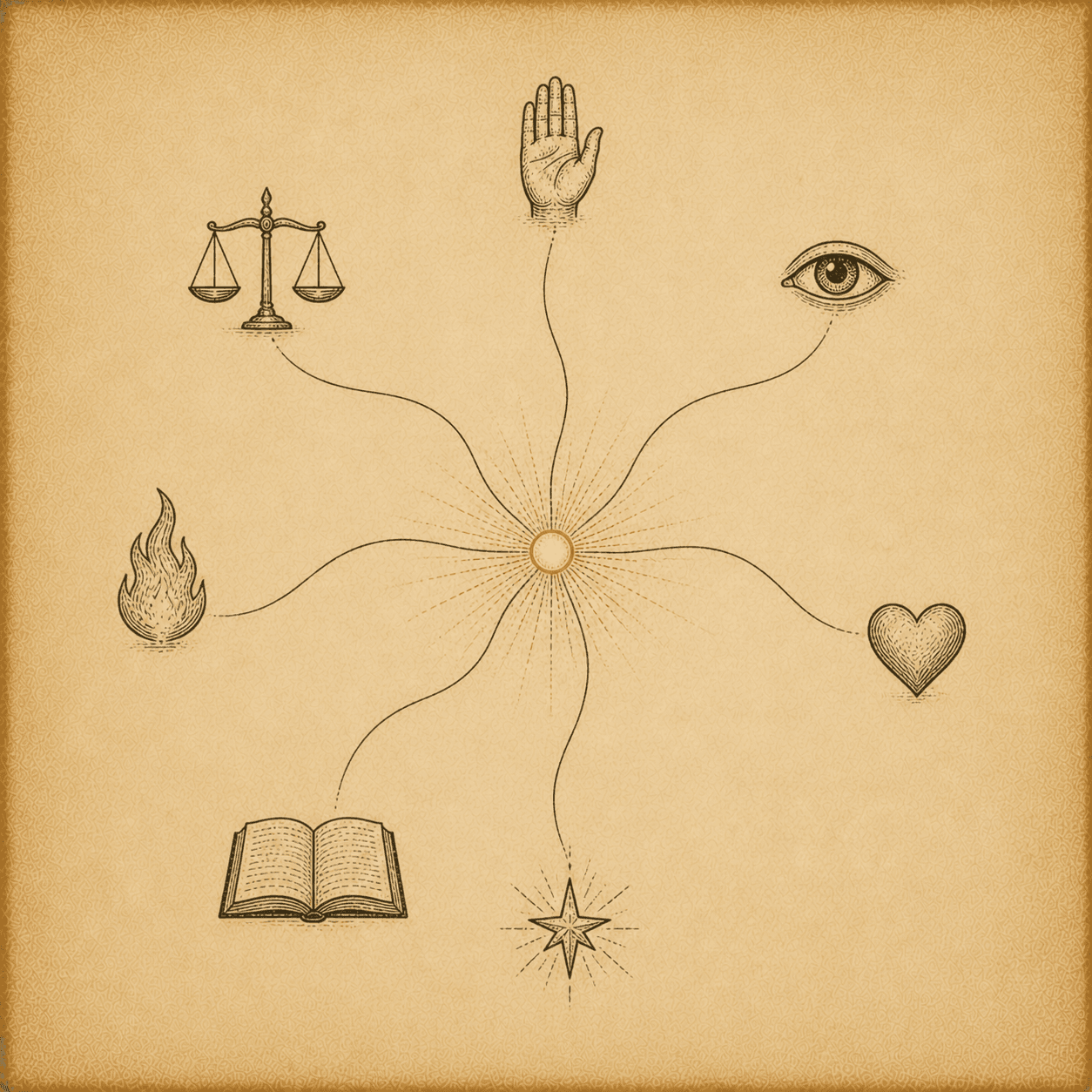
نحن حين نصف الله نستخدم كلمات كثيرة: الرحيم، العادل، الحكيم، القادر، العليم، الكريم. كل كلمة تشير إلى صفة. لكن هل الله مجموعة من الصفات المنفصلة؟ هل هو مركّب من أجزاء، كل جزء يحمل صفة مختلفة؟
فكّرتُ في الأمر، ووجدتُ أن هذا التصور خاطئ.
الله واحد. ليس واحداً بمعنى العدد، بل واحد بمعنى أنه لا يقبل الانقسام. هو كيان واحد متكامل، لا تتوزع فيه الصفات كما تتوزع الأعضاء في الجسد أو الغرف في البيت.
في حقيقته، تجتمع كل صفات الخير والكمال في صورة واحدة منسجمة. ليست صفات متجاورة أو متراكبة، بل صفات مندمجة في حقيقة واحدة لا تعرف التجزئة.
اندماج الصفات
هذا المفهوم صعب على العقل البشري. لكنني حاولتُ أن أفهمه.
رحمة الله لا تنفصل عن عدله. نحن نتخيل أحياناً أن الرحمة والعدل متناقضان: إما أن ترحم فتتجاوز عن العدل، وإما أن تعدل فتتجاوز عن الرحمة. لكن في الله، الرحمة والعدل شيء واحد. رحمته عادلة، وعدله رحيم. لا تناقض، لا تعارض، لا حاجة للاختيار بينهما.
حكمة الله لا تقوم خارج قدرته. نحن نعرف أناساً حكماء لكنهم عاجزون عن تنفيذ حكمتهم. ونعرف أناساً أقوياء لكنهم يفتقرون للحكمة. في الله، الحكمة والقدرة شيء واحد. حكمته نافذة لأنه قادر، وقدرته حكيمة لأنه عليم.
علمه لا ينفصل عن إرادته. نحن نعرف أشياء كثيرة لكننا لا نستطيع تغييرها. في الله، المعرفة والإرادة متحدتان. ما يعلمه يريده أو لا يريده، وما يريده يعلمه تماماً.
كل هذه الصفات التي نفصلها بالكلمات هي في حقيقته شيء واحد. ذات واحدة غير مركبة، لا تقوم على أجزاء، لا تعرف التفكك.
محدودية الإدراك البشري
لكن لماذا نحن نفصل بين هذه الصفات؟
لأن عقولنا محدودة.
نحن لا نستطيع أن ندرك الكمال المطلق دفعة واحدة. عقولنا تعمل بالتحليل والتفكيك. نأخذ الشيء المعقد ونقسمه إلى أجزاء أبسط لنفهمه. هذه طريقتنا في المعرفة.
حين ننظر إلى الله، لا نستطيع أن نرى حقيقته الواحدة المتكاملة. فنلجأ إلى التفريق: هذه رحمته، وهذا عدله، وهذه حكمته، وهذه قدرته. نفصل بين الصفات لتيسير الفهم على أنفسنا.
لكن هذا الفصل ليس في الله نفسه. الفصل في إدراكنا نحن.
الأمر أشبه برجل أعمى يتحسس فيلاً. يلمس الخرطوم فيقول: الفيل أنبوب طويل. يلمس الأذن فيقول: الفيل مروحة عريضة. يلمس الساق فيقول: الفيل عمود صلب. كل وصف صحيح جزئياً، لكن الفيل ليس مجموعة أجزاء منفصلة. الفيل كائن واحد متكامل، والأعمى يتحسسه جزءاً جزءاً لأنه لا يستطيع رؤيته دفعة واحدة.
وكذلك نحن مع الله. نتلمس صفاته واحدة واحدة، ونظن أنها منفصلة، بينما هي في حقيقته شيء واحد.
مثال النور الأبيض
وجدتُ مثالاً ساعدني على الفهم.
النور الأبيض يبدو لنا بسيطاً: ضوء واحد نقي. لكن حين يمر عبر منشور زجاجي، ينفصل إلى ألوان الطيف كلها: الأحمر والبرتقالي والأصفر والأخضر والأزرق والبنفسجي. كل هذه الألوان كانت موجودة في النور الأبيض، مندمجة فيه، لكننا لم نكن نراها متمايزة.
الله كذلك.
هو في حقيقته "نور" واحد يضم كل صفات الكمال مندمجة فيه. لكن حين ننظر إليه بعقولنا المحدودة، نرى الصفات متمايزة، كما نرى الألوان متمايزة حين يمر النور عبر المنشور.
الرحمة لون. العدل لون. الحكمة لون. القدرة لون. العلم لون. كلها ألوان في طيف واحد، مصدرها نور واحد.
والمنشور هنا هو عقلنا المحدود، الذي يفرّق ما هو في أصله متحد.
كيف نعرفه؟
إذا كان الله واحداً بهذا الشكل، وإذا كانت عقولنا عاجزة عن إدراكه دفعة واحدة، فكيف نعرفه؟
الجواب: نعرفه من خلال ما يتجلى منه في العالم.
العالم مليء بالقيم الإيجابية: الرحمة، العدل، الحكمة، الجمال، النظام، الحياة، المعرفة، المحبة. كل هذه القيم انعكاسات لصفات الله. حين نرى الرحمة في العالم، نعرف شيئاً عن رحمته. حين نرى الحكمة في العالم، نعرف شيئاً عن حكمته.
نجمع هذه الانعكاسات، ونردّها كلها إلى مصدرها الواحد.
كما لو أن شخصاً لم يرَ الشمس قط، لكنه رأى ضوءها على الجدران، ورأى دفئها على الأجساد، ورأى انعكاسها في الماء. من كل هذه الآثار، يستطيع أن يستدل على وجود الشمس ويعرف شيئاً عن طبيعتها، حتى لو لم يستطع النظر إليها مباشرة.
وكذلك نحن مع الله. لا نستطيع أن نراه مباشرة. لكننا نرى آثاره في كل مكان. ومن هذه الآثار نعرفه.
كتبتُ في دفتري:
"الله واحد غير منقسم. صفاته مندمجة في حقيقة واحدة. نحن نفصلها لأن عقولنا محدودة. الفصل في إدراكنا، لا في ذاته. نعرفه من آثاره في العالم، ونرد الكل إلى الواحد."
أغلقتُ الدفتر وأنا أشعر بشيء من الرهبة. الله أكبر من أن يُحاط به. لكن هذا لا يعني أننا لا نستطيع معرفته. نستطيع أن نعرف ما يكفي لنفهم مكاننا في هذا الوجود، ولنعرف كيف نعيش.
وهذا ما كان عليّ أن أستكشفه في المرحلة التالية.
الكمال مفتاحاً: فهم العالم والوجود من خلال كمال الله
أهمية تأكيد كمال الله
توقفتُ عند فكرة بدت لي مهمة جداً.
كل ما توصلتُ إليه حتى الآن - وجود الله، وعيه، وحدته - كل هذا مهم. لكن الصفة التي وجدتُها الأكثر أهمية للفهم هي: الكمال.
لماذا؟
لأن الكمال هو المفتاح الذي يفتح أبواباً كثيرة. حين نعرف أن الله كامل، نستطيع أن نفهم أشياء كثيرة عن العالم لم نكن نستطيع فهمها من قبل.
فكّرتُ في الأمر هكذا: لو كان الله ناقصاً بأي شكل، لو كان يجهل بعض الأشياء، أو يعجز عن بعض الأشياء، أو يخطئ أحياناً، لما استطعنا أن نثق بأي شيء في العالم. كل شيء سيكون محل شك. هل هذا القانون الطبيعي صحيح أم أن الله أخطأ في وضعه؟ هل هذا الحدث له معنى أم أنه وقع بالصدفة لأن الله لم يكن منتبهاً؟
لكن حين نعرف أن الله كامل، يتغير كل شيء. كل ما يصدر عنه يصدر عن حكمة كاملة. لا خطأ، لا صدفة، لا إهمال.
وهذا يعني شيئاً مهماً في طريقة تفكيرنا.
بدلاً من أن ننطلق من العالم بشكل أعمى لنحكم على الله، ننطلق من ثوابت عرفناها عنه لنفهم العالم من خلالها. الفرق كبير.
لنأخذ مثالاً: هل الله كريم؟
لو انطلقتُ من العالم وحده، قد أنظر إلى ما أملكه وما لا أملكه، ثم أصدر حكمي. إن كنتُ راضياً عن حالي، أقول إنه كريم. وإن كنتُ محروماً مما أريد، قد أشك في كرمه.
لكن هذه طريقة خاطئة.
الطريقة الصحيحة أن أبدأ مما عرفتُه: الله كامل، وكرمه كامل، لا نقص فيه. هذه نقطة البداية، لا نقطة الوصول. ثم أسأل: إذا كان كرمه كاملاً، فلماذا لا أملك كل ما أريد؟
هنا يتحول السؤال. بدلاً من أن أحكم على الله، أحاول أن أفهم حكمته. ربما ما أريده ليس ما أحتاجه. ربما في الحرمان درس. ربما هناك باب آخر ينتظر أن أطرقه.
هذا المنهج يحمي العقل من شيء خطير: تشويه صورة الله بناءً على منظورنا المحدود.
نحن نرى جزءاً صغيراً من الصورة. نرى لحظة من الزمن. نرى ظاهر الأشياء لا باطنها. فكيف نحكم على الكامل من موقعنا الناقص؟
الأصح أن نبدأ بما نعرفه عنه، ثم نحاول فهم ما نراه في ضوء هذه المعرفة. هذا يفتح أبواباً للفهم بدلاً من أن يغلقها. ويسمح لنا أن نبحث عن أسباب ما نمر به، فنصل أحياناً إلى إجابات تنفعنا، وربما تفتح لنا أبواباً جديدة كنا نظنها مغلقة.
منهجية الفهم
هذا أعطاني منهجية جديدة للفهم.
الحكمة صفة من صفات الله. هذا ما عرفتُه. لكن حين أفهم هذه الحكمة في إطار الكمال، أصل إلى استنتاج أعمق: حكمته ليست حكمة جزئية أو محدودة. هي حكمة كاملة، بلغت أقصى ما يمكن أن تبلغه الحكمة.
هذا يعني أن كل ما يصدر عن الله - في تكوين العالم، في خلق الكائنات، في وضع القوانين، في تسيير الأحداث - كل هذا يصدر عن حكمة كاملة.
لا شيء عبثي. لا شيء بلا معنى. لا شيء كان يمكن أن يكون أفضل مما هو عليه.
هذا لا يعني أنني أفهم كل شيء. لا أفهم لماذا يحدث هذا الحدث بالذات، أو لماذا خُلق هذا الكائن بهذا الشكل بالذات. لكنني أعرف أن هناك حكمة وراء كل شيء، حتى لو لم أستطع رؤيتها.
الاستنتاج الكبير
هذا قادني إلى استنتاج كبير.
كل ما يحيط بنا - ظروف ولادتنا، قدراتنا، المكان الذي نعيش فيه، الزمان الذي وُجدنا فيه، الأحداث التي تمر بنا - كل هذا ليس عشوائياً.
كل عنصر من هذه العناصر يمثل المسار الأمثل في تحقيق غاية أكبر. غاية لا نراها بوضوح لأننا جزء صغير من صورة كبيرة جداً.
هذا لا يعني أن نقبل كل شيء بسلبية. لا يعني أن نتوقف عن السعي للتغيير والتحسين. بل يعني أن نفهم أن ما نمر به له معنى، حتى لو كان صعباً. وأن جهودنا للتغيير هي نفسها جزء من الخطة، جزء من المسار الذي رُسم لنا.
خذ مثالاً حيّرني طويلاً: تفاوت ظروف الناس منذ الولادة. حين كنتُ أنطلق من العالم وحده، بدا هذا التفاوت ظلماً صارخاً. لكن حين انطلقتُ ممّا عرفتُه عن كمال الله، تبدّل السؤال في ذهني. لم أعد أسأل "أين العدل؟" بنبرة الاتهام، بل صرتُ أسأل: "أين الحكمة التي لا أراها بعد؟"
لم أكن أملك الجواب الكامل حينها. لكنني عرفتُ أنني إن وثقتُ بأن الحكمة كاملة، فمهمّتي أن أبحث عن وجهها، لا أن أنكرها. وهذا وحده فتح أمامي باباً كان مغلقاً.
انكشاف القضايا الوجودية
حين أثبتُّ كمال الله وأعدتُ قراءة صفاته في ضوء هذا الكمال، بدأت تنكشف أمامي قضايا كثيرة لم أكن أستطيع فهمها من قبل.
لماذا يوجد الألم في العالم؟ لأن الألم جزء من مسار له حكمة، حتى لو لم نرها.
لماذا يموت الناس؟ لأن الموت ليس نهاية بل انتقال، وهو جزء من تصميم أكبر.
لماذا تختلف ظروف الناس؟ لأن كل إنسان يحتاج ظروفاً مختلفة لرحلته الخاصة.
لماذا لا يتدخل الله لمنع الشر؟ لأن ما نسميه شراً هو نقص ناتج عن حدود المخلوقات، وهذه الحدود ضرورية لوجود عالم فيه حرية واختيار ونمو.
كل هذه الأسئلة التي حيّرت البشرية، بدأت تجد إجابات - ليست إجابات كاملة تفصيلية، لكنها إجابات تُطمئن العقل وتفتح أفقاً للفهم.
حدود المعرفة
لكنني كنتُ حريصاً على شيء مهم.
هذا الفهم لا يعني أنني أدّعي الإحاطة الكاملة بالله.
الكمال المطلق لا يُدرك إدراكاً تاماً إلا بمثله. يعني: لكي تفهم الكمال المطلق فهماً كاملاً، يجب أن تكون أنت نفسك كاملاً. وهذا مستحيل على أي مخلوق.
نحن نعرف الله معرفة جزئية. نعرف ما يكفي لنفهم مكاننا في الوجود. نعرف ما يكفي لنعرف كيف نعيش. نعرف ما يكفي لنطمئن. لكننا لا نحيط به علماً.
وهذا ليس نقصاً في المعرفة يجب أن نخجل منه. هذا طبيعة الأشياء. المحدود لا يحيط باللامحدود. الجزء لا يحتوي الكل.
ما يمكن بلوغه من المعرفة يكفي. يكفي للإجابة عن كثير من الأسئلة. يكفي لبناء فهم متماسك للوجود. يكفي لمعرفة كيف نعيش ونتصرف.
كتبتُ في دفتري:
"كمال الله مفتاح لفهم العالم. كل ما يصدر عنه يصدر عن حكمة كاملة. لا عبث، لا صدفة، لا ظلم. هذا لا يعني أنني أفهم كل شيء. لكنني أعرف أن كل شيء له معنى. معرفتي جزئية، وهذا طبيعي. ما أعرفه يكفي لأعيش وأفهم."
والآن، بعد أن عرفتُ الله من خلال العالم، حان الوقت للرحلة العكسية: أن أفهم العالم من خلال الله. أن أعود من الأصل إلى الفروع، من الخالق إلى المخلوقات، من المعلومات الشاملة إلى تجلياتها في الواقع.
كيف يصنع الله العالم؟ كيف تتحول المعلومة المجردة إلى مادة نراها ونلمسها؟ ما علاقة هذا بحياتنا اليومية، بألمنا وفرحنا، بولادتنا وموتنا؟
هذا ما كان عليّ أن أستكشفه في المرحلة التالية من الرحلة.
لحظة صمت
أغلقتُ الدفتر ووضعتُ القلم جانباً.
خرجتُ إلى الشرفة. كان الليل هادئاً، والسماء صافية. جلستُ على الكرسي القديم ورفعتُ رأسي إلى الأعلى.
النجوم. الملايين منها. كل واحدة شمس بعيدة، ربما تدور حولها كواكب، ربما فيها حياة لا نعرف عنها شيئاً.
كل هذا... من الله.
تنفّستُ بعمق.
طوال هذه السنوات كنتُ أبحث. أسأل، أقرأ، أتأمل، أشك، أعود، أتقدم. والآن وصلتُ. عرفتُ. ليس كل شيء، لكن ما يكفي. عرفتُ أن الله موجود، وأنه واحد، وأنه كامل، وأنه حكيم.
لكن...
سؤالاً واحداً ظل يدور في رأسي تلك الليلة:
"الآن وقد عرفتُ... كيف أعيش؟"
المعرفة شيء، والحياة شيء آخر. أن تعرف أن الله موجود لا يعني تلقائياً أنك تعرف كيف تعيش. أن تعرف أنه حكيم لا يعني أنك تفهم ما يحدث لك.
هناك فجوة بين المعرفة والحياة.
وهذه الفجوة هي ما كان عليّ أن أعبرها.
جلستُ صامتاً وقتاً طويلاً. لا أفكر في شيء محدد. فقط أتنفس، وأنظر للسماء، وأشعر بثقل السؤال وخفّته في آن واحد.
ثم عدتُ إلى الداخل.
كان عليّ أن أبدأ رحلة جديدة. رحلة من الله إلى العالم. من المعرفة إلى الفهم. من "من هو؟" إلى "كيف يعمل كل هذا؟"
Consciousness Points to a Conscious Being: From the Origin to the Active Creator
A Pivotal Point
I stopped at a question I could not move past.
I think. I feel. I am aware of my own existence. I know that I exist, and I know that I know. This is what we call consciousness. And it is not something simple or ordinary. Consciousness is the strangest phenomenon in all of existence. How can a collection of atoms become aware of itself? How can matter think?
But the question that occupied me was not about the nature of consciousness — it was about its source.
If everything within me emerged from the First Origin, then consciousness also came from there. The First Origin is what brought consciousness into being. And nothing can give what it does not possess.
I thought about it. Quarks cannot produce atoms unless they carry the information of atoms. Atoms cannot produce matter unless they carry the information of matter. This is what I had discovered earlier. Each world carries the information of what will come after it.
Therefore, for the First Origin to produce consciousness, it must carry the information of consciousness.
From Inert Existence to Conscious Existence
Here I paused for a long time.
What does it mean for the First Origin to carry "the information of consciousness"?
At first, I imagined the First Origin as a vast storehouse of information. Rules and laws and designs, stored somehow, waiting to manifest. Something like a cosmic hard drive containing all the data needed to build the universe.
But this image began to crack.
A hard drive does not know what it contains. A book does not understand what is written in it. Inert information does not perceive itself. Yet the First Origin produced conscious beings — beings that perceive themselves, think, and feel.
How can "mute" information produce consciousness?
If the First Origin were merely inert rules, merely cold data with no awareness, then where did the awareness I possess come from? Can darkness produce light? Can silence produce sound? Can the unconscious produce the conscious?
The answer seemed clear: No.
If consciousness exists in the world, then its source must also be conscious. The First Origin is not merely a storehouse of inert information. It is something deeper. Something that possesses, in some way, what we might call consciousness.
Approaching the Active Creator
This conclusion changed everything.
I was no longer speaking of "information" in the cold sense of the word. I was no longer speaking of rules that operate automatically without intention or awareness. I began to speak of something entirely different.
The First Origin is not a random system of information producing things without knowing what it does. It is a conscious origin. An origin that knows. An origin that has, in a way beyond our understanding, something resembling what we call awareness.
And this means it is not merely a "first cause" in the mechanical sense. Not like the first domino that falls and causes all the others to fall without knowing what it does. It is something closer to what we call... a Creator.
An active Creator, not a blind cause.
I wrote in my notebook:
"The First Origin is not inert information. It is a conscious existence. And from here, I begin to approach the idea of a Creator."
The Open Question
But I was not ready to leap to grand conclusions yet.
Yes, I had concluded that the First Origin is conscious, and that it is an active Creator rather than a blind cause. But this does not necessarily mean it is the God that religions speak of.
Religions describe God with specific attributes: absolute perfection, pure goodness, justice that never errs, wisdom without limits. Is the Creator I reached through reason the same as this God?
I did not yet know.
All I knew so far was that there is a First Origin, that it is comprehensive information existing by itself, that it is conscious, and that it is an active Creator. But is it perfect? Is it good? Does only good emerge from it, or can evil emerge from it as well?
These were questions I could not answer with what I had concluded so far. I needed to dive deeper. I needed to understand the meaning of perfection, the meaning of good and evil, then try to determine whether these concepts apply to the Creator I had discovered.
I closed my notebook that night feeling I was on the threshold of something immense.
I was no longer searching for an unknown "first origin." I had begun searching for a Creator. And the question now was: What is the nature of this Creator? Is it perfect? And what does perfection even mean?
This is what I needed to understand in the next stage.
Perfection and Deficiency: The Philosophy of Completeness and Limits
Defining Perfection
Before I could ask whether the Creator is perfect, I needed to understand what perfection means in the first place.
I sat thinking. What do we mean when we say something is "perfect"?
Perfection, as I came to understand it, means that something has reached the fullness of what it can be according to its nature. It has arrived at the utmost of what it is capable of becoming, so that it is no longer possible for it to be better than it is — not because of some flaw preventing it, but because it has reached its natural limit.
This means perfection is not a single concept that applies to everything in the same way. The perfection of a tree differs from the perfection of a human being. The perfection of a poem differs from the perfection of a machine. Everything has its own nature, and its perfection lies in fulfilling that nature to the fullest extent.
Manifestations of Perfection in the World
I looked around, searching for examples.
Existence is perfect when it is self-sustaining, not needing anything else to exist or continue. Something that depends on something else for its existence is deficient in this sense — if what it depends on were to disappear, it too would disappear.
A work of art is perfect when it expresses its creator's vision in a way that needs no clarification or addition. When you look at it and feel that everything is in its place — nothing missing, nothing superfluous.
A character trait is perfect when it manifests in a person consistently, without lapses or contradictions. The generous person who is sometimes miserly is not perfect in generosity. The truthful person who sometimes lies is not perfect in truthfulness. Perfection in character means consistency and steadfastness.
A creature is perfect when its form is complete and it fulfills the role for which it was created. A bird that flies easily, finds its food, reproduces, and lives its full life is closer to perfection than a sick or deformed bird that cannot fly.
Limits: What Hinders Completeness
But I noticed something important.
In every example I considered, there is something preventing the attainment of complete perfection. This something is what I call "limits."
Limits are everything that hinders something from reaching completeness.
Limits of the body: A person tires, falls ill, ages, dies. The body imposes constraints that cannot be transcended no matter how hard one tries.
Limits of space: A person cannot be in two places at the same time. Being in one place means being absent from every other place.
Limits of time: A person cannot return to the past to correct a mistake, nor leap into the future to see the outcome of a decision. We are imprisoned in the present moment.
Psychological constraints: Fear, anxiety, anger, envy. Emotions that affect our decisions and prevent us from acting optimally.
Limited resources: We do not possess all the resources we need. Money is limited, time is limited, energy is limited.
Ignorance: We do not know everything. We are ignorant of many truths that, if we knew them, would lead us to act differently. We make decisions based on incomplete information.
All these limits stand between a person and perfection. They prevent us from becoming the best we can be.
Deficiency: The Absence of Completeness
This is where deficiency comes from.
Deficiency is not something that exists in itself. Deficiency is simply the absence of completeness. It is the gap between what something is and what it could be if there were no limits.
A sick person lacks health. Not because illness is something added to them, but because complete health is absent.
An ignorant person lacks knowledge. Not because ignorance is something present in them, but because complete knowledge is absent.
A fearful person lacks courage. Not because fear is an independent force, but because complete courage is absent.
And since all creatures are surrounded by limits on every side, they cannot attain absolute perfection. They can approach it, strive toward it, achieve degrees of it. But absolute perfection remains out of reach, because limits never disappear.
The Relationship Between Perfection and Deficiency
Here I paused at an important insight.
Perfection and deficiency are not two independent opposites, as if they were two forces in conflict. In truth, they are descriptions of the degree to which a single value has been realized.
I thought of light as an example.
Light is a single concept. Its perfection lies in complete illumination — when it fills a space and no shadow remains. Its deficiency lies in weak illumination — when it is dim or absent. Darkness is not an independent force battling light. Darkness is simply the absence or weakness of light.
The same is true of heat. Its perfection lies in complete warmth, its deficiency in cold. Cold is not something that exists in itself; it is the absence or weakness of heat.
The same is true of knowledge. Its perfection lies in complete understanding, its deficiency in ignorance. Ignorance is not an independent force; it is the absence of knowledge.
This understanding changed how I saw things.
Deficiency is not a "thing" added to existence. Deficiency is the "absence" of perfection or the "weakness" of its realization. And limits are what cause this absence or weakness.
I wrote in my notebook:
"Perfection: when something reaches the utmost of what it can be according to its nature. Limits: what hinders something from reaching perfection. Deficiency: the absence of perfection or the weakness of its realization, caused by limits. The relationship: perfection and deficiency are not opposites, but two positions on the same spectrum."
I closed the notebook and thought: Now I understand what perfection means. The next question is: Is the Creator I have reached perfect? And if perfect, what is the relationship between that and good and evil in the world?
Good and Evil: An Existential Reading in Light of Divine Perfection
Defining Good
After understanding the meaning of perfection and deficiency, I moved to a harder question: What is good? And what is evil?
This question has occupied humanity since the beginning. Philosophers have disagreed, religions have offered varied answers, and people in their daily lives deal with these two concepts without stopping much to define them.
But I needed a clear understanding. So I sat and thought.
Good, as I began to understand it, is a comprehensive existential concept. It includes all the positive attributes, actions, forms, and systems in the world — not only in the human realm, but in all of nature. Honesty is good. Health is good. Order is good. Balance is good. Life is good.
But how do we distinguish good from everything else? What is the criterion?
I thought long and found that the criterion is: genuine benefit for the world as a whole.
Honesty is good because it benefits both the individual and society. When people trust one another, relationships flourish, commerce thrives, cooperation deepens. Honesty is not merely an imposed moral rule — it is genuinely beneficial.
Health is good because it enables a person to live, work, produce, and enjoy life.
Balance in nature is good because it ensures the continuation of life for all creatures.
The Nature of Evil
And what about evil?
Here I reached a conclusion that now seemed obvious: Evil is not a thing that exists in itself.
I applied what I had understood about perfection and deficiency. Deficiency is not an independent force; it is the absence of perfection. Darkness is not something that exists; it is the absence of light. Cold is not an independent force; it is the absence of heat.
And so it is with evil. Evil in its essence is not an independent force battling good. Evil is the absence of good or its diminishment.
Theft is not a "thing" that exists in itself. Theft is the absence of honesty and justice.
Lying is not an independent force. Lying is the absence of truthfulness.
Cruelty is not an entity that stands alone. Cruelty is the absence of mercy.
We give this absence the name "evil" so we can identify it and speak about it. But in its reality, it is not an independent existence — it is the non-existence of good or the weakness of its realization.
The Condition of Good: The Comprehensive View
Not everything that seems beneficial is truly good.
A thief sees benefit in stealing. But is theft good? Of course not. Why? Because it benefits the individual at the expense of others. It achieves a partial interest while causing harm to the whole.
Here we emphasize a fundamental condition: An action is not good if it achieves individual benefit at the cost of harming others, whether the benefit is material or psychological.
Why this condition?
Because we must look at the world from the Creator's perspective — for it is His domain — and that requires a comprehensive view, not a narrow individual one. The Creator does not look at the interest of one person at the expense of others. He sees the whole at once. And true good is what benefits the whole, or at least does not harm others.
The doctor who treats a patient does good, because their work benefits the patient without harming anyone else.
The teacher who transmits knowledge does good, because their work benefits students and society.
But the merchant who cheats in their goods does evil, even if they profit, because their gain came at the cost of harming others.
Evil as Deficiency Arising from Limits
Now I can tell you where evil in the world comes from.
Evil comes from limits.
Remember what I said about limits: limits of the body, limits of knowledge, limits of resources, psychological pressures. These limits prevent creatures from achieving perfection.
Fatigue is evil. But it arises from the limits of the body, which cannot work without rest.
Illness is evil. But it arises from the limits of the body, which is affected by external factors and cannot always resist them.
Ignorance is evil. But it arises from the limits of the mind, which cannot know everything.
Crime is evil. But it arises from psychological limits: ignorance of values, weakness of self-control, pressures that lead to deviation.
Even the disasters that result from humans corrupting nature are evils that arise from limits: ignorance of consequences, greed that blinds us to harm, failure to see comprehensively.
All these examples share one thing: Evil does not emanate from an independent force. It emanates from deficiency arising from the limits imposed on creatures.
The Creator's Relationship to Evil
Here I arrived at the difficult question: If the Creator is the one who brought creatures into existence, and these creatures are limited, and limits cause evil, is the Creator responsible for evil?
I thought about it carefully.
It is true that the Creator brought creatures into existence within limits. This is a reality that cannot be denied. Humans are limited, animals are limited, plants are limited. Everything in this world has limits.
And it is true that these limits may be the cause of evil appearing. When a person is ignorant, they may err. When they are weak, they may fall. When they are pressured, they may deviate.
But this does not mean that evil emanates from the Creator Himself.
I thought of an example: An engineer who designs a car knows it may be involved in an accident if driven recklessly. Does this mean the engineer caused the accident? Of course not. The engineer designed the car to be driven properly. The accident resulted from misuse, not from a flaw in the design.
And so it is with the Creator. He brought creatures into existence with certain capacities and limits. These creatures can walk the path of good if they use their capacities correctly. But they can also deviate because of their limits. The deviation is not from the Creator — it is from the creature that did not overcome its limits.
And there is another important point.
Evil is not inevitable. Not every limited being necessarily does evil.
A person is limited, yes. But they can overcome many of their limits. They can learn, reducing their ignorance. They can train, strengthening their will. They can reflect, understanding themselves and the world better.
Limits exist, but they are not an inescapable prison. They are challenges that can be dealt with.
I wrote in my notebook:
"Good: What benefits the world as a whole, not the individual at the expense of others. Evil: Not an independent force, but the absence of good or its diminishment. Source of evil: The limits imposed on creatures. The Creator's relationship: He brought creatures into existence with their limits, but evil arises from deficiency, not from the Creator's action. Evil is not inevitable: Creatures can overcome their limits."
I closed the notebook and felt I had taken a major step closer. Now I understand perfection, and I understand good and evil. The next question: Is the Creator I have reached perfect? And if perfect, what does that mean?
From the Conscious Creator to God: Where Reason Meets Faith
Summary of the Rational Journey
I sat that night reviewing what I had reached.
I had traced the chain of worlds — from our visible world to the world of atoms to the world of quarks — and realized that each world is produced by a world before it. Then I asked: Does this chain extend to infinity? And I found that this is impossible, because what has no beginning cannot reach any point.
Therefore, there is a beginning. There is a First Origin.
Then I asked: What is the nature of this Origin? And I found that it cannot be material, because everything that has form or energy needs something to bring it into existence. The First Origin must be free of these properties. And when I traced the pattern of the worlds, I found that matter diminishes the deeper we go, while information increases. At the First Origin, matter vanishes entirely, and what remains is comprehensive information for everything that will exist.
Then I asked: Is this Origin merely inert information? And I found that this too is impossible, because it produced consciousness. And what does not possess consciousness cannot produce consciousness. Therefore, the First Origin is conscious. It is an active Creator, not a blind cause.
This is what I had reached so far.
Contemplating Wisdom and Perfection
But the question that remained suspended: Is this Creator perfect?
I returned to what I had understood about perfection and deficiency. Deficiency comes from limits. And limits are: limits of the body, limits of space, limits of time, limits of knowledge, limits of power. Every creature is subject to these limits, and therefore cannot be perfect.
But the Creator... is He subject to these limits?
I thought about it.
The Creator has no body, because He is not material. Therefore, no bodily limits.
The Creator is not in a specific place, because space itself is of His creation. Therefore, no spatial limits.
The Creator is not in a specific time, because time itself is of His creation. Therefore, no temporal limits.
The Creator possesses the comprehensive information of everything in existence, as I had discovered earlier. Therefore, no limits of knowledge. No ignorance.
The Creator is the source of every power in existence, because every power that creatures possess came from Him. Therefore, no limits of power.
If the Creator is not subject to any of the limits that cause deficiency, this means He is... perfect.
Not perfect in a relative sense, as we say of a person that they are "perfect" in their field. But perfect in the absolute sense. No deficiency in Him whatsoever, because no limits hinder Him whatsoever.
Establishing Absolute Perfection
This conclusion opened new doors before me.
If the Creator is perfect, His actions do not stem from deficiency. No ignorance makes Him err, no weakness makes Him fail, no need drives Him to do what He should not.
And if He is perfect, His actions do not stem from randomness. Randomness means the absence of intention and planning. But the Creator who possesses comprehensive information cannot do anything without intention. Everything that issues from Him is intended, planned, calculated.
This is what we call: wisdom.
The Creator is wise. A complete wisdom that suffers no flaw.
And what about evil?
As I mentioned earlier, evil is not an independent force — it is deficiency arising from limits. Creatures do evil because they are limited: they are ignorant, they weaken, they deviate under pressure. But the Creator is not limited. No ignorance drives Him to err, no weakness drives Him to injustice, no need drives Him to harm.
Therefore, evil does not emanate from the Creator Himself. Evil emanates from the deficiency of creatures, not from the Creator's action.
And good? Good is the foundation of His action. Everything that issues from Him harmonizes with perfection and wisdom. Nothing issues from Him but good, because He possesses nothing that would drive Him toward anything other than good.
Where Reason Meets Faith
And here, at this moment, something happened that I did not expect.
I was writing in my notebook, trying to summarize what I had reached. I wrote:
"The Creator is one, because He is the Origin before which there is no origin. The Creator is conscious, because He produced consciousness. The Creator is perfect, because He is not subject to limits. The Creator is wise, because He possesses comprehensive information and does nothing without intention. The Creator does not wrong, because there is no deficiency in Him to drive Him to wrong. Good issues from the Creator, because He is perfect and nothing issues from perfection but perfection."
I stopped writing.
I read what I had written again. Then a third time.
These attributes... I know them. I have heard them before. Since my childhood. In religion classes, in books, in people's conversations.
The One. The Conscious. The Perfect. The Wise. The Just. The One who does not wrong. The One from whom good issues.
This is God.
The God that religions speak of. The God that prophets described. The God that millions have believed in throughout history.
I had not been searching for Him by name. I had been searching for truth. I had been following questions wherever they led. I had assumed nothing in advance, I had not begun from ready-made faith. I began from zero, from the question, from doubt, from the desire to understand.
And now, after this entire journey, I had arrived at the same point that believers arrived at.
But I arrived in my own way. Through reason, through contemplation, through searching.
I felt in that moment something strange. Something between astonishment and tranquility. As if I had been walking a long, dark road, and now suddenly I saw light at its end. Not a strange light, but a familiar one. A light I had always known but had never seen clearly.
The Final Conclusion
I closed the notebook and sat in silence.
Faith in God is not a leap outside of reason. It is not an abandonment of thinking. It is not a surrender to inherited tradition without examination.
Faith in God can be the natural result of a coherent intellectual journey. It can be the end of a rational quest that began with a question and ended with an answer.
This does not mean that everyone who believes must follow the same path. People arrive at faith in different ways: through natural inclination, through upbringing, through spiritual experience, through contemplation of the universe. All these are legitimate paths.
But what I discovered is that reason is also a path. The mind that questions and searches and analyzes can arrive, through logical steps, at the same conclusion that prophets and sages reached.
The God to whom reason led me is the same God that the divine messages spoke of.
This is what I understood that night.
And this is what changed everything.
The Unity of God: The Undivided Absolute Perfection
The Nature of Divine Unity
After concluding that God exists and that He is perfect, I began to contemplate the nature of this perfection.
When we describe God, we use many words: the Merciful, the Just, the Wise, the Powerful, the All-Knowing, the Generous. Each word points to an attribute. But is God a collection of separate attributes? Is He composed of parts, each part carrying a different attribute?
I thought about it and found that this conception is mistaken.
God is one. Not one in the sense of a number, but one in the sense that He does not admit division. He is a single integrated entity, in which attributes are not distributed as organs are distributed in a body or rooms in a house.
In His reality, all attributes of goodness and perfection converge in a single harmonious form. Not adjacent or layered attributes, but attributes merged into a single reality that knows no fragmentation.
The Fusion of Attributes
This concept is difficult for the human mind. But I tried to understand it.
God's mercy is not separate from His justice. We sometimes imagine that mercy and justice are contradictory: either you show mercy and forgo justice, or you enforce justice and forgo mercy. But in God, mercy and justice are one thing. His mercy is just, and His justice is merciful. No contradiction, no conflict, no need to choose between them.
God's wisdom does not stand apart from His power. We know people who are wise but unable to implement their wisdom. And we know people who are powerful but lack wisdom. In God, wisdom and power are one thing. His wisdom is effective because He is powerful, and His power is wise because He is all-knowing.
His knowledge is not separate from His will. We know many things but cannot change them. In God, knowledge and will are united. What He knows, He wills or does not will, and what He wills, He knows completely.
All these attributes that we separate with words are, in His reality, one thing. A single uncomposed essence, not built on parts, knowing no disintegration.
The Limits of Human Perception
But why do we separate these attributes?
Because our minds are limited.
We cannot perceive absolute perfection all at once. Our minds work by analysis and decomposition. We take the complex thing and divide it into simpler parts to understand it. This is our way of knowing.
When we look at God, we cannot see His single integrated reality. So we resort to differentiation: this is His mercy, this is His justice, this is His wisdom, this is His power. We separate the attributes to make understanding easier for ourselves.
But this separation is not in God Himself. The separation is in our perception.
It is like a blind man feeling an elephant. He touches the trunk and says: The elephant is a long tube. He touches the ear and says: The elephant is a wide fan. He touches the leg and says: The elephant is a solid pillar. Each description is partially correct, but the elephant is not a collection of separate parts. The elephant is a single integrated being, and the blind man feels it part by part because he cannot see it all at once.
And so it is with us and God. We feel His attributes one by one, and we think they are separate, while in His reality they are one thing.
The Example of White Light
I found an example that helped me understand.
White light seems simple to us: a single pure light. But when it passes through a glass prism, it separates into all the colors of the spectrum: red, orange, yellow, green, blue, violet. All these colors existed in the white light, merged within it, but we could not see them as distinct.
God is like that.
He is in His reality a single "light" that contains all attributes of perfection merged within it. But when we look at Him with our limited minds, we see the attributes as distinct, just as we see colors as distinct when light passes through a prism.
Mercy is a color. Justice is a color. Wisdom is a color. Power is a color. Knowledge is a color. All are colors in a single spectrum, their source a single light.
And the prism here is our limited mind, which differentiates what is originally unified.
How Do We Know Him?
If God is one in this way, and if our minds are incapable of perceiving Him all at once, how do we know Him?
The answer: We know Him through what manifests from Him in the world.
The world is full of positive values: mercy, justice, wisdom, beauty, order, life, knowledge, love. All these values are reflections of God's attributes. When we see mercy in the world, we know something of His mercy. When we see wisdom in the world, we know something of His wisdom.
We gather these reflections and trace them all back to their single source.
It is as if a person had never seen the sun, but saw its light on the walls, felt its warmth on bodies, saw its reflection in water. From all these effects, they can infer the existence of the sun and know something of its nature, even if they cannot look at it directly.
And so it is with us and God. We cannot see Him directly. But we see His effects everywhere. And from these effects we know Him.
I wrote in my notebook:
"God is one, undivided. His attributes are merged in a single reality. We separate them because our minds are limited. The separation is in our perception, not in His essence. We know Him from His effects in the world, and we trace the many back to the One."
I closed the notebook feeling something like awe. God is too great to be encompassed. But this does not mean we cannot know Him. We can know enough to understand our place in this existence, and to know how to live.
And this is what I needed to explore in the next stage.
Perfection as a Key: Understanding the World and Existence Through God's Perfection
The Importance of Affirming God's Perfection
I paused at an idea that seemed very important.
Everything I had reached so far — God's existence, His consciousness, His unity — all of this is important. But the attribute I found most important for understanding is: perfection.
Why?
Because perfection is the key that opens many doors. When we know that God is perfect, we can understand many things about the world that we could not understand before.
I thought of it this way: If God were deficient in any way, if He were ignorant of some things, or incapable of some things, or sometimes made mistakes, we would not be able to trust anything in the world. Everything would be in doubt. Is this natural law correct, or did God err in establishing it? Does this event have meaning, or did it happen by chance because God was not paying attention?
But when we know that God is perfect, everything changes. Everything that issues from Him issues from complete wisdom. No error, no chance, no negligence.
And this means something important in our way of thinking.
Instead of starting blindly from the world to judge God, we start from the constants we have learned about Him to understand the world through them. The difference is enormous.
Let us take an example: Is God generous?
If I started from the world alone, I might look at what I possess and what I lack, then issue my judgment. If I am satisfied with my condition, I say He is generous. If I am deprived of what I want, I might doubt His generosity.
But this is the wrong approach.
The correct approach is to begin from what I have learned: God is perfect, and His generosity is perfect, with no deficiency in it. This is the starting point, not the point of arrival. Then I ask: If His generosity is perfect, why do I not possess everything I want?
Here the question transforms. Instead of judging God, I try to understand His wisdom. Perhaps what I want is not what I need. Perhaps in deprivation there is a lesson. Perhaps there is another door waiting for me to knock on it.
This method protects the mind from something dangerous: distorting the image of God based on our limited perspective.
We see a small part of the picture. We see a moment in time. We see the surface of things, not their depths. So how can we judge the Perfect from our imperfect position?
The sounder approach is to begin with what we know about Him, then try to understand what we see in light of this knowledge. This opens doors to understanding instead of closing them. And it allows us to search for the reasons behind what we experience, sometimes reaching answers that benefit us, and perhaps opening new doors we thought were closed.
A Methodology of Understanding
This gave me a new methodology of understanding.
Wisdom is one of God's attributes. This I knew. But when I understand this wisdom in the framework of perfection, I arrive at a deeper conclusion: His wisdom is not partial or limited wisdom. It is complete wisdom, having reached the utmost that wisdom can reach.
This means that everything that issues from God — in the formation of the world, in the creation of creatures, in the establishment of laws, in the unfolding of events — all of this issues from complete wisdom.
Nothing is in vain. Nothing is without meaning. Nothing could have been better than it is.
This does not mean I understand everything. I do not understand why this particular event happens, or why this particular creature was created in this particular form. But I know that there is wisdom behind everything, even if I cannot see it.
The Great Conclusion
This led me to a great conclusion.
Everything that surrounds us — the circumstances of our birth, our capacities, the place where we live, the time in which we exist, the events that befall us — none of this is random.
Every element of these represents the optimal path in achieving a greater purpose. A purpose we do not see clearly because we are a small part of a very large picture.
This does not mean we accept everything passively. It does not mean we stop striving for change and improvement. Rather, it means we understand that what we go through has meaning, even if it is difficult. And that our efforts to change are themselves part of the plan, part of the path drawn for us.
Take an example that puzzled me for a long time: the disparity of people's circumstances from birth. When I set out from the world alone, this disparity seemed a glaring injustice. But when I set out from what I had come to understand about God's perfection, the question shifted in my mind. I no longer asked "Where is the justice?" in a tone of accusation, but rather asked: "Where is the wisdom I do not yet see?"
I did not hold the complete answer then. But I knew that if I trusted the wisdom to be complete, my task was to search for its face, not to deny it. And this alone opened before me a door that had been closed.
Existential Questions Unveiled
When I established God's perfection and reread His attributes in light of this perfection, many issues that I could not understand before began to become clear.
Why does pain exist in the world? Because pain is part of a path with wisdom behind it, even if we cannot see it.
Why do people die? Because death is not an ending but a transition, and it is part of a larger design.
Why do people's circumstances differ? Because each person needs different circumstances for their particular journey.
Why does God not intervene to prevent evil? Because what we call evil is deficiency arising from the limits of creatures, and these limits are necessary for the existence of a world that contains freedom, choice, and growth.
All these questions that have puzzled humanity began to find answers — not complete, detailed answers, but answers that reassure the mind and open horizons for understanding.
The Limits of Knowledge
But I was careful about something important.
This understanding does not mean I claim complete comprehension of God.
Absolute perfection can only be fully understood by its equal. That is: to fully understand absolute perfection, you yourself must be perfect. And this is impossible for any creature.
We know God partially. We know enough to understand our place in existence. We know enough to know how to live. We know enough to find peace. But we do not encompass Him in knowledge.
And this is not a deficiency in knowledge we should be ashamed of. This is the nature of things. The limited cannot encompass the unlimited. The part cannot contain the whole.
What can be attained of knowledge is enough. Enough to answer many questions. Enough to build a coherent understanding of existence. Enough to know how to live and act.
I wrote in my notebook:
"God's perfection is a key to understanding the world. Everything that issues from Him issues from complete wisdom. No vanity, no chance, no injustice. This does not mean I understand everything. But I know that everything has meaning. My knowledge is partial, and this is natural. What I know is enough to live and understand."
And now, having known God through the world, the time had come for the reverse journey: to understand the world through God. To return from the Origin to the branches, from the Creator to the creatures, from the comprehensive information to its manifestations in reality.
How does God make the world? How does abstract information transform into matter we can see and touch? What is the relationship of all this to our daily lives, to our pain and joy, to our birth and death?
This is what I needed to explore in the next stage of the journey.
A Moment of Silence
I closed the notebook and set the pen aside.
I went out onto the balcony. The night was calm, the sky clear. I sat in the old chair and raised my head upward.
The stars. Millions of them. Each one a distant sun, perhaps with planets orbiting it, perhaps with life we know nothing about.
All of this... from God.
I breathed deeply.
Throughout all these years I had been searching. Questioning, reading, contemplating, doubting, returning, advancing. And now I had arrived. I knew. Not everything, but enough. I knew that God exists, that He is one, that He is perfect, that He is wise.
But...
One question kept circling in my head that night:
"Now that I know... how do I live?"
Knowledge is one thing, and life is another. To know that God exists does not automatically mean you know how to live. To know He is wise does not mean you understand what happens to you.
There is a gap between knowledge and life.
And this gap is what I needed to cross.
I sat in silence for a long time. Not thinking of anything in particular. Just breathing, and looking at the sky, and feeling the weight and lightness of the question at the same time.
Then I went back inside.
I had to begin a new journey. A journey from God to the world. From knowledge to understanding. From "Who is He?" to "How does all this work?"