العالم الأول - في حضرة الأصلThe First World — In the Presence of the Origin
في حضرة الأصل: حين تضمحلّ المادة وتتعاظم المعلومة
العودة لمسألة انتقال المعلومات
قبل أن أتابع الغوص نحو البداية، توقفتُ لأستعيد ما تعلمتُه عن انتقال المعلومات بين العوالم.
كنتُ قد اكتشفتُ أن كل عالم لا يعرف فقط كيف يعمل هو نفسه، بل يحمل في داخله معلومات كل العوالم التي ستنبثق عنه. الكواركات حين تبني الذرات، تبنيها بهيئة مصممة بدقة، هيئة تمكّن الذرات من إنتاج المادة المرئية بالشكل الذي نعرفه. لو لم تكن الكواركات "تعرف" مسبقاً ما سيحتاجه كل عالم تالٍ، لما استطاعت أن تصمم الذرات بهذه الدقة.
هذا يعني أن المعلومات تتراكم كلما صعدنا في السلسلة، لكنها تتركز كلما نزلنا.
عالمنا المرئي يعرف نفسه فقط. الذرات تعرف نفسها وتعرف عالمنا. الكواركات تعرف نفسها وتعرف الذرات وتعرف عالمنا. وهكذا، كلما غصنا أعمق، وجدنا معرفة أوسع وأشمل.
نمط التوغل: اضمحلال المادة وتعاظم المعلومة
أخذتُ ورقة ورسمتُ خطين متعاكسين.
الخط الأول يمثل المادة: يبدأ عالياً عند عالمنا المرئي، ثم ينحدر كلما غصنا أعمق. عالمنا مليء بالمادة المعقدة والمتنوعة. عالم الذرات أبسط. عالم الكواركات أبسط أيضاً. وكلما تابعنا النزول، تضاءلت المادة، وتبسّط التركيب، وقلّت الهيئات المحددة.
الخط الثاني يمثل المعلومات: يبدأ منخفضاً عند عالمنا، ثم يصعد كلما غصنا أعمق. عالمنا يعرف نفسه فقط. لكن كلما نزلنا، ازدادت المعرفة، واتسع نطاق ما يحمله كل عالم من معلومات عن العوالم التي ستأتي.
نظرتُ إلى الخطين المتقاطعين وفهمتُ النمط بوضوح.
ما يضمحل في هذه الرحلة هو المادة والطاقة والعناصر الفيزيائية. كل ما يمكن قياسه ووزنه ورصده بالأدوات. كل ما له هيئة وشكل وتركيب.
ما يتعاظم هو المعلومات. المعرفة المختزنة. القدرة على تحديد ما سيأتي وتشكيله.
الخطان يسيران في اتجاهين متعاكسين. وإذا تابعنا هذا النمط حتى نهايته المنطقية...
عند الأصل الأول
أغمضتُ عيني وتخيلتُ الرحلة حتى نهايتها.
أتابع الغوص، عالماً بعد عالم. المادة تتضاءل أكثر فأكثر. الهيئات تصبح أبسط فأبسط. التركيب يتلاشى. الطاقة بالشكل الذي نعرفه تختفي.
في المقابل، المعلومات تتسع. كل عالم أغوص إليه يحمل معرفة أكبر، يعرف أكثر عما سيأتي، يحتوي على تفاصيل أدق عن كل العوالم التي ستنبثق عنه.
ثم أصل إلى النقطة الأخيرة. الأصل الأول. البداية الحقيقية.
ماذا أجد هناك؟
المادة وصلت إلى الصفر. لم يعد هناك هيئة، ولا طاقة، ولا تركيب، ولا أي شكل من أشكال الوجود المادي. انتفت تماماً. هذا منطقي، لأننا أثبتنا أن البداية لا يمكن أن تملك هذه الخصائص، وإلا لاحتاجت لمن أوجدها.
لكن المعلومات وصلت إلى الذروة. إلى الحد الأقصى. كل ما يمكن معرفته عن كل العوالم التي ستوجد، مختزن هنا. كل التفاصيل، كل القوانين، كل الهيئات التي ستتشكل لاحقاً، كل المسارات التي ستسلكها المادة حين تظهر، كل شيء.
الأصل الأول هو الحاوي لمعلومات كل الوجود، دون أن يمتلك أي خاصية مادية.
فتحتُ عيني ونظرتُ إلى ما رسمتُه.
الخطان يلتقيان عند نقطة واحدة. نقطة تكون فيها المادة صفراً والمعلومات في أقصاها. هذه النقطة هي الأصل الأول.
لكنني توقفتُ عند كلمة "عالم".
هل يصح أن أسمي هذا الأصل "عالماً"؟ العالم، بحسب ما فهمتُه، هو حيّز تتواجد فيه هيئات تحكمها قوانين. لكن في الأصل الأول لا توجد هيئات. وإذا لم تكن هناك هيئات، فلا حاجة لقوانين تحكمها.
إذاً، ما وصلتُ إليه ليس "عالماً" بالمعنى المتعارف عليه. ليس مكاناً فيه أشياء تتفاعل. هو شيء آخر تماماً.
هو معلومات صرفة. معلومات لا يحتويها شيء، لأنه لا يوجد شيء ليحتويها. معلومات قائمة بذاتها، موجودة قبل أن يوجد أي شيء آخر.
كتبتُ على ورقتي:
"الأصل الأول ليس عالماً. هو معلومات شاملة لكل ما في الوجود، قائمة بذاتها، دون هيئة ولا طاقة ولا مادة."
قرأتُ ما كتبتُ وشعرتُ بغرابة الفكرة. معلومات بلا حامل؟ معرفة بلا دماغ يحملها ولا كتاب يحفظها؟ كيف يمكن لهذا أن يكون؟
هذا ما يجب أن أفهمه الآن.
ما بعد العالم: حين تصبح المعلومة هي الوجود
جلستُ أتأمل ما وصلتُ إليه في الليلة السابقة.
الأصل الأول ليس عالماً. قلتُها لنفسي وأنا لا أزال أستغرب وقعها. طوال رحلتي، كان "العالم" يعني شيئاً واضحاً في ذهني: حيّز تسكنه هيئات محددة، تحكمها قوانين، وتتفاعل وفق أنماط يمكن رصدها ووصفها. عالم الكواركات فيه جسيمات وقوى. عالم الذرات فيه عناصر وتفاعلات. وعالمنا المرئي فيه مادة وحركة ولون وصوت. كل عالم عرفتُه كان له هذا الشكل.
لكن الأصل الأول ليس كذلك.
فيه انتفت الهيئات تماماً. لا جسيمات، لا طاقة، لا تركيب من أي نوع. وحين أزلتُ الهيئات في ذهني، لاحظتُ أن شيئاً آخر يسقط معها: القوانين. فالقوانين لم تُوجد إلا لتنظّم سلوك الأشياء، لتحدّد كيف تتحرك الهيئات وكيف تتفاعل. فإذا لم تكن هناك هيئات أصلاً، فما الذي ستنظّمه القوانين؟ لا شيء. حيث لا أشياء، لا حاجة لقواعد تحكمها.
إذاً، ما الذي يبقى؟
لا يبقى سوى المعلومات.
معلومات شاملة لكل ما سيوجد لاحقاً: كل عالم سينبثق، كل هيئة ستتشكل، كل قانون سيحكم، كل مسار ستسلكه المادة حين تظهر. كل هذا مختزن في الأصل الأول، لكن ليس كأشياء موجودة فعلاً، بل كمعرفة، كإمكانية، كتصميم ينتظر أن يظهر.
وهذا يعني أن ما وصلتُ إليه لا يصح أن أسميه "عالماً" بعد الآن. النقطة الأولى التي انبثق منها كل شيء ليست مكاناً، ولا زماناً، ولا مادة. هي معلومات صرفة، لا أكثر ولا أقل.
كتبتُ هذه الكلمة وحدها في منتصف الورقة: "معلومات". ونظرتُ إليها طويلاً.
ثم شعرتُ بأن شيئاً لا يستقيم.
في كل ما عرفتُه في حياتي، المعلومة لا تأتي وحدها. لا بد لها من شيء يحملها. الكلمة تحتاج إلى صفحة أو صوت. الصورة تحتاج إلى سطح تظهر عليه. الفكرة تحتاج إلى ذهن يفكر فيها. لم يحدث قط أن رأيتُ معلومةً "عاريةً"، معلومةً قائمةً بذاتها، معلّقةً في الفراغ دون أن يسندها شيء.
فكيف يكون الأصل الأول معلوماتٍ فقط، بلا شيء يحملها؟
بل كيف يكون شيءٌ موجوداً أصلاً، وهو ليس مادة ولا طاقة، ولا حتى وعاءً يحفظ المعلومة؟ نحن نقول عن الشيء إنه "موجود" حين نستطيع أن نلمسه، أو نقيسه، أو نرصد أثره. أما شيء بلا هيئة ولا طاقة، فبأي معنى نقول إنه موجود؟
توقفتُ عند هذا السؤال طويلاً، وأحسستُ أنه أصعب ما واجهني منذ بدأتُ الرحلة.
كل خطوة قبله كانت تقودني إلى الأمام بثبات. أما هنا، فقد بدا الأمر وكأنني أطلب من نفسي أن أتصوّر ما لا يمكن تصوّره: وجوداً بلا شيء موجود، ومعرفةً بلا من يعرف، ومعلومةً بلا حامل.
لكنني لم أستطع أن أتراجع. المنطق قادني إلى هنا خطوة بعد خطوة، ولم يكن في أي خطوة خطأ أستطيع أن أشير إليه. السلسلة يجب أن تنتهي، والبداية لا يمكن أن تكون مادية، وكلما غصتُ أعمق قلّت الهيئة واتسعت المعلومة. كل هذا صحيح. فإذا كانت النتيجة أن الأصل معلومات صرفة، فلا مفرّ من أن أفهم كيف يمكن للمعلومة أن توجد بذاتها.
طويتُ الورقة، ولم أنم تلك الليلة إلا متأخراً.
كان عليّ أن أفكّ هذا اللغز قبل أن أتقدّم خطوة أخرى.
المعلومة في ذاتها: جوهر سابق على الحامل
التمييز الأساسي: المعلومة والوسيط
ظللتُ أفكر في السؤال الذي تركته معلقاً: كيف يمكن للمعلومة أن توجد بذاتها، دون شيء يحملها؟
ولكي أقترب من جواب، كان عليّ أولاً أن أميّز بوضوح بين شيئين نخلط بينهما دائماً دون أن ننتبه: المعلومة نفسها، والوسيط الذي تظهر من خلاله.
في حياتنا اليومية، نرى المعلومات دائماً مرتبطة بشكل مادي. الكلمة مكتوبة على ورقة. الصورة معروضة على شاشة. الصوت ينتقل عبر موجات في الهواء. الفكرة موجودة في دماغ. نحن لا نرى المعلومات "عارية" أبداً، بل نراها دائماً متجسدة في شيء.
هذا الارتباط الدائم يجعلنا نعتقد أن المعلومة لا يمكن أن توجد بدون حامل. نظن أن الورقة هي التي تُوجد الكلمة، وأن الشاشة هي التي تُوجد الصورة، وأن الدماغ هو الذي يُوجد الفكرة.
لكن هذا الاعتقاد خاطئ.
الميل الطبيعي للخطأ
الخطأ يأتي من أننا ننظر إلى الأمور من زاوية واحدة فقط.
نحن نعيش في عالم مادي، ونتعامل مع الأشياء من خلال حواسنا المادية. لا نستطيع أن نلمس فكرة مجردة، ولا أن نرى معنى بالعين المجردة. لذلك، حين نريد أن نتواصل أو نحفظ أو ننقل معلومة، نحتاج إلى وسيط مادي: ورقة، صوت، إشارة، شاشة.
لكن هذه الأشكال المادية ليست المعلومة نفسها. هي فقط وسائل لظهورها في عالمنا.
فكّر في الأمر: الكلمة نفسها يمكن أن تُكتب بالحبر أو بالرصاص أو بالضوء على شاشة. يمكن أن تُنطق بصوت عالٍ أو بهمس. يمكن أن تُترجم إلى لغة الإشارة. الوسيط يتغير، لكن المعلومة تبقى هي هي.
لو كانت المعلومة هي الحبر، لتغيرت كلما تغير الحبر. لكنها لا تتغير. هذا يعني أنها شيء مستقل عن الحبر.
جوهر المعلومة
إذاً، ما هي المعلومة في جوهرها؟
المعلومة ليست ورقة ولا موجة ولا إشارة كهربائية ولا نشاطاً في خلايا الدماغ. هذه كلها أوعية, لا أكثر.
المعلومة في جوهرها هي: معنى، أو ترتيب، أو قاعدة، أو علاقة.
حين أقول "الماء يغلي عند مئة درجة"، هذه معلومة. لكن أين هي؟ ليست في الحبر الذي كُتبت به، ولا في الصوت الذي نُطقت به. هي علاقة بين أشياء: الماء، الحرارة، الغليان. هذه العلاقة موجودة سواء كتبتُها أم لم أكتبها، سواء عرفتُها أم لم أعرفها. الماء كان يغلي عند مئة درجة قبل أن يكتشف أي إنسان هذه الحقيقة.
وحين أقول "الدائرة شكل كل نقاطه تبعد مسافة متساوية عن المركز"، هذا تعريف، قاعدة، ترتيب. هل هذه القاعدة موجودة في الورقة التي كُتبت عليها؟ لا. هي موجودة بذاتها، كحقيقة هندسية لا تعتمد على أي وسيط مادي.
المعلومات، في أعمق جوهرها، هي حقائق وعلاقات وقواعد قائمة بذاتها. الأوعية المادية لا تُوجدها، بل تُظهرها فقط.
المعلومة في الأصل الأول
الآن أستطيع أن أفهم الأصل الأول بشكل أوضح.
في الأصل الأول، حيث لا مادة ولا طاقة ولا هيئات، تبقى المعلومة بوصفها الأصل. ليست محمولة على شيء، لأنه لا يوجد شيء ليحملها. هي موجودة بذاتها، كما أن قواعد الرياضيات موجودة بذاتها سواء اكتشفها أحد أم لا.
لكن هناك فرق جوهري.
المعلومات في الأصل الأول ليست مجرد قواعد سلبية تنتظر من يكتشفها. هي معلومات فاعلة، معلومات منها تنشأ القوانين والأشكال والعوالم. هي المصدر الذي انبثق منه كل شيء.
فكّر في الأمر هكذا: قوانين الفيزياء التي تحكم عالمنا، من أين جاءت؟ الهيئات التي تتخذها الجسيمات، من حدّدها؟ القواعد التي تنظم تفاعل الذرات، من وضعها؟
كل هذا كان موجوداً كمعلومات في الأصل الأول، قبل أن يوجد أي شيء مادي. ثم تجلّت هذه المعلومات، فظهرت العوالم بقوانينها وهيئاتها.
المعلومات لا تحتاج لحامل، لأن الحوامل نفسها تنشأ عنها. المادة لا تُوجد المعلومة، بل المعلومة هي التي تُوجد المادة.
الوجود القائم بذاته
وصلتُ الآن إلى فهم أعمق.
المعلومة في الأصل الأول وجود قائم بذاته. ليس لأنها تتجسد في شيء، فلا شيء هناك لتتجسد فيه. بل لأنها هي الأساس الذي يسمح لكل تجسد أن يكون ممكناً.
هذا يقلب الطريقة التي اعتدنا أن نفكر بها.
نحن نظن أن الوجود يبدأ بالمادة، ثم تأتي المعلومات لتصف هذه المادة. نظن أن الأشياء توجد أولاً، ثم نكتشف قوانينها لاحقاً. لكن الحقيقة، كما بدأتُ أفهمها، هي العكس تماماً.
المعلومات هي التي توجد أولاً. القوانين والقواعد والعلاقات موجودة قبل أن توجد الأشياء التي تخضع لها. ثم تتجلى هذه المعلومات، فتظهر المادة والطاقة والهيئات، كلها منضبطة بالقوانين التي سبقتها.
كتبتُ على ورقتي:
"الأصل الأول معلومات قائمة بذاتها. ليست محمولة على شيء لأنها سابقة على كل شيء. منها نشأت العوالم بقوانينها وهيئاتها. هي لا تحتاج لحامل، لأن كل الحوامل نشأت عنها."
نظرتُ إلى ما كتبتُ وشعرتُ بأنني أقترب من فهم طبيعة هذا الأصل. لكن سؤالاً جديداً برز أمامي: هذه المعلومات الشاملة، ما الذي تحتويه بالتحديد؟ وكيف يمكنني أن أعرف شيئاً عنها؟
ربما الجواب أقرب مما أظن. ربما هو أمامي، في هذا العالم نفسه الذي أعيش فيه.
تجلّيات الأصل: قراءة المعلومات في العالم
إذا كان الأصل الأول معلومات شاملة لكل ما في الوجود، فكيف يمكنني أن أعرف شيئاً عن محتوى هذه المعلومات؟
الجواب بدا واضحاً حين فكرتُ فيه: من خلال العالم نفسه.
العالم الذي أعيش فيه هو تجلٍّ لتلك المعلومات. كل ما أراه حولي، كل ما أسمعه وألمسه وأشعر به، كل هذا انبثق من الأصل الأول. إذاً، بمراقبة العالم، أستطيع أن أستخلص شيئاً عن المعلومات التي شكّلته.
خرجتُ في ذلك اليوم إلى الطبيعة.
جلستُ على صخرة قرب نهر صغير وبدأتُ أنظر حولي بعين مختلفة. لم أكن أنظر إلى الأشياء كأشياء فقط، بل كتجليات لمعلومات.
رأيتُ النهر يجري. الماء ينحدر من الأعلى إلى الأسفل، يتبع مساراً محدداً، يلتف حول الصخور، يحمل معه أوراقاً وأغصاناً صغيرة. هذا الجريان ليس عشوائياً. هناك قانون يحكمه، قوة تسحب الماء نحو الأسفل، خصائص تجعله يتدفق بهذه الطريقة لا بغيرها.
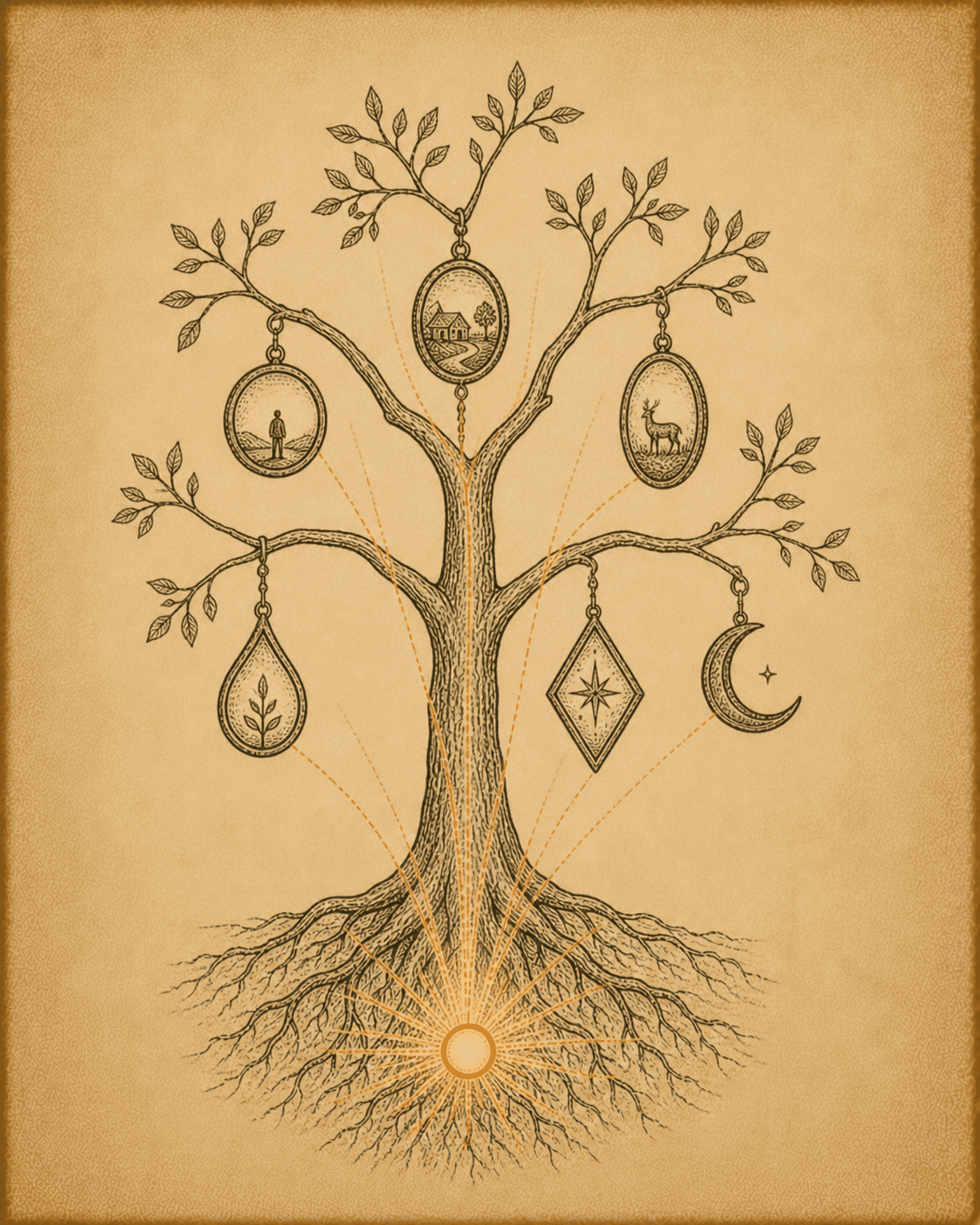
رأيتُ شجرة على الضفة. جذورها ممتدة في التراب، جذعها يرتفع نحو السماء، أغصانها تتفرع وتحمل أوراقاً خضراء. الشجرة تمتص الماء من الأرض، تستخدم ضوء الشمس لتصنع غذاءها، تتنفس وتنمو وتتكاثر. كل هذا يحدث وفق نظام دقيق، معلومات مختزنة في كل خلية من خلاياها.
رأيتُ طائراً يحلّق فوق رأسي. جناحاه يضربان الهواء بإيقاع منتظم، جسمه مصمم للطيران، عيناه ترصدان الأرض بحثاً عن طعام. من علّمه أن يطير؟ من صمّم جناحيه بهذا الشكل؟ من أودع فيه الغريزة التي تدفعه للبحث والصيد والعودة إلى عشه؟
كلما نظرتُ أكثر، رأيتُ أكثر.
المعلومات لا تتجلى فقط في الأشياء المنفردة، بل في العلاقات بينها أيضاً. النهر يسقي الشجرة. الشجرة توفر الظل والمأوى للطائر. الطائر يأكل الحشرات التي قد تضر الشجرة. كل شيء مرتبط بكل شيء ضمن شبكة معقدة من العلاقات.
ولاحظتُ أن هذه الشبكة ليست فوضوية. هناك نظام. هناك توازن. كل عنصر يؤدي دوراً، وكل دور يخدم الكل.
رفعتُ نظري إلى السماء وفكرتُ في النظام الأكبر.
الشمس تشرق كل صباح وتغرب كل مساء. هذا التعاقب بين الليل والنهار يحكم حياة كل الكائنات. النباتات تحتاج للضوء لتنمو، والحيوانات تحتاج للظلام لترتاح. لو كانت الشمس ثابتة، لاحترق نصف الأرض وتجمد النصف الآخر.
الفصول تتبدل: ربيع وصيف وخريف وشتاء. هذا التبدل يضمن تجدد الحياة. البذور تُزرع في الربيع، تنمو في الصيف، تُحصد في الخريف، والأرض ترتاح في الشتاء لتستعيد خصوبتها. لو كان الطقس ثابتاً، لاستُنزفت الأرض ولماتت النباتات.
الماء يتبخر من البحار، يصعد إلى السماء، يتحول إلى غيوم، يسقط مطراً على الأرض، يجري في الأنهار، يعود إلى البحار. دورة متكاملة تضمن وصول الماء إلى كل مكان، تسقي الأرض، تُحيي الكائنات.
كل هذه الأنظمة تخدم غاية واحدة: حفظ الحياة واستمرارها.
لا شيء في هذا العالم موجود بلا سبب. الشمس ليست موجودة لتكون جميلة في السماء، بل لتمنح الحياة الطاقة التي تحتاجها. الماء ليس موجوداً ليملأ البحار فقط، بل ليكون أساس كل كائن حي. الهواء ليس فراغاً بين الأشياء، بل وسط ضروري للتنفس والحركة والصوت.
كل شيء مصمم، كل شيء منظم، كل شيء يعمل ضمن منظومة أكبر منه.
عدتُ إلى البيت في المساء وأنا أحمل فهماً جديداً.
المعلومات التي في الأصل الأول ليست أرقاماً مجردة أو قواعد جافة. هي معلومات حيّة، تتجلى في مخلوقات تتنفس وتنمو وتشعر، وفي قوانين تحكم حركة الكون، وفي أنظمة تضمن استمرار الحياة جيلاً بعد جيل. كل قانون اكتشفتُه، وكل علاقة فهمتُها، وكل نظام لاحظتُه، كان يعود في أصله إلى تلك المعلومات الشاملة.
لكنني، وأنا أتأمل النهر والشجرة والطائر، شعرتُ أن هناك مرآةً أوضح لم أقف أمامها بعد. مرآةً أقرب إليّ من أي شيء في الطبيعة من حولي.
أنا نفسي. الإنسان.
فإذا كانت الطبيعة تكشف طرفاً من معلومات الأصل، فربما يكشف الإنسان طرفاً أعمق وأدق. فقررتُ أن أنقل نظري من الطبيعة الواسعة حولي إلى الحياة الإنسانية نفسها، لأرى ماذا تقول لي.
المرآة الكونية: العالم انعكاسٌ للأصل
بدأتُ بأقرب نظام أعرفه: الأسرة.
الأب والأم والأطفال. هذا النظام موجود في كل المجتمعات البشرية، بل في معظم الكائنات الحية. لماذا؟ لأنه يضمن استمرار النوع. الطفل يولد ضعيفاً، يحتاج لمن يرعاه ويحميه ويعلّمه حتى يكبر ويصبح قادراً على الاعتماد على نفسه. الأب والأم يوفران هذه الرعاية، مدفوعين بمشاعر لم يختاروها: الحب، الحنان، الشعور بالمسؤولية.
من أين جاء هذا النظام؟ من وضع هذه المشاعر في قلوب الآباء والأمهات؟ من صمّم هذه العلاقة بحيث تضمن بقاء النوع واستمراره؟
ثم نظرتُ إلى الأدوار الأخرى في المجتمع.
المعلم. شخص يحمل معرفة وينقلها إلى الآخرين. يأخذ ما تعلّمه من الأجيال السابقة ويوصله إلى الأجيال التالية. بفضله، لا يبدأ كل جيل من الصفر، بل يبني على ما سبقه. المعرفة تتراكم، والبشرية تتقدم.
المهندس. شخص يفهم قوانين الطبيعة ويستخدمها لبناء أشياء تخدم الإنسان. يحوّل الحجر إلى بيت، والحديد إلى آلة، والرمل إلى زجاج. يسخّر المادة لتلبية الحاجات.
الطبيب. شخص يفهم الجسد ويعالج أمراضه. يحافظ على الحياة، يخفف الألم، يعيد الصحة لمن فقدها. وجوده ضروري لاستمرار الحياة في وجه المرض والإصابة.
الفلاح. شخص يزرع الأرض ويحصد ثمارها. يوفر الغذاء الذي لا يمكن للإنسان أن يعيش بدونه.
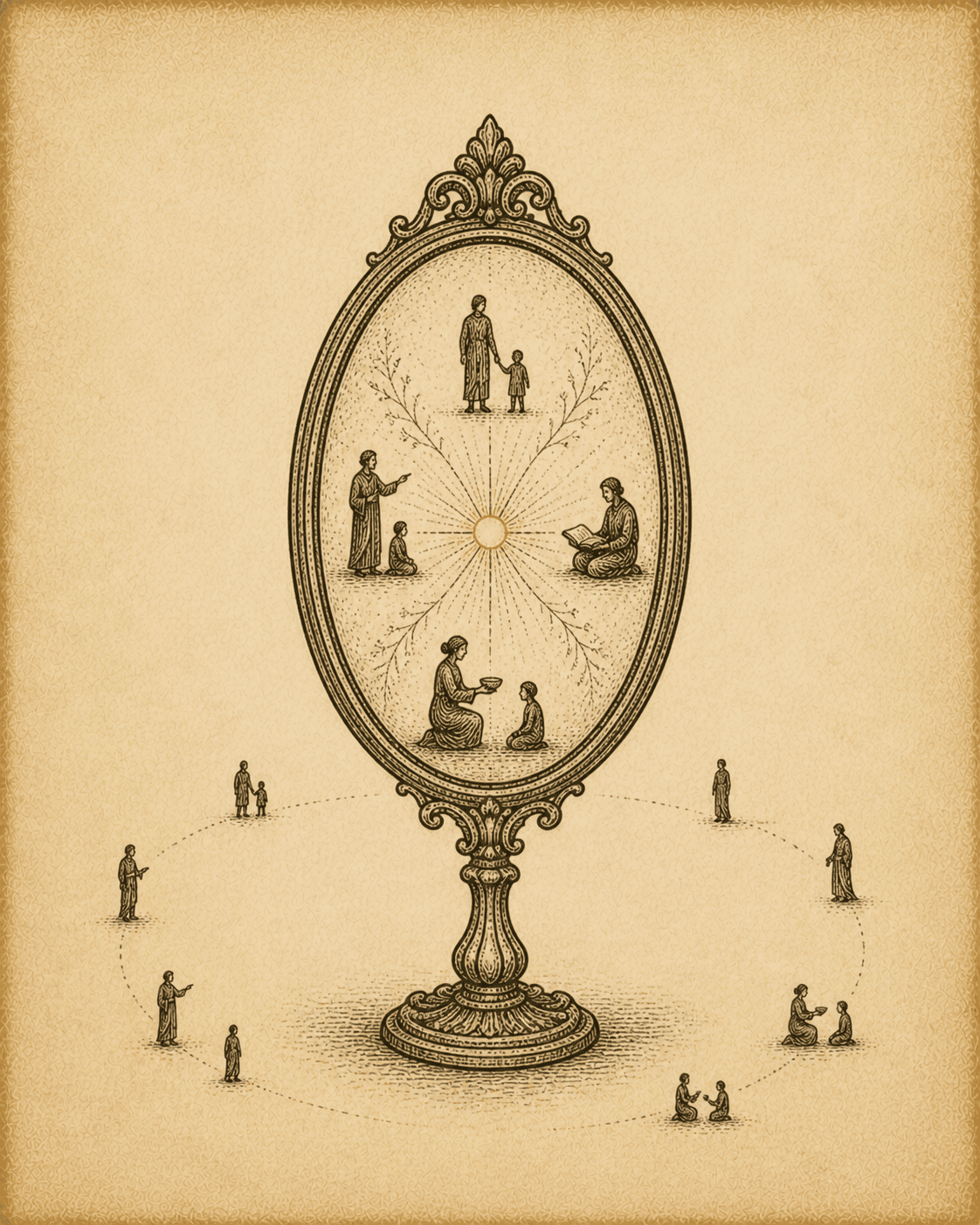
كل هذه الأدوار ليست اختراعات بشرية عشوائية.
نعم، الإنسان هو الذي يؤديها. لكن الحاجة إليها مغروسة في طبيعة الوجود نفسه. الإنسان يحتاج للمعرفة، فيظهر المعلم. يحتاج للمأوى، فيظهر المهندس. يحتاج للشفاء، فيظهر الطبيب. يحتاج للغذاء، فيظهر الفلاح.
هذه الأدوار تعبيرات عن معلومات أعمق. معلومات تقول: الحياة تحتاج إلى رعاية، والمعرفة تحتاج إلى نقل، والمادة تحتاج إلى تسخير، والجسد يحتاج إلى علاج، والأرض تحتاج إلى زراعة.
هذه المعلومات لم يخترعها الإنسان. هي موجودة في بنية الوجود نفسه. الإنسان فقط يكتشفها ويستجيب لها.
توسّعتُ في التأمل.
ليست الأدوار فقط، بل المشاعر أيضاً. الحب الذي يربط الأسرة. الفضول الذي يدفع للتعلم. الرغبة في الإبداع التي تحرّك المهندس والفنان. الرحمة التي تدفع الطبيب لعلاج المريض. كل هذه المشاعر موجودة فينا، لم نخترعها، وجدناها في داخلنا.
والقدرات أيضاً. القدرة على التفكير والتحليل. القدرة على التواصل واستخدام اللغة. القدرة على التخيل وابتكار ما لم يكن موجوداً. القدرة على التعاون والعمل مع الآخرين. كل هذه القدرات جزء من تكويننا.
والحاجات أيضاً. الحاجة للأمان، للانتماء، للحب، للمعنى، للتقدير، للإنجاز. هذه الحاجات تحرّكنا، تدفعنا للفعل، تجعلنا نبني ونبتكر ونتعاون.
كل مفهوم أستخرجه من هذا العالم يعود، في نهاية المطاف، إلى الأصل الأول.
الأسرة تعبير عن معلومات تتعلق بالرعاية والاستمرار. المعرفة تعبير عن معلومات تتعلق بالفهم والتراكم. البناء تعبير عن معلومات تتعلق بتسخير المادة. الشفاء تعبير عن معلومات تتعلق بالحياة والصحة. الحب تعبير عن معلومات تتعلق بالارتباط والعطاء.
العالم كله، بكل تفاصيله، مرآة تعكس ما في الأصل الأول من معلومات. حين أتأمل الطبيعة، أرى فيها طرفاً منه. وحين أتأمل الإنسان، أرى فيه طرفاً أعمق. وكلما نظرتُ إلى المرآة أطول، اتضح لي الأصل أكثر.
كتبتُ في دفتري:
"كلما تأملتُ في العالم، اقتربتُ من فهم الأصل. كل مخلوق، كل قانون، كل دور، كل مشاعر، كل قدرة، كل حاجة، كلها نوافذ. والأصل الأول هو ما يُرى من خلالها جميعاً."
وصلتُ الآن إلى نقطة محورية في رحلتي.
عرفتُ أن الأصل الأول معلومات شاملة قائمة بذاتها. عرفتُ أن العالم تجلٍّ لهذه المعلومات. عرفتُ أنني أستطيع أن أقرأ شيئاً عن الأصل من خلال التأمل في العالم.
لكن سؤالاً جديداً بدأ يلحّ عليّ.
هذه المعلومات التي في الأصل الأول، هل هي مجرد قواعد باردة؟ مجرد بيانات جامدة تعمل آلياً؟ أم أن هناك شيئاً أعمق؟
نظرتُ إلى نفسي. أنا أفكر، أشعر، أختار، أدرك وجودي. هذا ما نسميه الوعي. ومن أين جاء وعيي هذا؟ إذا كان كل ما فيّ منبثقاً عن الأصل الأول، فهذا يعني أن الوعي أيضاً جاء من هناك.
فكيف يمكن لشيء أن يُعطي ما لا يملك؟
هذا السؤال فتح أمامي باباً جديداً. باباً سيقودني من مفهوم "الأصل الأول" إلى شيء أعمق بكثير.
In the Presence of the Origin: When Matter Diminishes and Information Grows
Returning to the Question of Information Transfer
Before continuing the dive toward the beginning, I paused to recall what I had learned about information transfer between worlds.
I had discovered that every world doesn't just know how it itself works, but carries within it the information of all the worlds that will emerge from it. When quarks build atoms, they build them with a precisely designed form — a form that enables atoms to produce visible matter in the way we know it. If quarks hadn't "known" in advance what each subsequent world would need, they couldn't have designed atoms with such precision.
This means information accumulates as we ascend the chain, but it concentrates as we descend.
Our visible world knows only itself. Atoms know themselves and know our world. Quarks know themselves, know atoms, and know our world. And so, the deeper we dive, the broader and more comprehensive the knowledge we find.
The Pattern of Penetration: Matter Diminishing and Information Growing
I took a sheet of paper and drew two lines moving in opposite directions.
The first line represents matter: it starts high at our visible world, then descends as we dive deeper. Our world is filled with complex and diverse matter. The world of atoms is simpler. The world of quarks is simpler still. And the further we continue descending, the more matter diminishes, composition simplifies, and determined forms decrease.
The second line represents information: it starts low at our world, then rises as we dive deeper. Our world knows only itself. But the further we descend, the more knowledge increases, and the broader the information each world carries about the worlds that will come.
I looked at the two intersecting lines and understood the pattern clearly.
What diminishes on this journey is matter and energy and physical elements. Everything that can be measured and weighed and observed with instruments. Everything with form and shape and composition.
What grows is information. Stored knowledge. The capacity to determine what will come and shape it.
The two lines move in opposite directions. And if we follow this pattern to its logical end...
At the First Origin
I closed my eyes and imagined the journey to its conclusion.
I continue diving, world after world. Matter diminishes more and more. Forms become simpler and simpler. Composition dissolves. Energy in the form we know disappears.
In return, information expands. Every world I dive into carries greater knowledge, knows more about what will come, contains finer details about all the worlds that will emerge from it.
Then I arrive at the final point. The First Origin. The true beginning.
What do I find there?
Matter has reached zero. There is no longer any form, or energy, or composition, or any kind of material existence. It has completely vanished. This is logical, because we proved that the beginning cannot possess these characteristics — otherwise it would need something to bring it into existence.
But information has reached its peak. Its maximum. Everything that can be known about every world that will exist is stored here. Every detail, every law, every form that will later take shape, every path that matter will follow when it appears — everything.
The First Origin is the container of all existence's information, without possessing any material characteristic.
I opened my eyes and looked at what I had drawn.
The two lines meet at a single point. A point where matter is zero and information is at its maximum. This point is the First Origin.
But I paused at the word "world."
Is it right to call this Origin a "world"? A world, as I understood it, is a space where determined forms exist, governed by certain laws, interacting according to describable patterns. The world of quarks has particles and forces. The world of atoms has elements and interactions. Our visible world has matter and energy and motion.
But in the First Origin, forms have completely vanished. If there are no forms, there is no need for laws to govern them.
Therefore, what I have reached is not a "world" in the conventional sense. It is not a place with things interacting. It is something else entirely.
It is pure information. Information not contained by anything, because there is nothing to contain it. Information existing by itself, present before anything else exists.
I wrote on my paper:
"The First Origin is not a world. It is comprehensive information of everything in existence, existing by itself, without form or energy or matter."
I read what I had written and felt the strangeness of the idea. Information without a carrier? Knowledge without a brain to hold it or a book to preserve it? How can this be?
This is what I must understand now.
Beyond the World: When Information Becomes Existence
I sat contemplating what I had reached.
The First Origin is not a world. This conclusion seemed strange at first, but it's logical when I think about it. A world, as I understood it throughout my journey, is a space where determined forms exist, governed by certain laws, interacting according to describable patterns. The world of quarks has particles and forces. The world of atoms has elements and interactions. Our visible world has matter and energy and motion.
But in the First Origin, forms have completely vanished. No particles, no energy, no kind of composition. And if there are no forms, what need is there for laws? Laws exist to organize the behavior of things, to determine how forms interact with each other. But where there are no forms, laws have no meaning.
So what remains?
Nothing remains but information.
Comprehensive information of everything that will exist. Every world that will emerge, every form that will take shape, every law that will govern, every path that matter will follow when it appears. All of this is stored in the First Origin — not as things actually existing, but as knowledge, as possibility, as a design waiting to manifest.
The first point from which everything emerged is not a place, not a time, not matter. It is pure information.
But I stopped at a question I couldn't bypass.
How can information exist by itself?
In everything I know, information is connected to something that carries it. Words are written on paper. Images are stored in memory. Thoughts exist in minds. Even digital data is stored in devices. I have never seen "naked" information in my life — information without a medium carrying it.
So how can the First Origin be information without a carrier?
I stopped at this question for a long time, and felt it was the hardest thing I had faced since I began the journey.
Every step before it had carried me steadily forward. But here it was as if I were asking myself to imagine the unimaginable: an existence with nothing that exists, a knowledge with no one who knows, information with no carrier.
Yet I could not turn back. Logic had led me here step by step, and there was no step I could point to as an error. The chain must end, the beginning cannot be material, and the deeper I dived the less form there was and the more information. All of this was true. So if the conclusion was that the Origin is pure information, there was no escape from understanding how information can exist by itself.
I folded the paper, and did not sleep that night until late.
I had to solve this riddle before taking another step.
Information in Itself: An Essence Prior to the Carrier
The Fundamental Distinction: Information and Medium
To understand how information can exist by itself, I first had to clearly distinguish between two things we always confuse: the information itself, and the medium through which it appears.
In our daily lives, we always see information connected to a material form. The word is written on paper. The image is displayed on a screen. Sound travels through waves in the air. The thought exists in a brain. We never see information "naked" — we always see it embodied in something.
This constant connection makes us believe that information cannot exist without a carrier. We assume the paper creates the word, the screen creates the image, the brain creates the thought.
But this assumption is wrong.
The Natural Tendency Toward Error
The error comes from looking at things from only one angle.
We live in a material world, and we deal with things through our material senses. We cannot touch an abstract idea, nor see meaning with the naked eye. Therefore, when we want to communicate, preserve, or transfer information, we need a material medium: paper, sound, signal, screen.
But these material forms are not the information itself. They are only means for it to appear in our world.
Think about it: The same word can be written in ink, in pencil, or in light on a screen. It can be spoken aloud or whispered. It can be translated into sign language. The medium changes, but the information remains the same.
If the information were the ink, it would change every time the ink changed. But it doesn't change. This means it is something independent of the ink.
The Essence of Information
So what is information in its essence?
Information is not paper, not a wave, not an electrical signal, not activity in brain cells. These are all vessels, nothing more.
Information in its essence is: meaning, or arrangement, or rule, or relationship.
When I say "water boils at one hundred degrees," this is information. But where is it? It's not in the ink it was written with, nor in the sound that pronounced it. It is a relationship between things: water, heat, boiling. This relationship exists whether I write it or not, whether I know it or not. Water was boiling at one hundred degrees before any human discovered this fact.
And when I say "a circle is a shape whose every point is equidistant from the center," this is a definition, a rule, an arrangement. Does this rule exist in the paper it was written on? No. It exists by itself, as a geometric truth independent of any material medium.
Information, in its deepest essence, consists of truths and relationships and rules existing by themselves. Material vessels don't create them — they only display them.
Information in the First Origin
Now I can understand the First Origin more clearly.
In the First Origin, where there is no matter or energy or forms, information remains as the origin. It is not carried by anything, because there is nothing to carry it. It exists by itself, just as the rules of mathematics exist by themselves whether anyone discovers them or not.
But there is a fundamental difference.
Information in the First Origin is not merely passive rules waiting to be discovered. It is active information — information from which laws and forms and worlds arise. It is the source from which everything emerged.
Think of it this way: The laws of physics that govern our world — where did they come from? The forms that particles take — who determined them? The rules that organize atomic interactions — who established them?
All of this existed as information in the First Origin, before any material thing existed. Then this information manifested, and worlds appeared with their laws and forms.
Information doesn't need a carrier, because carriers themselves arise from it. Matter doesn't create information — information creates matter.
Existence Standing by Itself
I have now reached a deeper understanding.
Information in the First Origin is existence standing by itself. Not because it is embodied in something — there is nothing there for it to be embodied in. But because it is the foundation that makes all embodiment possible.
This reverses the way we are accustomed to thinking.
We assume existence begins with matter, then information comes to describe that matter. We assume things exist first, then we discover their laws later. But the truth, as I began to understand it, is the complete opposite.
Information exists first. Laws and rules and relationships exist before the things that are subject to them exist. Then this information manifests, and matter and energy and forms appear, all regulated by the laws that preceded them.
I wrote on my paper:
"The First Origin is information existing by itself. It is not carried by anything because it precedes everything. From it arose worlds with their laws and forms. It doesn't need a carrier, because all carriers arose from it."
I looked at what I had written and felt I was approaching an understanding of the nature of this Origin. But a new question emerged before me: This comprehensive information — what exactly does it contain? And how can I know something about it?
Perhaps the answer is closer than I think. Perhaps it is before me, in this very world I live in.
Manifestations of the Origin: Reading Information in the World
If the First Origin is comprehensive information of everything in existence, how can I know something about the content of this information?
The answer seemed clear when I thought about it: through the world itself.
The world I live in is a manifestation of that information. Everything I see around me, everything I hear and touch and feel — all of this emerged from the First Origin. Therefore, by observing the world, I can extract something about the information that shaped it.
I went out that day into nature.
I sat on a rock near a small river and began looking around with different eyes. I wasn't looking at things as merely things, but as manifestations of information.
I saw the river flowing. Water descending from high to low, following a determined path, winding around rocks, carrying leaves and small branches with it. This flow is not random. There is a law governing it, a force pulling water downward, properties that make it flow this way and no other.
I saw a tree on the bank. Its roots extended into the soil, its trunk rising toward the sky, its branches spreading and bearing green leaves. The tree absorbs water from the ground, uses sunlight to make its food, breathes and grows and reproduces. All of this happens according to a precise system — information stored in every one of its cells.
I saw a bird soaring above my head. Its wings beating the air in a regular rhythm, its body designed for flight, its eyes scanning the ground in search of food. Who taught it to fly? Who designed its wings in this shape? Who planted in it the instinct that drives it to search and hunt and return to its nest?
The more I looked, the more I saw.
Information manifests not only in individual things, but in the relationships between them as well. The river waters the tree. The tree provides shade and shelter for the bird. The bird eats insects that might harm the tree. Everything is connected to everything within a complex network of relationships.
And I noticed that this network is not chaotic. There is order. There is balance. Each element plays a role, and each role serves the whole.
I raised my gaze to the sky and thought about the larger system.
The sun rises every morning and sets every evening. This alternation between day and night governs the life of all creatures. Plants need light to grow, and animals need darkness to rest. If the sun were stationary, half the earth would burn and the other half would freeze.
The seasons change: spring and summer and autumn and winter. This change ensures the renewal of life. Seeds are planted in spring, grow in summer, are harvested in autumn, and the earth rests in winter to restore its fertility. If the weather were constant, the earth would be depleted and plants would die.
Water evaporates from the seas, rises to the sky, becomes clouds, falls as rain on the earth, flows in rivers, returns to the seas. A complete cycle ensuring water reaches every place, irrigating the earth, giving life to creatures.
All these systems serve a single purpose: preserving life and ensuring its continuity.
Nothing in this world exists without reason. The sun doesn't exist to look beautiful in the sky — it exists to give life the energy it needs. Water doesn't exist merely to fill the seas — it exists to be the foundation of every living creature. Air isn't emptiness between things — it's a necessary medium for breathing and movement and sound.
Everything is designed, everything is organized, everything works within a system larger than itself.
I returned home that evening carrying a new understanding.
The information in the First Origin is not abstract numbers or dry rules. It is living information — information that manifests in creatures that breathe and grow and feel, in laws governing the movement of the universe, in systems ensuring life continues generation after generation. Every law I discovered, every relationship I understood, every system I observed traced back in its origin to that comprehensive information.
But as I contemplated the river and the tree and the bird, I felt there was a clearer mirror I had not yet stood before. A mirror nearer to me than anything in the nature around me.
Myself. The human being.
If nature reveals one side of the Origin's information, perhaps the human being reveals a deeper and finer side. So I decided to turn my gaze from the wide nature around me to human life itself, to see what it would tell me.
The Cosmic Mirror: The World as a Reflection of the Origin
I began with the family.
Father and mother and children. This system exists in all human societies, indeed in most living creatures. Why? Because it ensures the continuation of the species. The child is born weak, needing someone to nurture and protect and teach them until they grow and become capable of depending on themselves. Father and mother provide this nurturing, driven by feelings they didn't choose: love, tenderness, the sense of responsibility.
Where did this system come from? Who placed these feelings in the hearts of fathers and mothers? Who designed this relationship to ensure the survival and continuation of the species?
Then I looked at other roles in society.
The teacher. A person who carries knowledge and transmits it to others. They take what they learned from previous generations and deliver it to the generations that follow. Thanks to them, each generation doesn't start from zero, but builds on what came before. Knowledge accumulates, and humanity advances.
The engineer. A person who understands the laws of nature and uses them to build things that serve humanity. They transform stone into a house, iron into a machine, sand into glass. They harness matter to meet needs.
The doctor. A person who understands the body and treats its diseases. They preserve life, alleviate pain, restore health to those who have lost it. Their existence is necessary for life to continue in the face of illness and injury.
The farmer. A person who plants the earth and harvests its fruits. They provide the food that humans cannot live without.
All these roles are not random human inventions.
Yes, humans are the ones who perform them. But the need for them is planted in the nature of existence itself. Humans need knowledge, so the teacher appears. They need shelter, so the engineer appears. They need healing, so the doctor appears. They need food, so the farmer appears.
These roles are expressions of deeper information. Information that says: Life needs nurturing, knowledge needs transmission, matter needs harnessing, the body needs treatment, the earth needs cultivation.
Humans didn't invent this information. It exists in the structure of existence itself. Humans only discover it and respond to it.
I expanded my contemplation.
Not just roles, but feelings as well. The love that binds the family. The curiosity that drives learning. The desire for creativity that moves the engineer and artist. The compassion that drives the doctor to treat the patient. All these feelings exist within us — we didn't invent them, we found them inside ourselves.
And capacities as well. The capacity for thinking and analysis. The capacity for communication and language use. The capacity for imagination and inventing what didn't exist. The capacity for cooperation and working with others. All these capacities are part of our constitution.
And needs as well. The need for safety, belonging, love, meaning, appreciation, achievement. These needs move us, drive us to action, make us build and innovate and cooperate.
Every concept I extract from this world returns, in the end, to the First Origin.
The family is an expression of information related to nurturing and continuity. Knowledge is an expression of information related to understanding and accumulation. Building is an expression of information related to harnessing matter. Healing is an expression of information related to life and health. Love is an expression of information related to connection and giving.
The entire world, in all its details, is a mirror reflecting what is in the First Origin of information.
I wrote in my notebook:
"The more I contemplate the world, the closer I come to understanding the Origin. Every role, every feeling, every capacity, every need — all are windows. And the First Origin is what is seen through them all."
I had now reached a pivotal point in my journey.
I knew that the First Origin is comprehensive information existing by itself. I knew the world is a manifestation of this information. I knew I could read something about the Origin by contemplating the world.
But a new question began pressing on me.
This information in the First Origin — is it merely cold rules? Merely inert data working automatically? Or is there something deeper?
I looked at myself. I think, I feel, I choose, I am aware of my existence. This is what we call consciousness. And where did my consciousness come from? If everything in me emerged from the First Origin, then consciousness also came from there.
So how can something give what it doesn't possess?
This question opened a new door before me. A door that would lead me from the concept of "the First Origin" to something far deeper.