البحث عن الحقيقة - من السؤال إلى العلمThe Search for Truth — From Question to Science
صوتٌ في الداخل: اكتشاف الاختلاف
كان اسمه سمير، أو ربما سامر، لم أعد أذكر بالضبط. لكنني أذكر وجهه في تلك اللحظة، أذكر عينيه.
كنتُ في السابعة أو الثامنة من عمري، واقفاً في زاوية ساحة المدرسة وقت الاستراحة. الشمس حارة، وصراخ الأطفال يملأ المكان، وأنا أراقب من بعيد كعادتي. ثم رأيتُه: ولد نحيل بملابس رثّة قليلاً، محاصَر بين ثلاثة أطفال أكبر منه. كانوا يدفعونه، يضحكون، يقلّدون طريقة كلامه. سقطت حقيبته على الأرض، فركلها أحدهم بعيداً. ضحكوا أكثر.
وقفتُ جامداً.
شيء ما في صدري انقبض. لم يكن خوفاً بالضبط، ولم يكن غضباً بالضبط. كان شيئاً آخر، شيئاً لم أكن أملك له اسماً حينها. شعرتُ وكأن ألم ذلك الولد ينتقل إليّ بطريقة ما، وكأنني أنا من يُدفع ويُسخر منه. نظرتُ حولي: أطفال آخرون يشاهدون، بعضهم يضحك، وبعضهم يتابع طريقه غير مكترث. لا أحد يتألم مثلي. لا أحد يبدو أن صدره ينقبض.
لماذا أنا فقط؟
سمعتُ صوتاً في داخلي، صوتاً خافتاً لكنه واضح، يقول لي: اذهب إليه. ساعده. لكنني لم أتحرك. كنتُ صغيراً وخائفاً، والأطفال الثلاثة أكبر مني. وقفتُ هناك، عاجزاً، أشاهد حتى ملّوا منه وتركوه. رأيتُه يجمع أغراضه من الأرض، رأيتُ كتفيه المنحنيتين، ورأيتُ شيئاً في عينيه حين رفع رأسه لحظة ونظر حوله... شيء لا أنساه حتى اليوم.
في ذلك المساء، لم أستطع النوم.
ظللتُ أفكر في ذلك الولد، وفي الأطفال الذين آذوه، وفي الأطفال الذين ضحكوا، وفي الأطفال الذين مرّوا غير مكترثين. لكن السؤال الذي أرّقني لم يكن عنهم. كان عني أنا.
لماذا شعرتُ بما شعرتُ به؟ لماذا انقبض صدري؟ لماذا كان ذلك الصوت في داخلي يدفعني للتدخل، بينما لم أرَ أثراً لصوت مشابه عند الآخرين؟
كنتُ طفلاً، ولم أكن أملك الكلمات لأصف ما يحدث. لكنني كنتُ أعرف، بطريقة غامضة، أنني مختلف.
لم تكن تلك الحادثة الأولى ولا الأخيرة.
في طفولتي، كنتُ طفلاً هادئاً بطبيعتي. لم أحب الألعاب العنيفة، ولم أجد متعة في المسابقات التي ينتهي فيها أحدهم خاسراً حزيناً. كنتُ أبتعد عن المشاجرات، ليس جُبناً، بل لأن شيئاً في داخلي كان يرفض إيذاء أي أحد. حتى حين كان الإيذاء متاحاً وسهلاً، حتى حين كان الآخرون يتوقعونه مني، كان ذلك الصوت الداخلي يمنعني.
وكنتُ ألاحظ.
ألاحظ كيف يسخر بعض الأطفال من زملائهم دون أن يرمش لهم جفن. ألاحظ كيف يضربون ويُؤذون ثم يعودون للعب وكأن شيئاً لم يكن. ألاحظ عدم اكتراثهم بدموع من آذوه، وأتعجب: ألا يشعرون بشيء؟ ألا يسمعون صوتاً في داخلهم يقول لهم إن هذا خطأ؟
يبدو أنهم لا يسمعون. أو ربما يسمعون ويتجاهلون. لم أكن أعرف.
بدأتُ أختار أصدقائي بعناية.
كنتُ أبحث عن الأطفال الهادئين مثلي، اللطيفين الذين لا يؤذون. كنتُ أبتعد عن الصاخبين والعدوانيين، حتى لو كانوا الأكثر شعبية في الصف. وجدتُ راحة في صحبة القلة الذين يشبهونني، الذين يبدو أن لديهم هم أيضاً ذلك الصوت الداخلي، حتى لو لم نتحدث عنه أبداً.
لكن السؤال ظل يلاحقني: من أين يأتي هذا الصوت؟
لم يعلّمني أحد أن أتعاطف. لم يجلس معي أبي أو أمي ويقولا لي: "يجب أن تشعر بألم الآخرين." التعاطف كان موجوداً في داخلي قبل أن أتعلم الكلمة نفسها. كان فطرياً، طبيعياً، كجزء من تكويني لا أستطيع فصله عن نفسي.
فمن وضعه هناك؟
أمضيتُ سنوات طفولتي أراقب.
أراقب الناس، أراقب تصرفاتهم، أحاول أن أفهم. لماذا يفعل هذا الشخص ما يفعله؟ لماذا يؤذي ذاك ولا يكترث؟ لماذا يبكي هذا بينما يضحك ذاك على نفس الموقف؟
كنتُ أبحث عن نمط، عن تفسير، عن شيء يساعدني على فهم طبيعة هذا الاختلاف بيني وبين كثير ممن حولي. لم أكن أظن نفسي أفضل منهم، لم يكن الأمر غروراً. كنتُ فقط أريد أن أفهم: لماذا أسمع ما لا يسمعون؟
ذلك الصوت الداخلي... من أين يأتي؟ وإلى أين يريد أن يقودني؟
لم أجد الإجابة في طفولتي. لكن السؤال ظل حياً في داخلي، ينتظر.
حين رفضتُ أن أصلّي لإلهٍ لا أعرفه
مشهد الصلاة: اللحظة الحاسمة
كنتُ في المرحلة المتوسطة حين قرر أستاذ الدين أن يعلّمنا الصلاة.
أخذنا إلى قاعة واسعة في الطابق الأرضي، قاعة لم أكن أعرف بوجودها من قبل. كانت الأرضية مفروشة بسجاد أخضر داكن، والنوافذ عالية تدخل منها أشعة الشمس بشكل مائل، والهواء فيها بارد قليلاً ورطب. وقف الأستاذ أمامنا، رجل في الخمسينات بلحية بيضاء قصيرة وصوت هادئ، وبدأ يشرح لنا حركات الصلاة واحدة تلو الأخرى.
"قفوا في صفوف منتظمة... هكذا نرفع أيدينا عند التكبير... ثم نركع..."
وقف زملائي في صفوف، وبدأوا يقلّدونه. أجسادهم تتحرك معاً، ترفع، تنحني، تسجد. بدوا وكأنهم يفهمون ما يفعلون، أو على الأقل لا يسألون.
أما أنا، فوقفتُ في مكاني ولم أتحرك.
لم يكن الأمر عناداً ولا تمرداً. كان شيئاً آخر. سؤال قفز إلى ذهني ولم أستطع تجاوزه: ما الذي أفعله بالضبط؟ ولماذا؟
نظرتُ إلى الأستاذ وهو يركع ويقوم، ونظرتُ إلى زملائي يقلّدونه، وشعرتُ بشيء غريب. إذا كانت الصلاة حديثاً مع الله، فكيف أتحدث مع شخص لا أعرفه؟ إذا كان الوقوف أمامه يفترض أن يعني شيئاً، فما هو هذا الشيء بالنسبة لي الآن؟
الأستاذ كان يشرح الحركات، لكنه لم يشرح الشعور. كان يقول لنا كيف نحرّك أجسادنا، لكنه لم يقل لنا كيف نحرّك قلوبنا.
وأنا لم أستطع أن أحرّك جسدي في فعل لا يحرّك قلبي.
الاعتراض الأول: معرفة الله شرط للصلاة
بعد انتهاء الدرس، انتظرتُ حتى خرج معظم الطلاب، ثم اقتربتُ من الأستاذ. كان يطوي سجادته الخاصة، تلك التي كان يصلي عليها أمامنا للتوضيح.
"أستاذ..."
رفع رأسه ونظر إليّ. كانت عيناه هادئتين، فيهما شيء من اللطف.
"نعم يا بني؟"
ترددتُ لحظة. لم أكن أعرف كيف أصوغ ما في رأسي.
"أنا... لم أصلِّ معكم."
لم يبدُ عليه الغضب. مال برأسه قليلاً، كمن ينتظر توضيحاً.
"لماذا؟"
صمتُّ. نظرتُ إلى الأرض، ثم إليه، ثم عدتُ للأرض. كيف أقول له ما أفكر فيه دون أن يبدو الأمر وقاحة؟
"أستاذ... كيف أصلي لشخص لا أعرفه؟"
رفع حاجبيه قليلاً. لم يقل شيئاً، فأكملتُ:
"أعني... أنتم تقولون إن الصلاة وقوف أمام الله. لكنني لا أعرف الله. لا أعرف من هو. فكيف أقف أمامه؟ كيف أتحدث إليه؟ ألن يكون ذلك... كذباً؟"
الأستاذ وضع السجادة جانباً ببطء. جلس على حافة طاولة قريبة، وأشار لي أن أجلس على كرسي مقابل له. جلستُ.
"ما اسمك يا بني؟"
"محمد."
"محمد..." كرر اسمي ببطء، كأنه يتذوقه. "أنت تسأل سؤالاً كبيراً."
"هل هو سؤال خاطئ؟"
هز رأسه. "لا. ليس خاطئاً. لكن... الصلاة فريضة يا محمد. الله أمرنا بها. نحن نصلي لأنه طلب منا ذلك."
"لكن لماذا طلب منا ذلك؟"
"لأن فيها خيراً لنا."
"ما هو هذا الخير؟"
صمت الأستاذ لحظة. رأيتُ شيئاً يتحرك في عينيه، شيئاً بين الحيرة والإعجاب. ربما لم يسأله طالب هذا السؤال من قبل بهذه الطريقة.
"الصلاة تقرّبنا من الله يا بني. تذكّرنا به. تجعلنا نشعر بوجوده."
"لكنني لا أشعر بوجوده الآن. كيف ستقرّبني منه الصلاة إذا كنتُ لا أعرفه أصلاً؟ أليس من المنطقي أن أعرفه أولاً، ثم أصلي له؟"
الأستاذ فرك ذقنه. نظر إلى النافذة لحظة، ثم عاد إليّ.
"معرفة الله يا محمد... ليست أمراً سهلاً. بل يقول بعض العلماء إنها مستحيلة. الله أكبر من أن يحيط به عقل الإنسان."
الاعتراض الثاني: العقل خُلق للمعرفة
شعرتُ بشيء يتحرك في داخلي. ليس غضباً، بل شيئاً أشبه بالدهشة.
"مستحيلة؟"
"عقل الإنسان محدود يا بني. والله غير محدود. كيف للمحدود أن يدرك غير المحدود؟"
صمتُّ لحظة، أفكر. ثم قلتُ:
"لكن أستاذ... إذا كانت معرفة الله مستحيلة، فلماذا أعطانا العقل أصلاً؟"
"العقل له وظائف كثيرة يا محمد. نفكر به، نحل المشكلات، نتعلم..."
"لكن ألا يجب أن يكون قادراً على معرفة من خلقه؟ ما نفع عقل لا يستطيع أن يعرف خالقه؟"
رأيتُ الأستاذ يتنفس ببطء. لم يبدُ عليه الضيق، لكنني شعرتُ أنني أسأله أسئلة لا يملك لها إجابات جاهزة.
"يا بني... هذه أمور يختلف فيها العلماء. لكن ما أعرفه هو أن الصلاة فريضة، وأنها خير لك. صلِّ الآن، وربما مع الوقت تتكشف لك الإجابات."
نظرتُ إليه. كان صادقاً، أستطيع أن أرى ذلك. لم يكن يحاول خداعي أو إسكاتي. كان يقول ما يؤمن به. لكن ما يؤمن به لم يكن كافياً لي.
"أستاذ... أنا لا أستطيع."
"لا تستطيع ماذا؟"
"لا أستطيع أن أصلي لإله لا أعرفه. أشعر أن ذلك سيكون... إهانة. إهانة له وللصلاة نفسها. كأنني أكذب."
صمت طويل. الأستاذ نظر إليّ نظرة لم أفهمها تماماً. ثم قال بصوت ناعم:
"أنت ولد مختلف يا محمد."
لم أعرف إن كان ذلك مدحاً أم قلقاً. ربما كان الاثنين معاً.
"صلِّ يا بني. صلِّ وأنت تسأل. ربما تجد الإجابة في الصلاة نفسها."
لكنني لم أقتنع. شكرتُه وخرجت.
الربط الحاسم: من الصوت الداخلي إلى الله
في طريق العودة إلى البيت، كانت رأسي تضج بالأفكار.
الأستاذ قال إن معرفة الله صعبة أو مستحيلة. لكن شيئاً في داخلي رفض هذا الكلام. إذا كان الله قد خلقنا، وخلق لنا عقولاً، أفلا يريدنا أن نعرفه؟ وإذا كان لا يريدنا أن نعرفه، فلماذا يريدنا أن نصلي له؟
ثم خطرت لي فكرة.
ذلك الصوت الداخلي الذي كنتُ أسمعه منذ طفولتي... الصوت الذي كان يمنعني من الأذى ويدفعني نحو الخير... من أين يأتي؟
لم يعلّمني أحد هذا الصوت. لم يضعه فيّ أبي ولا أمي ولا أي معلم. كان موجوداً قبل أن أتعلم أي شيء عن الصواب والخطأ. كان جزءاً من تكويني.
فماذا لو... ماذا لو كان هذا الصوت من الله؟
توقفتُ في منتصف الطريق. الفكرة ضربتني بقوة.
ماذا لو كان الله يتحدث إليّ طوال هذا الوقت من خلال ذلك الصوت، وأنا لم أدرك ذلك؟ ماذا لو كانت معرفته ممكنة، لكن ليس بالطريقة التي يتحدث عنها الناس؟
في تلك اللحظة، تغيّر شيء في داخلي. لم أعد أبحث فقط عن سبب اختلافي عن الآخرين. أصبحتُ أبحث عن شيء أكبر: أصبحتُ أبحث عن الله نفسه.
تلك الليلة، استلقيتُ في سريري ولم أستطع النوم.
الغرفة مظلمة، وصوت أنفاس أخي النائم بجواري منتظم وهادئ، لكن ذهني كان يعمل بلا توقف. أسئلة تدور وتتشابك وتتفرع:
من هو الله؟ كيف أعرفه؟ هل الصوت الداخلي منه حقاً؟ وإذا كان منه، فلماذا لا يتحدث إليّ بوضوح أكبر؟ لماذا يتركني أتخبط في الأسئلة؟
وسؤال آخر، أكثر إلحاحاً: إذا كان رجال الدين أنفسهم لا يملكون الإجابات، فأين أجدها؟
حدّقتُ في السقف المظلم. لم أكن خائفاً، لكنني كنتُ وحيداً. وحيداً مع أسئلتي، في عالم يبدو أن الجميع فيه قد توقفوا عن السؤال.
لكنني لن أتوقف.
قلتُ لنفسي تلك الليلة: سأجد الإجابة بنفسي. مهما استغرق الأمر، سأعرف الله قبل أن أصلي له. سأفهم من هو، وماذا يريد، ولماذا خلقني.
ثم، وأخيراً، سأقف أمامه.
لم أكن أعرف أن هذا القرار سيأخذني في رحلة ستمتد ثلاثين سنة. لكنني كنتُ أعرف شيئاً واحداً بيقين: الطريق الذي بدأتُه تلك الليلة لن أعود منه.
القيم والفلسفة: حين انفتح باب العلم
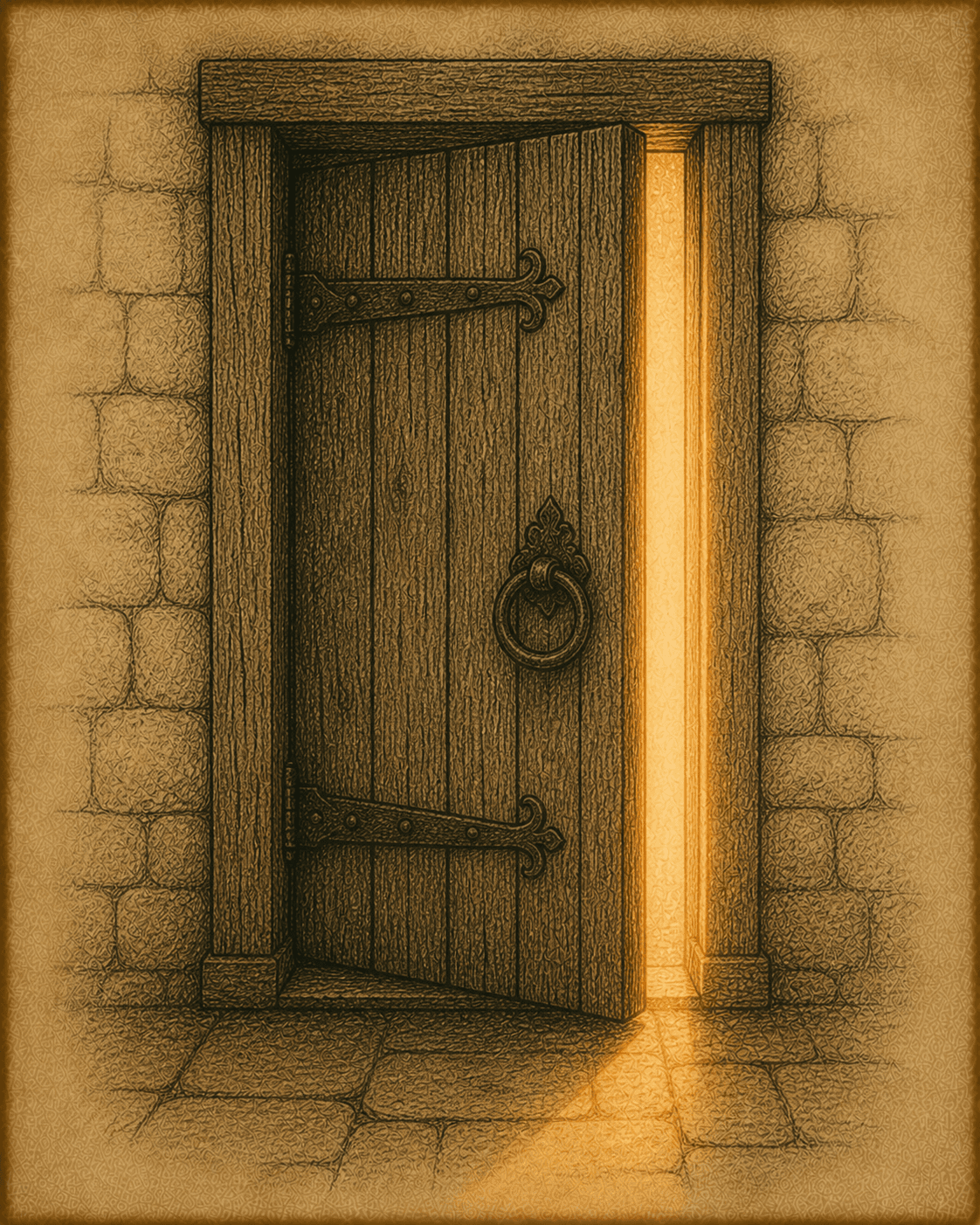
في المرحلة الثانوية، وفي حصة لم أكن أتوقع منها شيئاً، انفتح أمامي باب.
كان الأستاذ يتحدث عن مادة الاجتماع، يشرح شيئاً اسمه "القيم الاجتماعية". كنتُ أستمع بنصف انتباه، كعادتي في الحصص التي لا تثير فضولي، حين قال جملة جعلتني أرفع رأسي فجأة:
"القيم هي المبادئ التي توجّه سلوك الإنسان. وهي تختلف من شخص لآخر، ومن مجتمع لآخر."
القيم. المبادئ التي توجّه السلوك.
في تلك اللحظة، شعرتُ كأن قطعة من أحجية طويلة قد استقرت في مكانها. ذلك الاختلاف الذي كنتُ أشعر به منذ طفولتي، ذلك الصوت الداخلي الذي كان يمنعني من الأذى ويدفعني نحو التعاطف... ربما كان الأمر متعلقاً بالقيم. ربما كانت قيمي مختلفة عن قيم كثير ممن حولي.
لأول مرة، أصبح لديّ اسم لما أشعر به. لأول مرة، أصبح بإمكاني أن أبحث.
بعد تلك الحصة، ذهبتُ إلى مكتبة المدرسة.
كانت مكتبة صغيرة، رفوفها خشبية قديمة، ورائحة الورق العتيق تملأ المكان. وقفتُ أمام قسم الفلسفة والفكر، أتأمل العناوين التي لا أعرف معظمها. أسماء غريبة، كتّاب لم أسمع بهم. لكنني كنتُ مصمماً.
سحبتُ كتاباً عشوائياً تقريباً. كان عن الأخلاق والقيم الإنسانية. جلستُ في زاوية هادئة وبدأتُ أقرأ.
الصفحات الأولى كانت صعبة. كلمات لا أفهمها، مفاهيم تبدو معقدة. لكنني واصلتُ. ثم، في مكان ما من الكتاب، قرأتُ جملة توقفتُ عندها طويلاً:
"الفضيلة ليست شيئاً يُكتسب من الخارج، بل هي ميل طبيعي في النفس الإنسانية نحو الخير."
ميل طبيعي نحو الخير.
أغلقتُ الكتاب ونظرتُ أمامي. هذا بالضبط ما كنتُ أشعر به. ذلك الصوت الداخلي لم يكن شيئاً تعلمتُه، بل كان ميلاً طبيعياً، شيئاً موجوداً في داخلي منذ البداية. لكن السؤال الذي لم يجب عنه الكتاب: من وضع هذا الميل في النفس الإنسانية؟ ومن أين جاء؟
من ذلك اليوم، أصبحتُ قارئاً.
لم أعد أذهب إلى المكتبة لأقضي وقت الفراغ فحسب، بل أصبحتُ أذهب ببحث محدد في ذهني. أريد أن أفهم القيم. أريد أن أعرف من أين تأتي. أريد أن أفهم النفس الإنسانية التي تحملها.
قادتني القيم إلى الأخلاق، والأخلاق قادتني إلى الفلسفة، والفلسفة فتحت أمامي عالماً لم أكن أعرف بوجوده.
قرأتُ عن الفضائل عند اليونانيين القدماء. قرأتُ كيف حاول الفلاسفة أن يفهموا ما الذي يجعل الإنسان صالحاً، وما الذي يجعله سيئاً. قرأتُ نظريات مختلفة، بعضها يقول إن الأخلاق فطرية، وبعضها يقول إنها مكتسبة، وبعضها يقول إنها وهم اخترعه البشر لتنظيم حياتهم.
كل نظرية كانت تقدم جزءاً من الصورة، لكن لا واحدة منها قدمت الصورة كاملة.
في مكان ما من رحلتي في الفلسفة، بدأتُ ألتفت إلى علم النفس.
كان الأمر طبيعياً. إذا كنتُ أريد أن أفهم لماذا يتصرف الناس بالطريقة التي يتصرفون بها، فعلم النفس يبدو المكان المناسب للبحث. بدأتُ أقرأ عن الدوافع والغرائز، عن الوعي واللاوعي، عن الطريقة التي تتشكل بها شخصية الإنسان.
أذكر كتاباً قرأتُه عن النفس البشرية، جلستُ معه ليالٍ طويلة. كان يتحدث عن الطبقات المختلفة في النفس، عن الصراعات الداخلية التي لا نراها، عن الأسباب الخفية وراء سلوكنا. شعرتُ وأنا أقرأه أنني أرى نفسي بوضوح أكبر، أفهم ردود أفعالي، أدرك لماذا أشعر بما أشعر به في مواقف معينة.
لكن حتى علم النفس، رغم كل ما قدمه لي، لم يجب عن سؤالي الأكبر.
ثم جاءت الفلسفة الوجودية.
كنتُ في نهاية المرحلة الثانوية حين وقع في يدي كتاب عن الوجود والعدم، عن معنى الحياة، عن سؤال "لماذا نحن هنا؟". كان كتاباً ثقيلاً، ليس في حجمه فحسب، بل في أفكاره. جلستُ معه أسابيع، أقرأ صفحات قليلة كل يوم، أتوقف لأفكر، أعود لأقرأ من جديد.
الفلاسفة الوجوديون كانوا يسألون أسئلة تشبه أسئلتي. لماذا نوجد؟ ما الغاية من كل هذا؟ هل هناك معنى للحياة، أم أننا نحن من نصنع المعنى؟
بعضهم قال إن الله موجود وهو مصدر المعنى. بعضهم قال إن الله غير موجود وعلينا أن نصنع معنانا بأنفسنا. وبعضهم قال إن السؤال نفسه لا إجابة له.
قرأتُ كل وجهات النظر. حاولتُ أن أفهم كل واحدة منها. تعلمتُ كيف أحلل الأفكار، كيف أقارن بين النظريات، كيف أبني حجة وأفككها.
لكنني لم أجد الإجابة.
بعد سنوات من القراءة، وجدتُ نفسي أملك الكثير وأفتقر إلى الكثير.
أملك مفاهيم. أملك أدوات للتفكير. أفهم النفس البشرية أفضل مما كنتُ أفهمها. أستطيع أن أناقش الأخلاق والقيم والوجود بلغة لم أكن أعرفها من قبل.
لكن السؤال الذي بدأتُ به رحلتي... "من هو الله؟"... ظل بلا جواب.
الفلسفة علّمتني كيف أسأل، لكنها لم تعطني الإجابة. قدّمت لي نظريات كثيرة عن الله، لكن لا واحدة منها أقنعتني تماماً. كل واحدة كانت تبدو جزئية، ناقصة، كأنها تمسك بطرف الخيط دون أن تصل إلى نهايته.
أغلقتُ آخر كتاب فلسفي قرأتُه في تلك المرحلة، ونظرتُ من نافذة غرفتي. كان الليل قد حلّ، والأضواء البعيدة تتلألأ في العتمة.
شعرتُ بشيء غريب: لستُ محبطاً، لكنني لستُ راضياً أيضاً. الفلسفة كانت محطة ضرورية، علّمتني الكثير، لكنها لم تكن المحطة الأخيرة.
أين أبحث الآن؟
السؤال ظل معلقاً. لكنني كنتُ أعرف أنني سأجد طريقاً. كنتُ أعرف أن الباب الذي انفتح في تلك الحصة المدرسية لن يُغلق حتى أجد ما أبحث عنه.
من الكون إلى الصانع: القرار الحاسم
مرّت سنوات.
انشغلتُ بالحياة كما ينشغل الجميع. الدراسة الجامعية، ثم البحث عن عمل، ثم ضغوط البدايات. الأسئلة التي كانت تؤرقني لم تختفِ، لكنها تراجعت إلى الخلف، تنتظر في مكان ما من وعيي، بينما الحياة اليومية تأخذ كل الواجهة.
ثم جاءت فرصة السفر للعمل في الخارج.
الليلة الأولى في تلك المدينة الغريبة، جلستُ وحيداً في غرفة صغيرة مستأجرة.
الجدران بيضاء وخالية، والأثاث بسيط ومحايد، والصمت ثقيل. لا أصوات مألوفة من الشارع، لا رائحة طعام أمي من المطبخ، لا ضجيج إخوتي. فقط أنا، في غرفة لا تعرفني، في مدينة لا تعرفني، في بلد لا يعرفني.
نظرتُ من النافذة الصغيرة. أضواء غريبة، مبانٍ لا أعرفها، سماء هي نفس السماء لكنها تبدو مختلفة من هنا.
وفي تلك الوحدة، عادت الأسئلة.
لم تعد بهدوء. عادت دفعة واحدة، كأنها كانت تنتظر هذه اللحظة بالذات. من أنا؟ لماذا أنا هنا؟ ما معنى كل هذا؟ وذلك السؤال القديم الذي لم أجد له جواباً: من هو الله؟
جلستُ على حافة السرير، وشعرتُ بشيء يتحرك في داخلي. ليس حزناً، بل شيء أشبه بالعزم. هذه الوحدة، هذا الفراغ، هذا الصمت... ربما هي الفرصة التي كنتُ أحتاجها. هنا، بعيداً عن كل شيء، يمكنني أن أعود للبحث.
قررتُ تلك الليلة أن أبدأ من جديد.
لكن من أين أبدأ؟
الفلسفة لم تعطني الجواب. الكتب التي قرأتُها قدّمت نظريات كثيرة، لكن لا واحدة منها أقنعتني. كنتُ بحاجة إلى مقاربة مختلفة.
ثم خطرت لي فكرة بسيطة: ماذا لو بحثتُ عن الله في العلم؟
الفكرة بدت منطقية. إذا كان الله قد صنع هذا العالم، فربما بدراسة العالم أستطيع أن أفهم شيئاً عن صانعه. كما أن من يرى لوحة فنية يستطيع أن يستنتج شيئاً عن الفنان الذي رسمها، ربما من يدرس الكون يستطيع أن يستنتج شيئاً عمّن أوجده.
بدأتُ أقرأ عن نظريات نشوء الكون.
كانت قراءات مختلفة تماماً عما اعتدتُ عليه.
بدلاً من الفلاسفة وتأملاتهم، كنتُ أقرأ عن الفيزياء والرياضيات. بدلاً من الأسئلة المجردة عن المعنى، كنتُ أقرأ عن الانفجار الكبير، عن تمدد الكون، عن المادة والطاقة والزمن. كنتُ أحاول أن أفهم كيف بدأ كل شيء.
قرأتُ عن تلك اللحظة الأولى التي يقول العلماء إن الكون انطلق منها. نقطة متناهية الصغر، متناهية الكثافة، انفجرت فأنتجت كل ما نراه حولنا: المجرات والنجوم والكواكب، الذرات والجزيئات، الزمان والمكان نفسهما.
تتبعتُ الخط الزمني للوراء قدر ما استطعتُ. من الآن إلى الوراء، من الأرض إلى الشمس، من الشمس إلى المجرة، من المجرات إلى بداية الكون. وصلتُ إلى تلك النقطة الأولى، تلك اللحظة التي يسميها العلماء "البداية".
ثم توقفتُ.
ماذا كان قبل البداية؟
سألتُ هذا السؤال، وبحثتُ عن إجابة. لكن العلم لم يقدم جواباً واضحاً. بعض النظريات تقول إن السؤال نفسه لا معنى له، لأن الزمن بدأ مع الانفجار الكبير، فلا يوجد "قبل". نظريات أخرى تقترح احتمالات مختلفة، لكن لا واحدة منها مثبتة.
وقفتُ عند حافة ما يعرفه العلم.
من أوجد تلك النقطة الأولى؟ من أشعل ذلك الانفجار؟ من وضع القوانين التي تحكم المادة والطاقة؟ أسئلة لم يستطع العلم الإجابة عنها. ليس لأن العلم فشل، بل لأن هذه الأسئلة تقع خارج نطاق ما يستطيع العلم التجريبي الوصول إليه.
شعرتُ بشيء غريب.
من ناحية، كنتُ محبطاً. ظننتُ أن العلم سيعطيني الجواب، لكنه أوصلني إلى جدار. من ناحية أخرى، شعرتُ بشيء آخر، شيء أشبه بالحماس. لأن العلم، رغم أنه لم يجب عن سؤالي، فتح أمامي باباً لم أكن أراه من قبل.
الكون ليس فوضى عشوائية. الكون منظّم، محكوم بقوانين دقيقة، مبني بطريقة تسمح للحياة أن توجد. هذا النظام، هذه الدقة، هذا التصميم المذهل... لا بد أن يعني شيئاً.
لم أجد الله في معادلات الفيزياء، لكنني وجدتُ أثره. وجدتُ كوناً يبدو وكأنه صُنع بعناية، لا وكأنه حدث بالصدفة.
الساعة الكونية: من الظاهر إلى الباطن
خلال قراءاتي في الفيزياء، بدأت أصادف مصطلحات لم أكن أعرفها من قبل.
الجسيمات. الذرات. الكواركات. عالم كامل يختبئ تحت سطح ما نراه، عالم لا تدركه الحواس لكن العلم استطاع أن يكشف عنه. كنتُ أقرأ عن هذه الأشياء وأشعر بدهشة متزايدة. كل ما أراه حولي، كل ما ألمسه وأشمّه وأسمعه، مبني من وحدات صغيرة لا تُرى، تتفاعل مع بعضها وفق قوانين محددة.
في أحد الأيام، كنتُ جالساً في غرفتي أفكر، حين وقعت عيني على ساعة قديمة موضوعة على الرف.
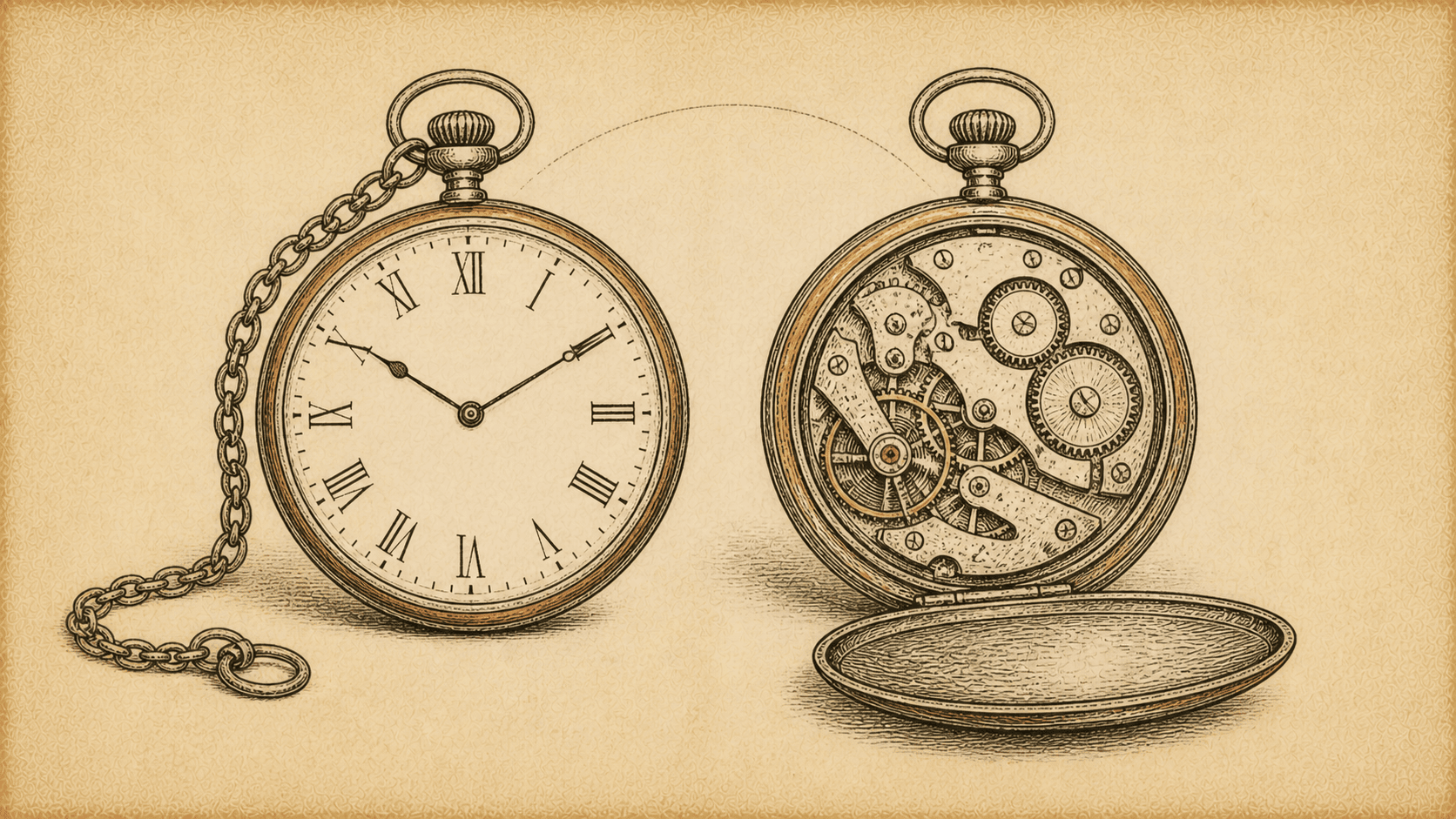
كانت ساعة جيب ورثتُها عن جدي، ذهبية اللون، بغطاء منقوش. أخذتُها بيدي وفتحتُ غطاءها. العقارب تتحرك ببطء، ثابتة، منتظمة. الساعة تخبرني بالوقت، هذه وظيفتها الظاهرة، هذا ما أراه.
ثم فعلتُ شيئاً لم أفعله من قبل: قلبتُ الساعة وفتحتُ غطاءها الخلفي.
ما رأيتُه جعلني أتوقف.
تروس صغيرة، بعضها أصغر من حبة العدس، متشابكة مع بعضها في تناغم مذهل. كل ترس يدفع الذي يليه، وكل حركة صغيرة تساهم في الحركة الكبرى. نوابض دقيقة، محاور رفيعة، أجزاء لا أعرف أسماءها لكنني أستطيع أن أرى أنها تعمل معاً في نظام واحد.
هذا هو باطن الساعة. هذا ما يجعل العقارب تتحرك.
جلستُ أحدّق في تلك التروس، وفكرة بدأت تتبلور في ذهني.
الكون مثل هذه الساعة. له ظاهر نراه: النجوم والكواكب والمجرات، الجبال والبحار والأشجار، البشر والحيوانات والحياة. هذا هو وجه الساعة، العقارب التي تتحرك أمامنا.
لكن خلف هذا الظاهر، هناك باطن. هناك تروس الكون: الذرات والجسيمات، القوى والطاقات، القوانين التي تحكم كل شيء. هذا هو ما يجعل الكون يعمل، ما يجعل النجوم تشتعل والكواكب تدور والحياة تنبض.
حتى الآن، كنتُ أبحث في الظاهر. كنتُ أسأل: كيف بدأ الكون؟ متى بدأ؟ ما الذي كان قبله؟ وصلتُ إلى حدود ما يمكن معرفته من هذا الاتجاه.
لكن ماذا لو بحثتُ في الباطن؟ ماذا لو درستُ التروس بدلاً من العقارب؟
أغلقتُ غطاء الساعة وأعدتُها إلى مكانها.
كان القرار قد اتُّخذ. سأنتقل من الفيزياء الكلاسيكية، من دراسة الكون الكبير، إلى الفيزياء الحديثة، إلى دراسة الكون الصغير. سأغوص في عالم الذرات والجسيمات، سأحاول أن أفهم كيف يُبنى هذا الكون من الداخل.
ربما هناك، في أعماق المادة، في تلك المستويات التي لا تراها العين، سأجد خيطاً يقودني إلى ما أبحث عنه.
الظاهر أوصلني إلى جدار. حان الوقت لأفتح الغطاء الخلفي وأنظر إلى التروس.
هكذا انتهت المرحلة الأولى من رحلتي.
بدأتُ طفلاً يسمع صوتاً في داخله لا يفهمه. سألتُ عن سبب اختلافي، فوجدتُ نفسي أسأل عن الله. بحثتُ في الفلسفة فتعلمتُ كيف أسأل، لكنني لم أجد الجواب. انتقلتُ إلى العلم، ودرستُ الكون من الخارج، فوصلتُ إلى حدود ما يمكن معرفته.
الآن، أقف على عتبة مرحلة جديدة.
سأدخل إلى باطن الكون، إلى عالم الجسيمات والذرات، إلى تلك التروس الخفية التي تجعل كل شيء يعمل. لا أعرف ماذا سأجد هناك. لا أعرف إن كنتُ سأقترب من الإجابة أم سأصطدم بجدار آخر.
لكنني أعرف شيئاً واحداً: لن أتوقف عن البحث.
الطريق يمتد أمامي، وأنا مستعد للغوص أعمق.
A Voice Within: Discovering the Difference
His name was Samir — or maybe Samer. I can't quite remember. But I remember his face in that moment. I remember his eyes.
I was seven or eight years old, standing in a corner of the schoolyard during recess. The sun was hot. Children's screams filled the air. And I was watching from a distance, as I usually did. Then I saw him: a thin boy in slightly worn clothes, cornered by three older children. They were shoving him, laughing, mimicking the way he talked. His bag fell to the ground. One of them kicked it away. They laughed harder.
I stood frozen.
Something in my chest tightened. It wasn't exactly fear, and it wasn't exactly anger. It was something else — something I had no name for at the time. I felt as though that boy's pain was somehow passing into me, as though I were the one being shoved and mocked. I looked around: other children were watching. Some laughed. Some walked past without a second glance. No one seemed to hurt the way I did. No one's chest seemed to tighten.
Why only me?
I heard a voice inside me — faint but clear — telling me: Go to him. Help him. But I didn't move. I was small and afraid, and the three boys were bigger than me. I stood there, helpless, watching until they grew bored and left him alone. I saw him gathering his things from the ground. I saw his hunched shoulders. And I saw something in his eyes when he lifted his head for a moment and looked around — something I haven't forgotten to this day.
That evening, I couldn't sleep.
I kept thinking about that boy, and about the children who hurt him, and the ones who laughed, and the ones who walked past without caring. But the question that kept me awake wasn't about them. It was about me.
Why did I feel what I felt? Why did my chest tighten? Why was that voice inside me pushing me to step in, while I saw no trace of a similar voice in anyone else?
I was a child. I didn't have the words to describe what was happening. But I knew, in some vague way, that I was different.
That incident was neither the first nor the last.
As a child, I was quiet by nature. I didn't enjoy rough games. I found no pleasure in competitions where someone had to lose and feel sad about it. I stayed away from fights — not out of cowardice, but because something inside me refused to hurt anyone. Even when hurting them would have been easy. Even when others expected it of me. That inner voice always held me back.
And I noticed things.
I noticed how some children mocked their classmates without flinching. How they hit and hurt, then went back to playing as if nothing had happened. I noticed how unbothered they were by the tears of those they'd harmed, and I wondered: Don't they feel anything? Don't they hear a voice inside them telling them this is wrong?
It seemed they didn't. Or maybe they did and chose to ignore it. I couldn't tell.
I began choosing my friends carefully.
I looked for the quiet children, the gentle ones who didn't hurt others. I stayed away from the loud and aggressive ones, even if they were the most popular in class. I found comfort in the company of the few who were like me — the ones who seemed to carry that same inner voice, even though we never spoke about it.
But the question kept following me: Where does this voice come from?
No one had taught me to feel empathy. My mother and father never sat me down and said, "You should feel other people's pain." The empathy was there inside me before I even learned the word. It was innate, natural — a part of my makeup that I couldn't separate from who I was.
So who put it there?
I spent my childhood years watching.
Watching people. Watching their behavior. Trying to understand. Why does this person do what he does? Why does that one hurt others and not care? Why does one cry while another laughs at the same situation?
I was looking for a pattern, an explanation — something to help me understand the nature of this difference between me and so many of those around me. I didn't think I was better than them. It wasn't arrogance. I simply wanted to understand: Why do I hear what they don't?
That inner voice — where does it come from? And where does it want to lead me?
I didn't find the answer in my childhood. But the question stayed alive inside me, waiting.
When I Refused to Pray to a God I Didn't Know
The Prayer Scene: The Decisive Moment
I was in middle school when our religion teacher decided it was time to teach us how to pray.
He took us to a large hall on the ground floor — a room I hadn't known existed. The floor was covered in dark green carpet. Tall windows let in slanted beams of sunlight. The air was slightly cool and damp. The teacher stood before us — a man in his fifties with a short white beard and a calm voice — and began explaining the movements of prayer, one by one.
"Stand in straight rows... This is how we raise our hands at the opening... Then we bow..."
My classmates lined up and started imitating him. Their bodies moved together — rising, bending, prostrating. They seemed to understand what they were doing, or at least they weren't asking.
I stood in my place and didn't move.
It wasn't stubbornness. It wasn't rebellion. It was something else. A question had leapt into my mind, and I couldn't get past it: What exactly am I doing? And why?
I watched the teacher bowing and rising. I watched my classmates copying him. And I felt something strange. If prayer was a conversation with God, how could I speak to someone I didn't know? If standing before Him was supposed to mean something, what did it mean for me right now?
The teacher was explaining the movements, but he wasn't explaining the feeling. He was telling us how to move our bodies, but he never told us how to move our hearts.
And I couldn't move my body through an act that didn't move my heart.
The First Objection: Knowing God as a Condition for Prayer
After the lesson ended, I waited until most of the students had left, then approached the teacher. He was folding his personal prayer mat — the one he'd been using to demonstrate.
"Teacher..."
He looked up at me. His eyes were calm, with something gentle in them.
"Yes, son?"
I hesitated. I didn't know how to put what was in my head into words.
"I... didn't pray with the others."
He didn't seem angry. He tilted his head slightly, as if waiting for an explanation.
"Why not?"
I fell silent. I looked at the floor, then at him, then back at the floor. How could I say what I was thinking without sounding disrespectful?
"Teacher... how can I pray to someone I don't know?"
His eyebrows rose slightly. He said nothing, so I continued.
"I mean... you say that prayer is standing before God. But I don't know God. I don't know who He is. So how can I stand before Him? How can I speak to Him? Wouldn't that be... a lie?"
The teacher set his prayer mat aside slowly. He sat on the edge of a nearby table and motioned for me to sit in a chair facing him. I sat down.
"What's your name, son?"
"Mohamad."
"Mohamad..." He repeated my name slowly, as though tasting it. "You're asking a very big question."
"Is it a wrong question?"
He shook his head. "No. It's not wrong. But... prayer is an obligation, Mohamad. God commanded us to pray. We pray because He asked us to."
"But why did He ask us to?"
"Because there is good in it for us."
"What good?"
The teacher paused. I saw something shift in his eyes — something between perplexity and admiration. Perhaps no student had ever asked him this question quite this way.
"Prayer brings us closer to God, son. It reminds us of Him. It makes us feel His presence."
"But I don't feel His presence now. How will prayer bring me closer to Him if I don't even know Him? Isn't it more logical to know Him first, and then pray?"
The teacher stroked his chin. He looked toward the window for a moment, then turned back to me.
"Knowing God, Mohamad... is not an easy thing. Some scholars even say it's impossible. God is too great for the human mind to grasp."
The Second Objection: The Mind Was Made to Know
I felt something stir inside me. Not anger — something closer to astonishment.
"Impossible?"
"The human mind is limited, son. And God is limitless. How can something limited comprehend something limitless?"
I was quiet for a moment, thinking. Then I said:
"But teacher... if knowing God is impossible, then why did He give us minds in the first place?"
"The mind has many functions, Mohamad. We use it to think, to solve problems, to learn..."
"But shouldn't it also be capable of knowing the One who made it? What use is a mind that can't know its own maker?"
I saw the teacher breathe slowly. He didn't seem irritated, but I could feel that I was asking him questions he didn't have ready answers for.
"Son... these are matters that scholars disagree about. But what I know is that prayer is an obligation, and that it's good for you. Pray now, and perhaps in time the answers will reveal themselves."
I looked at him. He was sincere — I could see that. He wasn't trying to deceive me or silence me. He was saying what he believed. But what he believed wasn't enough for me.
"Teacher... I can't."
"Can't what?"
"I can't pray to a God I don't know. It would feel like... an insult. An insult to Him and to the prayer itself. It would feel like lying."
A long silence. The teacher looked at me with an expression I couldn't fully read. Then he said softly:
"You're a different kind of boy, Mohamad."
I didn't know if that was a compliment or a concern. Maybe it was both.
"Pray, son. Pray while you ask your questions. Maybe you'll find the answer in the prayer itself."
But I wasn't convinced. I thanked him and walked out.
The Crucial Link: From the Inner Voice to God
On the walk home, my head was buzzing with thoughts.
The teacher had said that knowing God was difficult — maybe even impossible. But something inside me rejected that. If God had created us, and created minds for us, wouldn't He want us to know Him? And if He didn't want us to know Him, why would He want us to pray to Him?
Then a thought occurred to me.
That inner voice I'd been hearing since childhood — the voice that held me back from hurting others and pushed me toward good — where did it come from?
No one had taught me that voice. My father hadn't put it in me. Neither had my mother, nor any teacher. It was there before I'd learned anything about right and wrong. It was part of how I was made.
What if... what if that voice was from God?
I stopped in the middle of the road. The thought hit me hard.
What if God had been speaking to me all along through that voice, and I simply hadn't realized it? What if knowing Him was possible — just not in the way people usually talked about?
In that moment, something shifted inside me. I was no longer just searching for why I was different from others. I was searching for something bigger. I was searching for God Himself.
That night, I lay in bed and couldn't sleep.
The room was dark. My brother's breathing beside me was steady and quiet. But my mind wouldn't stop. Questions circled and tangled and branched:
Who is God? How do I know Him? Is the inner voice really from Him? And if it is, why doesn't He speak to me more clearly? Why does He leave me fumbling through questions?
And another question, more urgent than the rest: If religious scholars themselves don't have the answers, where do I find them?
I stared at the dark ceiling. I wasn't afraid, but I was alone. Alone with my questions, in a world where everyone else seemed to have stopped asking.
But I wouldn't stop.
I told myself that night: I will find the answer on my own. However long it takes, I will know God before I pray to Him. I will understand who He is, what He wants, and why He made me.
And then — finally — I will stand before Him.
I didn't know that this decision would take me on a journey spanning thirty years. But I knew one thing with certainty: the road I started that night was one I would never turn back from.
Values and Philosophy: When a Door Opened
In high school, during a class I expected nothing from, a door opened.
The teacher was talking about social studies, explaining something called "social values." I was half-listening, as I usually did in classes that didn't spark my curiosity, when he said a sentence that made me lift my head:
"Values are the principles that guide human behavior. And they differ from one person to another, and from one society to another."
Values. The principles that guide behavior.
In that moment, I felt as though a piece of a long puzzle had clicked into place. That difference I'd been feeling since childhood, that inner voice that held me back from harm and pushed me toward compassion — maybe it had to do with values. Maybe my values were different from those of many people around me.
For the first time, I had a name for what I felt. For the first time, I had something I could search for.
After that class, I went to the school library.
It was a small library with old wooden shelves, and the smell of aged paper filled the space. I stood in front of the philosophy and thought section, scanning titles I mostly didn't recognize. Unfamiliar names. Authors I'd never heard of. But I was determined.
I pulled a book almost at random. It was about ethics and human values. I sat in a quiet corner and began to read.
The first few pages were difficult. Words I didn't understand. Concepts that seemed impossibly complex. But I kept going. Then, somewhere in the book, I came across a sentence that stopped me:
"Virtue is not something acquired from the outside; it is a natural inclination within the human self toward good."
A natural inclination toward good.
I closed the book and stared ahead. This was exactly what I had been feeling. That inner voice wasn't something I had learned — it was a natural inclination, something that had been inside me from the start. But the question the book didn't answer: Who placed this inclination in the human self? Where did it come from?
From that day on, I became a reader.
I no longer went to the library just to pass time. I went with a specific search in mind. I wanted to understand values. I wanted to know where they come from. I wanted to understand the human self that carries them.
Values led me to ethics. Ethics led me to philosophy. And philosophy opened a world I hadn't known existed.
I read about the virtues as the ancient Greeks understood them. I read about how philosophers had tried to determine what makes a person good and what makes a person bad. I read different theories — some claiming that morality is innate, some that it's acquired, and some that it's an illusion humans invented to organize their lives.
Each theory offered a piece of the picture, but none of them offered the whole thing.
Somewhere along my journey through philosophy, I turned to psychology.
It was a natural step. If I wanted to understand why people behave the way they do, psychology seemed like the right place to look. I began reading about drives and instincts, about consciousness and the unconscious, about how personality takes shape.
I remember one book about the human psyche that kept me up for many nights. It explored the different layers of the self, the inner conflicts we don't see, the hidden reasons behind our behavior. As I read it, I felt I was seeing myself more clearly — understanding my reactions, recognizing why I felt what I felt in certain situations.
But even psychology, for all it gave me, didn't answer my deepest question.
Then came existential philosophy.
I was near the end of high school when I came across a book about existence and nothingness, about the meaning of life, about the question "Why are we here?" It was a heavy book — not just in size, but in its ideas. I spent weeks with it, reading a few pages each day, stopping to think, going back to read again.
The existentialist philosophers were asking questions that resembled my own. Why do we exist? What is the purpose of all this? Is there meaning to life, or do we create meaning ourselves?
Some said God exists and is the source of meaning. Some said God doesn't exist and we must make our own meaning. And some said the question itself has no answer.
I read every point of view. I tried to understand each one. I learned how to analyze ideas, how to compare theories, how to build an argument and take it apart.
But I didn't find the answer.
After years of reading, I found myself possessing a great deal and lacking a great deal.
I had concepts. I had tools for thinking. I understood the human psyche better than I ever had before. I could discuss ethics, values, and existence in a language I once didn't know.
But the question I had started my journey with — "Who is God?" — remained unanswered.
Philosophy taught me how to ask, but it didn't give me the answer. It offered me many theories about God, but none of them fully convinced me. Each one seemed partial, incomplete — as though it had grasped one end of the thread without reaching the other.
I closed the last philosophy book I read in that period and looked out my bedroom window. Night had fallen. Distant lights glimmered in the darkness.
I felt something strange: I wasn't discouraged, but I wasn't satisfied either. Philosophy had been a necessary stop. It taught me a great deal. But it wasn't the final stop.
Where do I search now?
The question hung in the air. But I knew I would find a way. I knew that the door which had opened in that classroom would not close until I found what I was looking for.
From the Universe to Its Maker: The Decisive Turn
Years passed.
I got busy with life, the way everyone does. University. Then the search for a job. Then the pressures of starting out. The questions that had once kept me awake didn't disappear, but they retreated to the back of my mind, waiting somewhere in my awareness while daily life took over the foreground.
Then came the opportunity to travel abroad for work.
The first night in that unfamiliar city, I sat alone in a small rented room.
The walls were white and bare. The furniture was simple and impersonal. The silence was heavy. No familiar sounds from the street. No smell of my mother's cooking drifting from the kitchen. No noise from my siblings. Just me — in a room that didn't know me, in a city that didn't know me, in a country that didn't know me.
I looked out the small window. Strange lights. Buildings I didn't recognize. A sky that was the same sky, yet somehow looked different from here.
And in that solitude, the questions returned.
They didn't return quietly. They came all at once, as though they had been waiting for this exact moment. Who am I? Why am I here? What does any of this mean? And that old question I had never answered: Who is God?
I sat on the edge of the bed, and I felt something move inside me. Not sadness — something closer to resolve. This loneliness, this emptiness, this silence... maybe they were the opportunity I needed. Here, far from everything, I could return to the search.
That night, I decided to start again.
But where to begin?
Philosophy hadn't given me the answer. The books I'd read offered many theories, but none had convinced me. I needed a different approach.
Then a simple idea occurred to me: What if I searched for God in science?
The idea seemed logical. If God had made this world, then perhaps by studying the world I could understand something about its maker. Just as someone who sees a painting can deduce something about the artist who created it, perhaps someone who studies the universe can deduce something about whoever brought it into existence.
I began reading about theories of the origin of the universe.
These were readings of an entirely different kind.
Instead of philosophers and their reflections, I was reading about physics and mathematics. Instead of abstract questions about meaning, I was reading about the Big Bang, the expansion of the universe, matter, energy, and time. I was trying to understand how everything began.
I read about that first moment scientists say the universe launched from. A point infinitely small and infinitely dense that exploded and produced everything we see around us: galaxies and stars and planets, atoms and molecules, space and time themselves.
I traced the timeline backward as far as I could. From the present to the past. From the Earth to the Sun. From the Sun to the galaxy. From the galaxies to the beginning of the universe. I arrived at that first point — the moment scientists call "the beginning."
Then I stopped.
What was there before the beginning?
I asked this question and searched for an answer. But science didn't offer a clear one. Some theories say the question itself is meaningless, because time began with the Big Bang — there is no "before." Other theories propose various possibilities, but none of them are proven.
I stood at the edge of what science knows.
Who brought that first point into existence? Who ignited that explosion? Who set the laws that govern matter and energy? These were questions science couldn't answer. Not because science had failed, but because these questions lie beyond the reach of experimental science.
I felt something strange.
On one hand, I was frustrated. I had thought science would give me the answer, but it had led me to a wall. On the other hand, I felt something else — something closer to excitement. Because science, even though it hadn't answered my question, had opened a door I hadn't seen before.
The universe is not random chaos. The universe is ordered, governed by precise laws, built in a way that allows life to exist. This order, this precision, this astonishing design — it had to mean something.
I didn't find God in the equations of physics. But I found His trace. I found a universe that looked as though it had been crafted with care, not as though it had happened by chance.
The Cosmic Clock: From Surface to Depth
During my readings in physics, I began encountering terms I had never known before.
Particles. Atoms. Quarks. An entire world hiding beneath the surface of what we see — a world our senses can't detect, but science has managed to reveal. I read about these things with growing amazement. Everything I see around me, everything I touch and smell and hear, is built from invisible units interacting with one another according to specific laws.
One day, I was sitting in my room thinking, when my eyes fell on an old watch sitting on the shelf.
It was a pocket watch I had inherited from my grandfather — gold-colored, with an engraved cover. I picked it up and opened the front. The hands moved slowly, steadily, evenly. The watch told me the time. That was its visible function. That was what I could see.
Then I did something I'd never done before: I turned it over and opened the back.
What I saw made me stop.
Tiny gears — some smaller than a lentil — interlocked in stunning harmony. Each gear drove the next, and every small movement contributed to the larger motion. Delicate springs, thin axles, parts whose names I didn't know — but I could see that they all worked together as a single system.
This was the inside of the watch. This was what made the hands move.
I sat staring at those gears, and an idea began to crystallize in my mind.
The universe is like this watch. It has a visible surface: stars and planets and galaxies, mountains and oceans and trees, humans and animals and life. That is the face of the watch — the hands moving before us.
But behind that surface, there is a hidden depth. There are the universe's gears: atoms and particles, forces and energies, the laws that govern everything. This is what makes the universe work — what makes stars burn, planets orbit, and life pulse.
Until now, I had been searching the surface. I had been asking: How did the universe begin? When did it begin? What came before it? I had reached the limits of what could be known from that direction.
But what if I searched the depth instead? What if I studied the gears rather than the hands?
I closed the watch and put it back on the shelf.
The decision was made. I would move from classical physics — the study of the large-scale universe — to modern physics, the study of the universe at its smallest scale. I would dive into the world of atoms and particles. I would try to understand how this universe is built from the inside.
Perhaps there, in the depths of matter, at levels the eye cannot see, I would find a thread leading me to what I was searching for.
The surface had led me to a wall. It was time to open the back cover and look at the gears.
And so the first phase of my journey came to an end.
I had begun as a child hearing a voice inside him he couldn't understand. I asked why I was different, and found myself asking about God. I searched in philosophy and learned how to ask, but didn't find the answer. I turned to science and studied the universe from the outside, only to reach the limits of what could be known.
Now, I stood on the threshold of a new phase.
I would enter the inner workings of the universe — the world of particles and atoms, those hidden gears that make everything run. I didn't know what I would find there. I didn't know if I would get closer to the answer or hit another wall.
But I knew one thing: I wouldn't stop searching.
The road stretched ahead of me, and I was ready to dive deeper.